
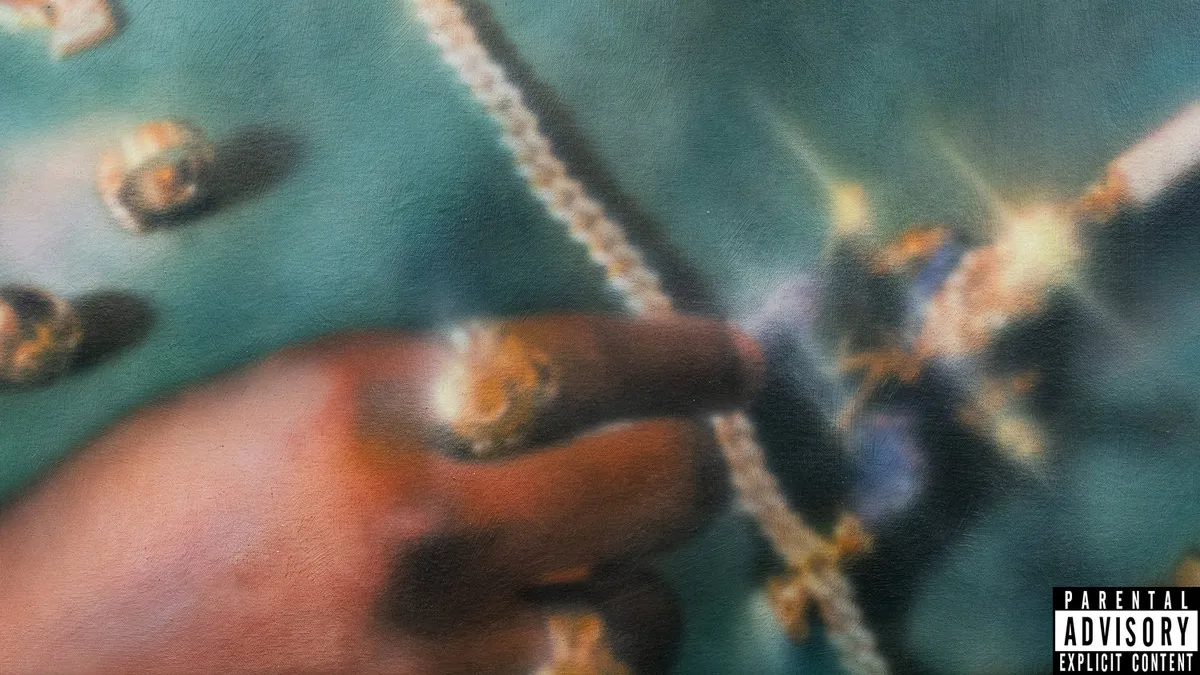
Most rappers and beatmakers who manage to stick around for more than a few years, build a dedicated following, and make a healthy living off of music eventually hit a wall. They may ask themselves, “Why am I still doing this?,” searching for the fire they had in their belly when barely anyone knew their name. Music becomes business and business can become tedious. In the background of ii, the long-awaited follow-up to 2020’s Unlocked, Denzel Curry and Kenny Beats—my fault, Kenneth Blume—are reckoning with the reality of the mid-career creative plateau.
“I’m not doing this just to do it, I wanna win a Grammy off this hoe,” Curry said in an interview four years ago. “But it feel like I don’t get recognized for what I do, even though I’ve been doing this for a long time.” On “Gone Fishing,” the 31-year-old rapper takes stock of his career trajectory, wide-eyed and full of zeal. He gloats a lil’ bit like he tends to (his passion is “Christ-like,” since 16 he’s been “the zeitgeist”), but what sticks out is how indifferent he’s become about status or stature. “Fuck the best rapper shit, I’m tryna make (cha-ching),” Denzel Curry spits with a shrug. “A history of hits, but for you it’s not hitting.” For the 15 years he’s been around, it feels like the South Florida native has hardly been able to remove the chip on his shoulder, and despite the fact that he says it’s still there, things feel different now. Throughout ii, I can’t shake the feeling that Denzel Curry’s pursuit of contentment (and money) in lieu of industry plaudits has sunk him into creative stasis—his Southern-fried double-time flows and zany one-liners feel tame and predictable, circulating over beats that double down on that feeling.
No score yet, be the first to add.
Across raps about getting rich and staying rich, Denzel proves he’s still technically proficient, but he’s grown more subdued with time. On the first Unlocked tape with Blume, six years ago, he was growling and barking, channeling DMX cadences as his pitch modulated and distorted. He’s much less dynamic this time around, but I like his slippery, Twista-type staccato on “Product,” where he watches overhead for vultures fiending for a come-up. He’s fiercely illustrative (“See, you ride-givin’, slob-lickin’ leeches ain’t breechin’ my pod, pimpin’,” from “UPS”) and alliterative (“Dump until you’re duppy, don’t give a darn ‘bout a dang dollar,” from “Cold Night in Hell”) when he’s on his game, something like Dr. Seuss if he grew up listening to Juicy J in Carol City. But listening to Curry rap on ii can feel like watching your homie re-tell the same story to different groups of people; the shifts in tone and motifs feel less engaging as you recognize their familiarity.
It’s immediately clear that Blume’s production across ii’s nine tracks aspires to the warm TV glow of old DOOM and Madlib beats, but it pales in comparison. ii’s compositions feel begrudgingly methodical, co-opting the facets of what made Blume’s lodestars cool by making minimal templates out of them. Present are the cartoonish loops, muffled boom-bap drums, and vocal samples meant to interact with the music like laugh tracks on a sitcom. Absent is any of the whimsy or animated restlessness. The most distinct track on here, “Difference,” adds a much-needed jolt of energy through its jittery piano chords and singer Yebba’s beautiful falsetto.