
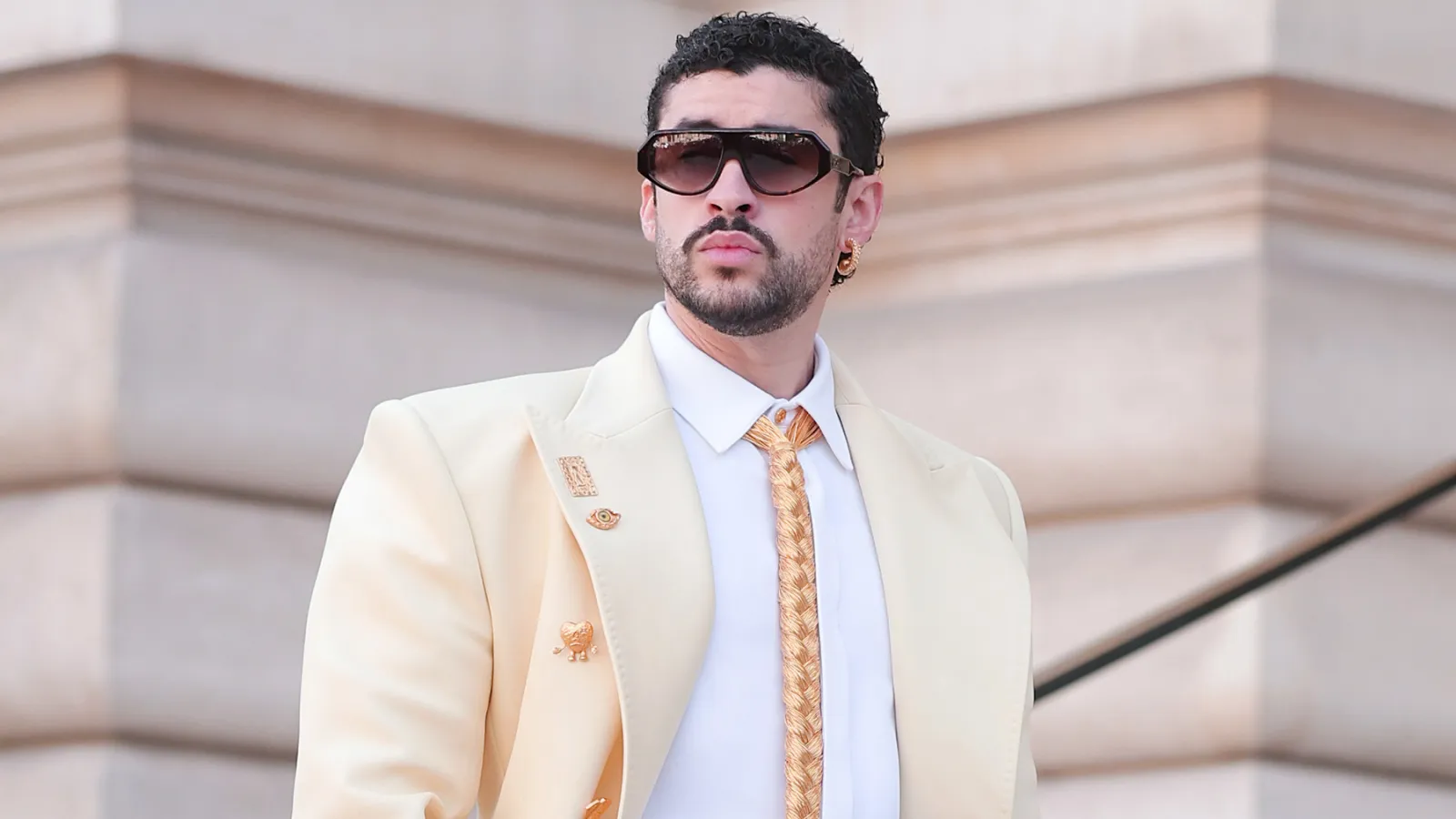
Lawyers for Bad Bunny, Drake, and many of reggaeton’s biggest stars faced off against attorneys for reggae duo Steely & Clevie in a Los Angeles courtroom Friday, as a judge asked pointed questions and said he would need several weeks to decide whether to reconsider a major ruling he issued last month.
In the July ruling, the judge found that a jury must decide whether an estimated 1,800 reggaeton songs by more than 100 artists infringed the composition copyright held by Cleveland “Clevie” Browne and the heirs of Wycliffe “Steely” Johnson for the 1989 song “Fish Market.” The plaintiffs claim the song was the original source of reggaeton’s so-called dembow rhythm, the signature percussion pattern that helped define the genre.
Bad Bunny’s lawyers filed the motion asking the judge to reconsider his ruling, and lawyers for the other artists later joined the request. They argued Friday that the combination of musical elements that the judge found potentially protectable, referred to in the case as the “Fish Market Elements,” was actually a “pastiche” assembled from different portions of different songs.
Kenneth Freundlich, the lead lawyer for Bad Bunny, pointed to sworn testimony in which Clevie Browne said the two-measure pattern identified as “Fish Market” in the complaint was actually made up of “two bars not connected in the song ‘Fish Market.’” Freundlich said Browne testified that the first bar came from the opening measure of “Fish Market,” while the second came from bar 22.
Freundlich argued that two-bar timbale loop identified as protectable in the complaint appears only in the related song “Pounder (Dub Mix II),” which does not contain the tambourine element identified as protectable in “Fish Market.” He also noted that Steely & Clevie do not own the composition copyright for “Pounder,” only the copyright to its sound recording. (Jamaican producer Dennis “the Menace” Halliburton owns the composition copyright and is not a party to the lawsuit.)
“It’s our position that a selection arrangement can’t be based on a pastiche of compositions. We have to have a single work,” Frendlich argued. “The case has been shape-shifting from day one. …They took something from here and something from there, and they put it together as if it was continuous.”
U.S. District Judge André Birotte Jr. opened the hearing on Friday by noting that he was being asked to “mull this nightmare over some more.” He then turned to lawyers for Steely & Clevie with the pointed question at the center of the dispute.
“How do you all reconcile the assertion that the claimed pattern exists in ‘Fish Market’ when the testimony is that the timbale figure was taken from two separate portions of ‘Fish Market?’” he asked. Plaintiffs’ lawyer Benjamin Tookey answered that a “consecutive two-bar timbale pattern” exists in one place in the composition for “Fish Market,” and that it was repeated “at different times in ‘Fish Market.’”
When it was his turn to speak, Freundlich reacted sharply. “This is the first time we’ve heard them say that the two-measure pattern [listed in the complaint] is in ‘Fish Market.’ We’ve never heard that before, and that directly contradicts their client under oath.” He accused the plaintiffs of claiming exclusive rights to “a complete blur” of elements taken from different songs. In his motion for reconsideration, Freundlich said Steely & Clevie “assembled a Frankenstein” from the separate songs.
“No one’s Frankenstein-ing anything,” plaintiffs’ lawyer Stephen M. Doniger shot back. “There is a genuine factual dispute as to whether or not that two-bar slice is out of ‘Fish Market.’ It’s like if I took a slice of a recognizable Monet painting, then I repeated it, and everyone was like, that’s a Monet remix. That’s what this case is.”
Doniger said “this Frankenstein theory is a great soundbite,” but it’s “inaccurate” because “the only reason we talk about ‘Pounder,’” is because it contains much of the same selection and arrangement as “Fish Market.”
As the hour-long hearing in downtown Los Angeles concluded, Judge Birotte took the matter under submission. “I need to think about this,” he told the lawyers. “It will probably be a few weeks before I get an order out.”
Bad Bunny’s motion asked the judge to either reverse his July ruling or allow the defendants to immediately appeal it. Freundlich argued Friday that taking the case to trial would otherwise be “a complete mess,” with discovery and preparation involving roughly 1,800 songs by scores of famous artists including Karol G, Anitta, Pitbull, Justin Bieber, and Daddy Yankee, potentially “taking us into 2035.”
Bad Bunny, meanwhile, has denied allegations he infringed on Steely & Clevie’s work on dozens of songs including “Tití Me Preguntó,” “Un Ratito,” and “Una Vez.”
Whatever the judge ultimately decides, the case will continue on copyright claims involving allegedly unauthorized samples of sound recordings owned by the plaintiffs.
Daniel D`Amico for SANREMO.FM
