
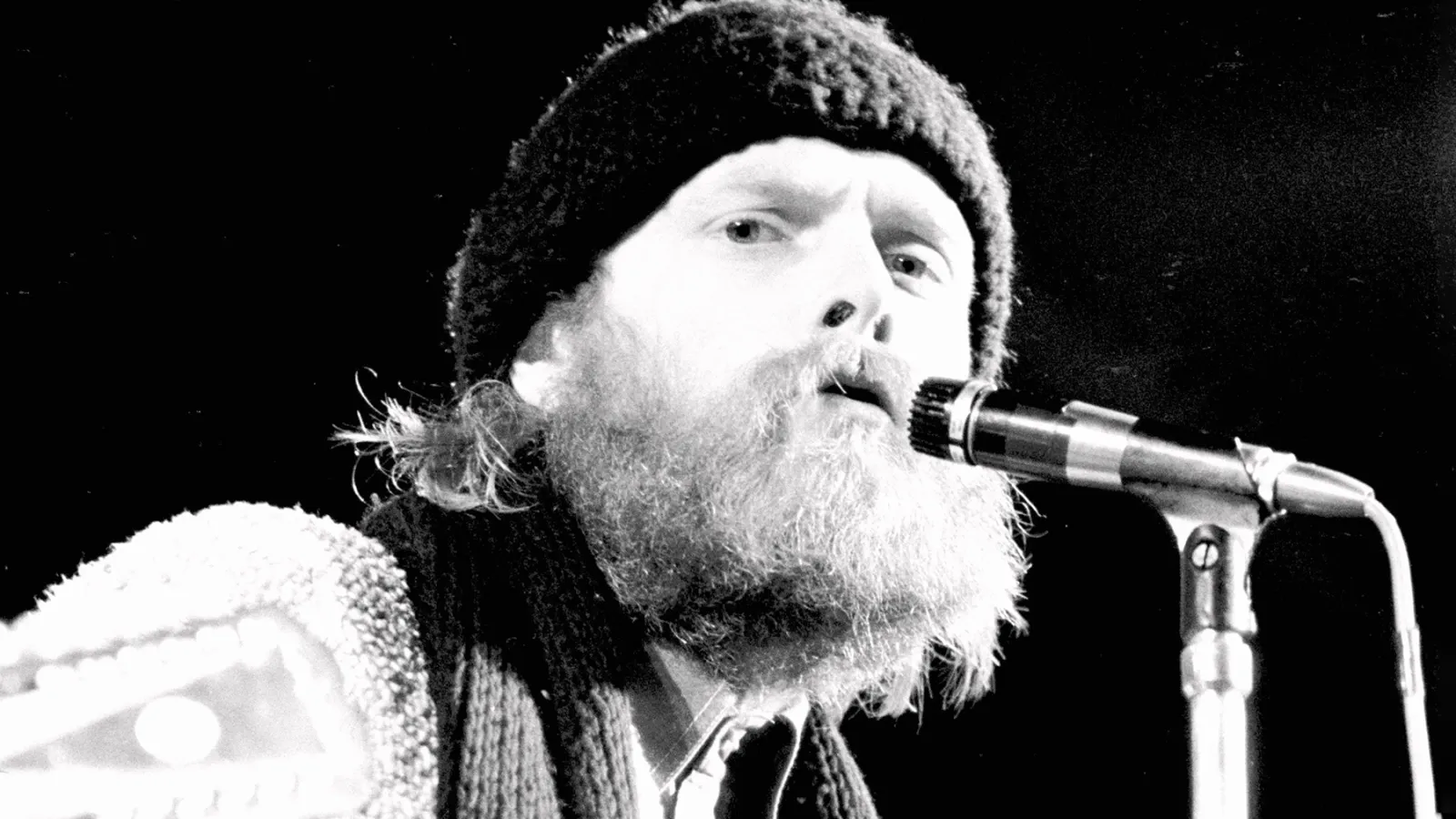
Farewell to Mike Love of the Beach Boys, who died Saturday night at 85. He was the band’s main voice, the California boy who sang their biggest hits, celebrating cars and girls and surf and summer. You might think a rock star who spends 60 years making arenas sing along with “Surfin’ U.S.A.” would naturally turn into one of America’s most beloved music legends, whether he wanted to or not.
But needless to say, that’s not exactly what happened. Love kept battling with Brian Wilson over the Beach Boys, fighting his cousin for control of the band’s legacy, their history, their soul, not to mention the money. As he noted proudly in his 2016 memoir Good Vibrations, “For those who believe that Brian walks on water, I will always be the Antichrist.”
That’s the eternal Mike Love mystery: How do you sing so many of the most beloved American songs of the past century, yet end up one of the nation’s favorite villains? How do you spend ten thousand and one nights singing “Fun, Fun, Fun,” yet turn into one of the most polarizing figures in rock & roll? How can you be the lead singer of the damn Beach Boys — keeping the band alive for six decades — but remain as deeply infuriating as Mike Love?
That’s why there’s no other rock legend like this man, in all his contradictions. He was a crucial part of one of the all-time great songbooks, singing the Beach Boys’ most universally beloved hits, including classics like “Shut Down” and “California Girls.” Brian Wilson was the introspective genius composer who took refuge in the studio, but Mike Love was the one who always thrived onstage. He loved the spotlight, even more than he loved courtrooms. Good Vibrations must hold the rock-memoir record for lawsuits per page. The most depressing scene in his book: Brian attends Mike’s wedding, where his brother Carl Wilson sings “God Only Knows.” Mike Love’s best man is the lawyer who’s just been deposing Brian for 17 days.
His dark side went public for the first time in 1988, when the Beach Boys were inducted into the Rock & Roll Hall of Fame, and he gave a speech that could be gently described as a four-alarm emotional breakdown. It was the first time the general public got to glimpse the Mike Love heel turn behind the image. “The Beach Boys did about 180 performances last year,” he boasted. “I’d like to see the Moptops match that! I’d like to see Mick Jagger get out on this stage and do ‘I Get Around’ versus ‘Jumpin’ Jack Flash,’ any day now.”
He didn’t crack a smile; this guy was pissed. “I don’t care what anyone in this room thinks,” he snarled. “I challenge the Boss to get up onstage and jam.”
By now, Paul Shaffer and his house band were playing “Good Vibrations” to drown him out, but it didn’t work. “I wanna see Billy Joel, see if he can still tickle ivories,” he said. “I know Mick Jagger won’t be here tonight; he’s gonna have to stay in England. But I’d like to see us in the Coliseum and he at Wembley Stadium, because he’s always been chickenshit to get on stage with the Beach Boys.”
That was the night even casual Beach Boys fans — which meant pretty much everybody — realized Mike Love was not exactly the happy-go-lucky surfer dude he played onstage. Bob Dylan, also inducted that night, said, “I want to thank Mike Love for not mentioning me.” Fellow Beach Boy Carl Wilson handed his award to Shaffer and said, “Our career is over.” But Ringo Starr, getting inducted with the Beatles, wasn’t paying attention. “Yeah,” he told Rolling Stone. “I don’t ever listen to what he has to say.”
He spent the rest of his life blaming his Hall of Fame tantrum on skipping meditation that morning, making fans wonder what kind of spiritual practice gives you results like this. He was a lifelong devotee of Transcendental Meditation, after going to India with the Maharishi in 1968, at the same time as the Beatles (he claimed “Back in the U.S.S.R.” was his idea).
If you’re looking for a song to remember Mike Love today, try “Big Sur,” his folkie ode to the West Coast countryside. He left the original song unreleased for years, though he revamped it for the “California Saga” suite on the 1973 album Holland. He wrote it while escaping to Big Sur during a divorce — “I just wrote a poem about being there” — finding peace among the canyons, redwoods, deer, and seashells. It finally came out on the 2018 Feel Flows box — a rustic beauty showing the vulnerable side that Love usually worked hard to keep hidden.
Love led the band as a touring machine, still an amazing live performer into his eighties. “Tony Bennett’s our idol,” Love told Rolling Stone’s Angie Martoccio in 2020. “He’s like ninety-something and he sounds great.”
I saw a Beach Boys show in September 2024, in New Jersey, and the 83-year-old Mike Love was a marvel, giving a high-energy, fully engaged performance. “I Get Around,” “Little Honda,” “Barbara Ann,” the Ramones’ “Rockaway Beach” — he worked those hits as hard as ever. (And naturally, he didn’t even mention Brian at all until after intermission — Brian finally got a shout-out during “Girls on the Beach,” which Love decided was about the JFK assassination.) Even the fans who saw this guy as the Antichrist had to give the devil his due: Nobody could come away from this show with any doubts about his vitality. He did 123 shows that year — the same nonstop pace he kept every year.
But the next summer, Brian Wilson died — and mysteriously, all the mojo seemed to go out of Love. He went into free-fall as a performer, looking and sounding alarmingly frail, until John Stamos had to take over for the final Beach Boys shows. It’s almost enough to make you wonder if feuding with Brian was the force that helped give him his sense of purpose — once he no longer had his nemesis around to focus his rage, he fell apart. Was it hatred that held him together?
The Beach Boys were the most legendary of American bands, partly because they were a family affair. They formed in 1961, a surf band starring the three Wilson brothers: tortured composer Brian, shy Carl, madman drummer Dennis, managed by their abusive father. Plus their high school buddy Al Jardine and their flashy cousin Mike Love, teenage boys living out a Southern California dream for the rest of the world to envy.
Brian and Mike clashed for decades of drama, in rock’s longest-running dysfunctional family saga. That’s a key reason we get so obsessed over the Beach Boys — the idea that these two opposite personalities, born into the same family, could spend so many years making each other miserable, with nothing except the music in common. The boy genius who wrote the tunes and the cocky frontman who sang them — it’s some kind of cosmic prank they were stuck together for life, making music neither could escape. In the Brian “I Get Around” cosmology, Mike was the bad guy who knew him but wouldn’t leave him alone. As for that whole idea of family love and peace and harmony — wouldn’t it be nice?
The surviving Beach Boys put their differences aside for a 50th anniversary reunion tour in 2012, but as any fan could have predicted, the tour crashed and burned when Love shocked his bandmates with an abrupt press release that he was ditching them. Wilson responded, “It sort of feels like we’re being fired.”
They stayed on the road with their competing bands. (Brian had old Beach Boys buddies Al Jardine and Blondie Chaplin; Love had Bruce Johnston.) They released competing memoirs in 2016, I Am Brian Wilson vs. Good Vibrations, giving contradictory accounts of their years together. Love seemed to be working overtime to live up to his ornery reputation, stopping by the White House to give a bizarre speech about how Donald Trump tried to save Whitney Houston’s life. “You’ve always been a big supporter of some of the best music America has ever made,” Love told Trump. “I remember you tried your best to get Whitney Houston into some kind of shape.”
But nobody could miss how serious he was about the live operation. A few years ago, I sat behind him at a Monkees gig in NYC — Love was incognito, just taking in the show, studying how a top-notch rival touring band was doing it. He sat unnoticed in his baseball cap; not a single fan in the crowd seemed to recognize him. (Rolling Stone’s forensic Beach Boys expert Andy Greene identified him by his rings.)
Love also co-wrote the most (only?) divisive Beach Boys hit, “Kokomo,” from the soundtrack of the 1988 Tom Cruise movie Cocktail. It was the only Beach Boys Number One with no Brian involvement at all, and it’s stayed a wedding-DJ staple ever since, even if it’s reviled by Brianistas and other aesthetes. This summer I saw a Pet Sounds tribute band horrify the crowd by busting out “Kokomo.” (If you’re a band with “Pet Sounds” in your name, your Number Two job is playing Pet Sounds; your Number One job is not playing “Kokomo.”)
Love kept litigating his case against his bandmates, in and out of court. In his book, he responds to the 1998 death of Carl Wilson from cancer with the boast, “Since Carl’s passing, the shows have never been better.” The Beach Boys: An American Family was a 2000 TV movie attacking Brian as a fraud and hailing Mike as the genius of the group, executive-produced by Love’s wingman Stamos. He always seemed to play up his Scarface “say goodnight to the bad guy” energy.
That’s also why his book Good Vibrations is one of his major personal statements, one of the most openly petty rock memoirs ever written. He rages at “Brian’s hagiographers and sycophants,” seeing himself as the band’s leader. Love boasts about how much money he made suing Wilson for defamation over his first memoir, though he insists he wouldn’t stoop to actually reading the book. Most rock memoirs get boring when they start talking lawsuits, but for Love this is the surf’s-up part: Litigation is his happy place. Depositions are his Kokomo, cross-examinations his Aruba. When choosing a lawyer, he notes, “we still needed to do our astrological vetting.” Fortunately, Love’s astrologer approves the lawyer because “in the twelfth House of Justice he has an exalted Jupiter.”
He also devotes a chapter to complaining about Brian’s failure to finish Smile in the 1960s, but doesn’t mention that Brian went back and finished it 37 years later, turning it into his late-game masterpiece. Needless to say, he sued Brian over that album, too, claiming it “shamelessly misappropriates Mike Love’s songs [and] likeness.” (The federal judge dismissed the case, saying his claims “bordered on frivolous and were not objectively reasonable.”)
“Despite the obvious dysfunctionality of the Beach Boys as a group of human beings,” Love told Rolling Stone in 2016, “to be able to take this music — all of these foibles and trials and tribulations, all of the unhappiness and self-destruction, the self-indulgent behavior — but if you take the music, that’s the story of it, right? The value of the music, and what it’s meant to so many people.”
As it turns out, Mike Love and Brian Wilson ended their careers the same way, with the same song: “Fun, Fun, Fun.” Both men lingered onstage, watching somebody else sing it, because they were no longer up to it physically. What can it mean that these cousins both went out with a song about teenagers deceiving a stern father figure, when they both got so horribly exploited at a young age by the same father/uncle/manager? And was there ever any hope, anywhere in this story, that this shared trauma might have brought them together instead of tearing them apart? Like so many questions in the Beach Boys story, this one has just one answer: God only knows.
Daniel D`Amico for SANREMO.FM