
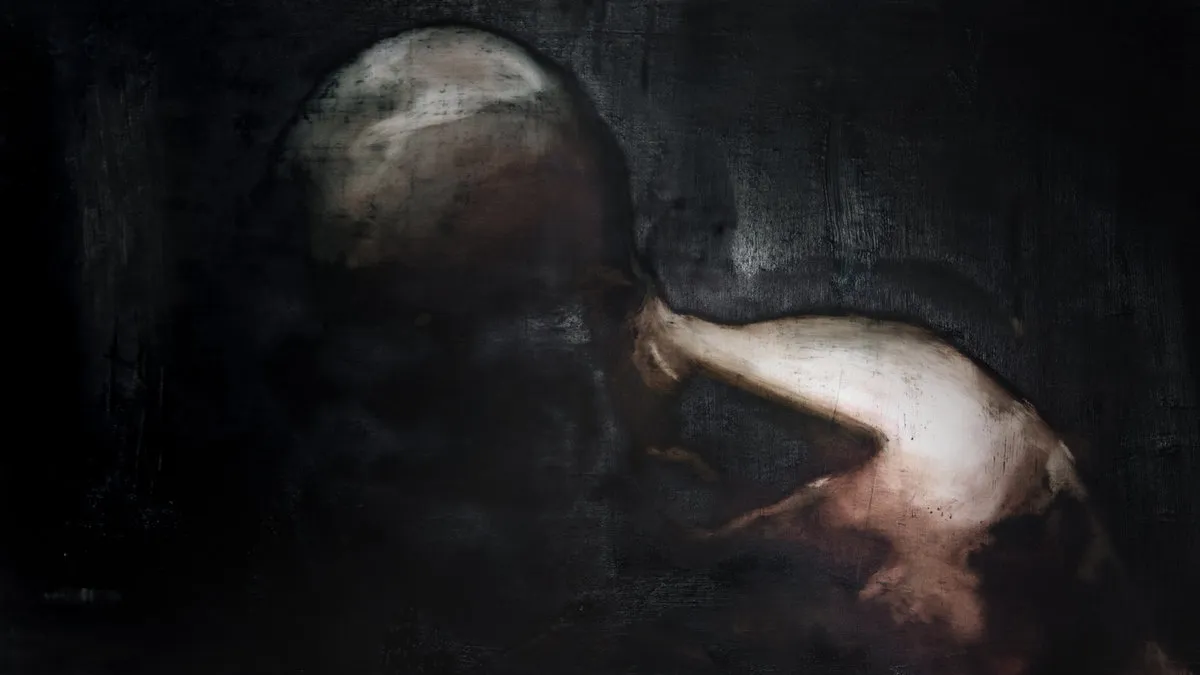
On Saints in the Wethouse, Blackhaine reaches through the agony in search of salvation. Redemption wasn’t always in sight. In his brutal EPs from the early 2020s, the rapper-dancer-producer from North West England used music as a vehicle for narrativizing personal struggle. He pushed through harsh noise and screamed over bulldozing drill productions only to find the ambient solace that lay beyond was numb and unstable. But he kept pushing, and, in his 2025 dance piece And Now I Know What Love Is, finally found a tenderness that felt years in the making.
Yet Blackhaine’s debut album finds him in purgatory again. He arrives riled up: “Do you even know you’re fucking with a real one?” he snarls on “Consumer” over a haunted dancehall beat. Both singles—“Consumer” and the bulldozing “Northside Needs Me”—feature production by Wraith9, the EsDeeKid and fakemink collaborator. The new sound arrives with a jolt—previous Blackhaine productions were sparser and more spacious—and, with buzzy, saw-synth lines and chopped-up Todd Terry samples, they initially suggest a violent swerve into a more commercial space.
No score yet, be the first to add.
That Blackhaine’s anguished, theatrical delivery feels at odds with the of-the-moment production, you realize later, is sort of the point on a rap concept album where security constantly eludes its central character. The everpresent purgatory puts it in mind of concept records by Quadeca, or, further back, Tech N9ne’s Anghellic. But its closest precedent is collaborator Rainy Miller’s Joseph, What Have You Done? Both artists hail from Lancashire, a historic center of heretical Catholicism, and both fold distinctly Catholic ideas of suffering and redemption into their confessionally shaped narratives.
Where Miller’s album ends in conflicted glory, Blackhaine falls, as if the very title Saints in the Wethouse had foreordained it. (A wethouse is a hostel where homeless alcoholics can, essentially, drink themselves to death in a controlled environment.) If a purgatorial album following a doomed character through his terminal decline sounds like a slog, Saints in the Wethouse adds a dramatic conceit, punctuating the descent with futile glimpses at recovery. They appear twice: in the unexpectedly Cohen-like crooning of “The Wind,” with its gentle melody and washed-out acoustic guitars, and the consecrated, slow-motion hard house of “Spirit.” These are moments of sober relief; they’re preceded by cycles of addiction then apotheosis, and followed by relapse, or, in the end, expiry.
Daniel D`Amico for SANREMO.FM