
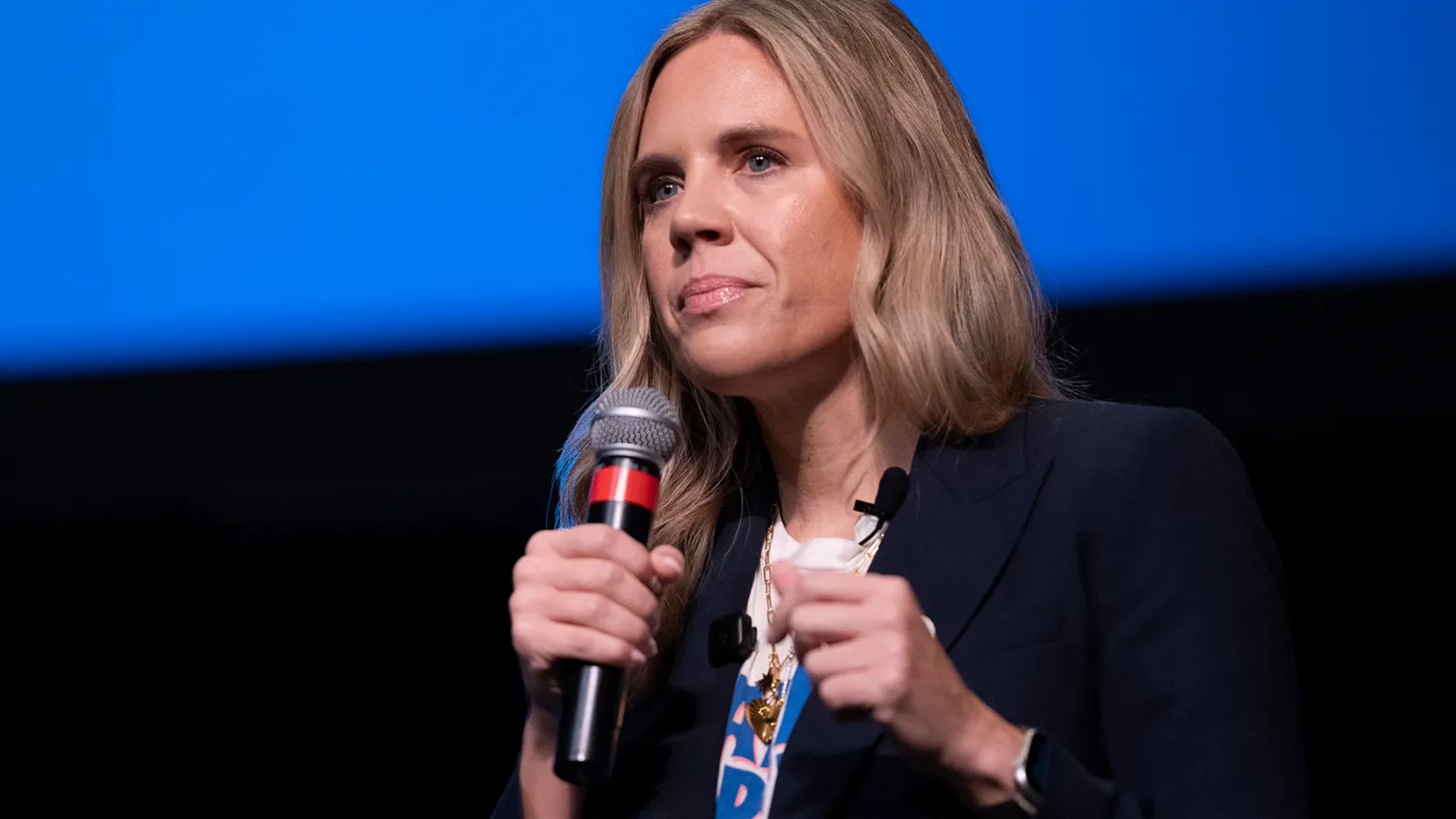
Before he died in July, Lindsay Graham ruled over South Carolina politics for 23 years. It was a conservative state then — Graham won the seat after the death of the legendary racist Strom Thurmond in 2003 — and it is a conservative state now, but Graham’s death and Donald Trump’s overwhelming unpopularity have created an opportunity for a Democrat to change the state’s future. Enter Dr. Annie Andrews.
Andrews is a career pediatrician who turned to politics in the 2022 election cycle, when she unsuccessfully challenged Congresswoman Nancy Mace. The race was enough to push her to the front of the Democratic bench in the state, and now she’s one of the party’s best hopes for flipping a crucial seat and regaining control of the most powerful legislative body in the country.
And yet, Andrews tells Rolling Stone she’s not paying much attention to the national Democratic Party’s greater struggle. Instead, she says, she wants to “be a part of a new era of bipartisanship and compromise,” and insisting to South Carolina’s voters that the issues that matter to them are the issues that matter to her: health care, data centers, and the price of diesel.
Standing in her way, however, is Graham’s legacy — namely, his sister, Darline Graham, who was appointed to Lindsay’s seat by Governor Henry McMaster in July. Thus far, the GOP’s campaign to elect Graham in place of her brother has rested on name recognition alone. She has been largely absent on the campaign trail, and when she has appeared, she has expressed little interest in, and demonstrated little aptitude, for the job. In one viral moment during her primary debate, she responded to a basic question about Taiwan and the South China Sea, by replying, “national security is not my thing.”
To Andrews, Darline Graham is a symbol of everything wrong with American politics: hand-picked by D.C. bigwigs and offered up to South Carolina’s voters as if she is the only choice they have. “She’s taking South Carolina’s votes for granted,” Andrews says.
But beating her is still a tall order. Recent polls show the two candidates are basically deadlocked, with Graham holding a small edge in the red state. Still, in South Carolina, Andrews likes those odds, and this weekend she’ll finally get to square up with Graham head-on when the two candidates debate for the first time on Sunday, October 11. Days before that surely-pivotal moment, Andrews got on the phone with Rolling Stone to discuss her strange campaign against a late legend’s barely present sister, Trump’s attacks against her, and what she hopes to offer the people of South Carolina.
You declared your intent to run for Senate while Lindsay Graham was still alive. What changed for you when you went from running against a long-time incumbent to running for an open seat with his sister appointed to the post?
It certainly changed who I was running against, but it didn’t change who I’m running for, or the reasons I got involved in the first place. I got in this race because it was clear to me that South Carolina was in need of a senator who was willing to wake up every day, go to work, roll up their sleeves, work across the aisle and put South Carolina first.
I’ve seen you mention that you were partially inspired to run because of your background as a pediatrician, especially when RFK Jr. was appointed as Health and Human Services secretary. How has his tenure impacted public health in your state?
I’m in this race because of my experience working within America’s broken health care system. I started to realize what I was seeing from hospital room to hospital room were the impacts of broken policies coming from Washington, harming my patients and their families. Certainly, you know, the day RFK Jr. was nominated to lead HHS was a pretty profound moment for me. It signaled the urgency of this moment — that there was never been a more important time for a pediatrician like me to serve in the U.S. Senate, to be a part of conversations about how we build a health care system in this country that meets the needs of everyone. That will be a huge priority of mine when I get to Washington, DC.
When you’re traveling around the state, what are other doctors telling you they need?
We’ve all worked in the same broken system for a long time, so we have a lot of shared goals. First and foremost, it’s stopping the impending Medicaid budget cuts. Pediatricians really see the Medicaid program as a children’s health insurance program. The majority of patients I’ve cared for over my career have been funded by the Medicaid program.
It’s the largest insurer of children in my state, and defunding that program, gutting that program, as will happen in the new year if we don’t win some elections and stop these budget cuts, will be devastating to access for children’s health care.
One of the first things I plan to do when I get to Washington, D.C., is to call Senator Tim Scott and talk to him about the Medicaid program, because I have watched him advocate for South Carolinian children with sickle cell disease, and I’ve watched him work across the aisle with Corey Booker on that. I think that would be an opening to start with something we clearly agree on, and then work from there.
I really hope when I’m elected to be a part of a new era of bipartisanship and compromise. That’s the only way we’re going to be able to effectively solve so many of the problems we’re facing across the country.
“I really hope to be a part of a new era of bipartisanship and compromise. That’s the only way we’re going to be able to effectively solve so many of the problems we’re facing across the country.”
I’ve seen you mention that desire to start to bridge that gap in other interviews. But it feels like there’s a huge imperative for the Democrats to regain control of the Senate. You’re running as a Democrat. How do you see your role in that two-party system?
I’m really a mom and a pediatrician, first and foremost. I don’t see this campaign, this race as being about flipping a Senate seat. I see it as South Carolina’s opportunity to elect a senator who will put South Carolina first.
I look forward to working with whoever I need to work with. I’ve seen the career politicians on both sides of the aisle, the dysfunction in Washington, D.C., and the role that corporate money plays in politics. So many of those things are barriers to effective governing. There are so many people across the country — I hear from them in South Carolina — who are just so frustrated and really kind of disgusted with the Washington political system. One of our new ads is about “the swamp” and how my opponent, Darline Graham, was handpicked by it. She’s going to work for the swamp, and that is not what I see this job as.
Yeah, I wanted to talk about your opponent. What do you make of Darline Graham’s first few months in office?
What I’ve watched her do is vote to continue this deeply unpopular war multiple times — while I talk to farmers and shrimpers in South Carolina who are being crushed by these record-high diesel prices. I see her not on the campaign trail. I’ve been to almost two dozen campaign stops just this week and it’s only Thursday. I’m talking to everyone everywhere and she is nowhere. She’s taking South Carolinians’ votes for granted. People deserve to hear from her and to see her and she needs to listen to South Carolinians about their problems. That’s what’s so troubling to me: she’s listening to people in Washington, D.C., the people who handpicked her to run for this seat, and that’s who she’s going to answer to.
How do you run against someone who is not really participating in the process like any, like a normal politician would?
I won’t argue with the fact that it’s an interesting set of circumstances in this particular race, but my strategy continues to be to show up everywhere, and to show up and listen first, and not presume to know what issues folks are concerned about. It’s just what I did for 20 years as a doctor. You walk into a room of a sick child at a children’s hospital and you listen. You can’t make a diagnosis without listening and then you also have to communicate your treatment plan very clearly to worried parents and a sick child. Campaigning is very similar. You show up everywhere. You listen first. You come up with a plan and you communicate that plan back to the voter. I’m offering to be the senator that South Carolinians are missing. I will show up on the campaign trail every day and I will show up when I am given the privilege to serve as South Carolina’s next senator.
You’ve gotten more real pushback from President Trump himself than you have from Darline. He came down and did this rally and referred to you using a really offensive slur [“Trannie” Andrews, a reference to Andrews’ stance on gender-affirming care for adults]. What do you do to push back against the president of the United States? How do you counter his influence in your state?
I’m more focused on addressing South Carolinians. They’re attacking me because I’m fighting for the people here in South Carolina. If name calling will lower gas prices and diesel prices and grocery prices and fix their broken health care system, then he can call me all the names he wants. I think what we’ve seen this week says a lot more about Darline — that she needs the president to do her talking, especially when she’s not out here on the campaign trail.
“[Darline Graham] needs the president to do her talking, especially when she’s not out here on the campaign trail.”
It seems like in this midterm cycle the conservative strategy has been to really double down on those kinds of culture war attacks. What’s been your strategy for dealing with those attacks? And what do you say to the voters that express concerns over these social issues.
You know, what we saw this week was the vitriol that has become so normal in our politics, that really turns off people from both sides of the aisle.
I’ve gotten a lot of messages of support from Republicans here in South Carolina because they’re just as turned off by this as so many of us are. I only hear about these issues from people in D.C. and from insiders, the insiders who handpicked Darline Graham. I’m talking to voters, you know? I was in the low country talking to shrimpers who are being crushed by these diesel prices. Just today, I was in Bennettsville talking to community members outside their only hospital that closed 11 years ago, and now there are zero hospitals, zero emergency departments in the entire county. I’m talking to people who are working multiple jobs just so they can keep their lights on at the end of the month. I’ve been to Spartanburg, South Carolina, where residents are furious about a $3 billion data center that’s being built in their backyard.
There are so many very real issues facing South Carolinians, and because I’m out here on the campaign trail, unlike my opponents, I’m using what I’m hearing from voters to inform what I’m focused on and what I’m talking about.
You mentioned data centers several times. What have you heard from these communities about the data centers that are springing up everywhere?
One of the things that’s so interesting about it is, I think this is one of those rare issues where Republicans and Democrats are completely united in their opposition to this unchecked data center development in our rural communities. It’s not just one part of the state where we’ve had these conversations. It’s community after community after community. Talking to folks in Spartanburg, they felt completely misled, that these companies swoop in to these rural communities, dangle a few carrots in front of local elected officials, and then these communities get steamrolled and they’re not getting transparency about the economic impact or the environmental impact, and then these huge facilities are just being built in their backyard. I think it’s really striking. We have a plan that calls for a two-year moratorium and a return to local control, because that’s what I’ve been hearing from people on the ground. To me, it’s a little sliver of hope about how people on both sides of the aisle can be reminded that we are not each other’s enemies. There’s far more that unites us than divides us, and that we can work together, in our communities, to advance agendas that are in the best interest of our communities.
Is there another issue that you can think of that both your Republican and your Democratic supporters have come to you about?
I think one of the most common areas of agreement is about the corruption in D.C. and the role of money in politics. When I talk about my support for term limits, and banning members of Congress from trading stock, and getting dark money out of politics, I get big applause every time when I’m in mixed audiences. I think that’s because people are recognizing that Washington isn’t working for them. So [people like] Darline Graham go up there and take money from these special interest groups, corporations, and billionaire donors, and then they do their bidding, and it’s not solving problems here in South Carolina. You cannot govern effectively if you’re not connected to the community.
“[People like] Darline Graham go up there and take money from these special interest groups, corporations, and billionaire donors, and then they do their bidding. It’s not solving problems here in South Carolina. You cannot govern effectively if you’re not connected to the community.”
I was going to ask you specifically about a single-pair health care system. What was your experience with that in the health care system? How would your job have been different if everyone had access to a well-funded Medicare/Medicaid system?
I think more people understand correctly now that so much of the money that we fork over for our premiums, and our deductibles, and our co-insurance, and our co-payments, and our prescription drugs, so much of that money is going to pad the pockets of insurance companies, shareholders, and executives. I think people are aware that it’s not doctors getting rich off this system. These laws are being written by lobbyists in Washington, D.C., from these insurance companies in a way to benefit insurance companies, and it’s patients who are being left behind paying the price. When I talk to my pediatrician colleagues, the conversation is really about, what can we do to build a system that ensures every child in America has access to high quality, affordable health care, that every child is not one broken arm away from sending their family into medical bankruptcy. We can do so much better by America’s children by building a health care system that really meets the needs of all of them.
You’re a mom of three and you’ve worked with kids all your life. I’m curious — what are your kids saying about the campaign trail?
You know it’s been really a wonderful experience with me and my kids. My kids are 14, 12, and almost 10.
My oldest is a freshman in high school. She’s really interested in the campaign and the politics around it. It’s just been great to see her and her curiosity build as I’ve been through this process. She actually ran for freshman class president. I was so proud of her for running. She didn’t win, but I reminded her the night before that I ran for Congress in 2022 and I didn’t win. My son is the sweetest. Every time I tell him “I’m so proud of you,” he’ll say, “But mom, I’m so proud of you!” Then my almost 10-year-old is the one who keeps me honest. When I walk out of the bedroom with an outfit on for an event and she tells me thumbs up her thumbs down about my outfit. She’s hilarious.
Say you are elected to the Senate. What’s the one thing you would like to be remembered by?
So first, I’ve only committed to serving two terms. I believe in term limits, and I will not serve more than two terms in the U.S. Senate. It would be such a privilege to be able to represent South Carolina, and if any part of my legacy is about building a health care system that is accessible and affordable to everyone, particularly vulnerable children, so many of whom fall through the cracks, that meets the needs of people all across this country, that isn’t bankrupting people, if I can be a part of holding insurance companies accountable, this will be well worth my time and effort out here on the campaign trail.
