
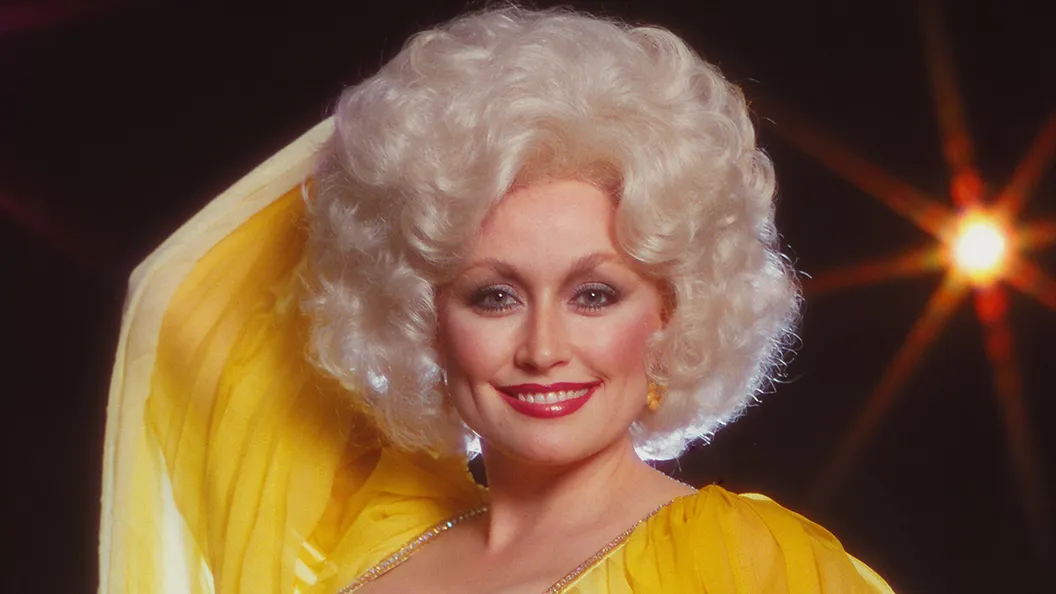
Dolly Parton has died at 80. A cause of death was not given. Parton’s nephew, Bryan Seaver, announced the death on social media. “Dolly opened the door for generations of singers, songwriters, musicians, and dreamers from every walk of life and across every continent,” he said. “From her example, we believed that anything was possible.” Parton’s publicist confirmed a small, private service will be held for immediate family.
Known for her flamboyant style as much as her inimitable chops as a songwriter, Parton endured as a country legend for more than half a century. Her songs are among the biggest hits in the genre, and her larger-than-life personality made her beloved in conservative Nashville and beyond. She had had 25 county No. 1 hits across her career, the most for a female artist.
Dolly Parton was born in a one-room cabin on Jan. 19, 1946 to Robert Lee, a farmer, and Avie Lee (Owens) Parton, a homemaker. Parton grew up in poverty with her parents and 11 siblings in the small town of Pittman Center, Tennessee. Her rural, religious upbringing heavily influenced her career, from her affection for the sounds of old hymns to the subject matter of many of her songs. She moved to Nashville with her uncle and recorded her first single, “Puppy Love,” at age 13, the same year she debuted on the Grand Ole Opry.
Following the release of her debut album Hello, I’m Dolly in 1967, Parton caught the attention of country star Porter Wagoner, who invited her to join him on his TV show and adjoining tours. Her star rose quickly as she released songs like “Dumb Blonde,” “Coat of Many Colors,” “My Tennessee Mountain Home,” and “Jolene” in parallel with her time on TV and at the Grand Ole Opry. When she felt like Wagoner’s vision for her career was at odds with her own, she left the program. Parton’s decision to step away from The Porter Wagoner Show inspired her to write “I Will Always Love You,” which she released in 1974.
The same year “I Will Always Love You” became a hit, Elvis Presley expressed interest in recording his own version of the song. There was a catch: the deal would require Parton to sign half of all the song’s publishing royalties to Presley forever. Though she was encouraged to take advantage of Presley’s star power to boost her own, Parton declined to sign away her publishing money, which her colleagues warned would ruin her career. Not only would the song remain one of Parton’s biggest recordings, but it got a second life as a smash hit for Whitney Houston in the 1992 soundtrack to The Bodyguard.
In 1977, Parton crossed over into pop with her 18th album New Harvest…First Gathering. Her more pop-focused era included hits like “Here You Come Again,” “Two Doors Down,” and “9 to 5.” She later returned to her country roots in 1989 with White Limozeen. In addition to her albums with Wagoner, Parton had a handful of other major collaborations. The 1987 album Trio (and its 1999 follow-up) linked her with Linda Ronstadt and Emmylou Harris; in 1993, she joined Tammy Wynette and Loretta Lynn for Honky Tonk Angels. Her chemistry with fellow country superstar Kenny Rogers was legendary. Their recording of the Bee Gees-penned “Islands in the Stream” becoming a platinum-selling hit for the duo. The 1980s also marked the decade she opened her Pigeon Forge, Tennessee amusement park Dollywood.
Parton’s exuberant personality helped her land film roles in Steel Magnolias, The Best Little Whorehouse in Texas, and 9 to 5, the latter of which was adapted into a Broadway musical in 2008. Parton also had multiple made-for-TV movies and other specials, including 1986’s A Smoky Mountain Christmas and Dolly Parton’s Coat of Many Colors, which came out in 2015. Parton found new recognition among millennial children for her role on Disney’s Hannah Montana sitcom, where she played an aunt to Miley Cyrus’ titular pop star. Cyrus was Parton’s real-life goddaughter.