
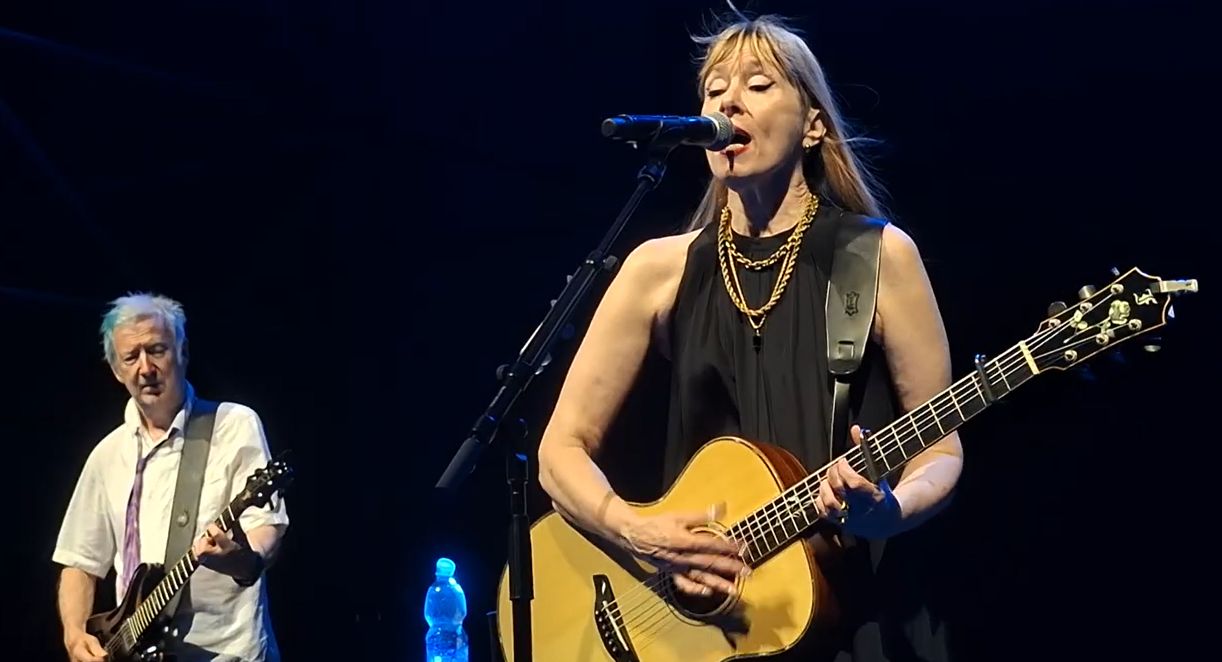
“From New York City, Suzanne Vega!”, announces a voice-over. And it's really a New York state of mind the one that will take over the magnificent Ardeatina Park for two hours where the Casa del Jazz stands. Because she is on stage, Suzanne Nadine Vega, a healthy bearer of the most authentic spirit of the Big Apple, shaped over years of apprenticeship among the clubs of Greenwich Village with her guitar slung over her shoulder and her clear and refined verses, around which she has built a songwriting among the most graceful and credible of the last 40 years. Accompanying her on stage for the occasion is an exceptional guitarist: Gerry Leonard, already alongside David Bowie for his latest works in the recording studio and on stage, who will then be joined by cellist Stephanie Winters.
Suzanne, black dress, top hat chanteuse of cabaret, he immediately begins “Marlene On The Wall” and it is a heart-stopping sensation, at least for those who – like myself – have fallen in love with his folk-rock of imploded emotions thanks to that song, which caresses a vision that is both mythological and melancholy: “Marlene watches from the wall/ Her mocking smile says it all/ She records the rise and fall/ Of every soldier passing/ But the only soldier now is me/ I'm fighting things I cannot see/ I think it's called my destiny/ That I am changing”. A text which – as she herself told us in an interview some time ago – has nothing to do with more celebrated “walls”, referring to a “more anonymous wall”: the wall of her bedroom, where as a young girl she kept a photo of Marlene Dietrich hanging.
It's already very hot, but only the pressing can lead us to the temperature of “99.9 F°”. title track of the 1992 album, with the harmonic sweetness of the vocalizations combined with electric and scratchy discharges riff of guitar. To close the magical initial hat-trick, an intense “Caramel” – one of the nine objects of desire of 4 years later (“Nine Objects Of Desire”, 1996) – at the pace of a persuasive bossa nova à la Astrud Gilberto, illuminated by a radiant melodic opening.
Suzanne is in the mood for chatter and confidences. For example, he tells us about one of his first great loves, the one for a boy he met at a folk gathering when he was 18: the story that inspired “Gypsy” (from “Solitude Standing”, 1987). But beware of wallowing in melancholy, because the wit by Vega is always lurking: “There's a new album! It's called 'Flying With Angels'… The tour is also called that. We have lots of new songs… But now let's do the old ones, because you know them better and we know them better too!”. Then he jokes by introducing “The Queen And The Soldier”, the other feat from his debut LP: “It's a sad song, it ends badly and what's more it's also very long!”. Stephanie Winters also arrives on stage, accompanying the entire piece with her cello, amplifying the sense of pain and helping to create a suspended and almost magical atmosphere, while Leonard delicately plucks the strings of his acoustic guitar and Suzanne's voice spreads a sweetness of rare intensity.
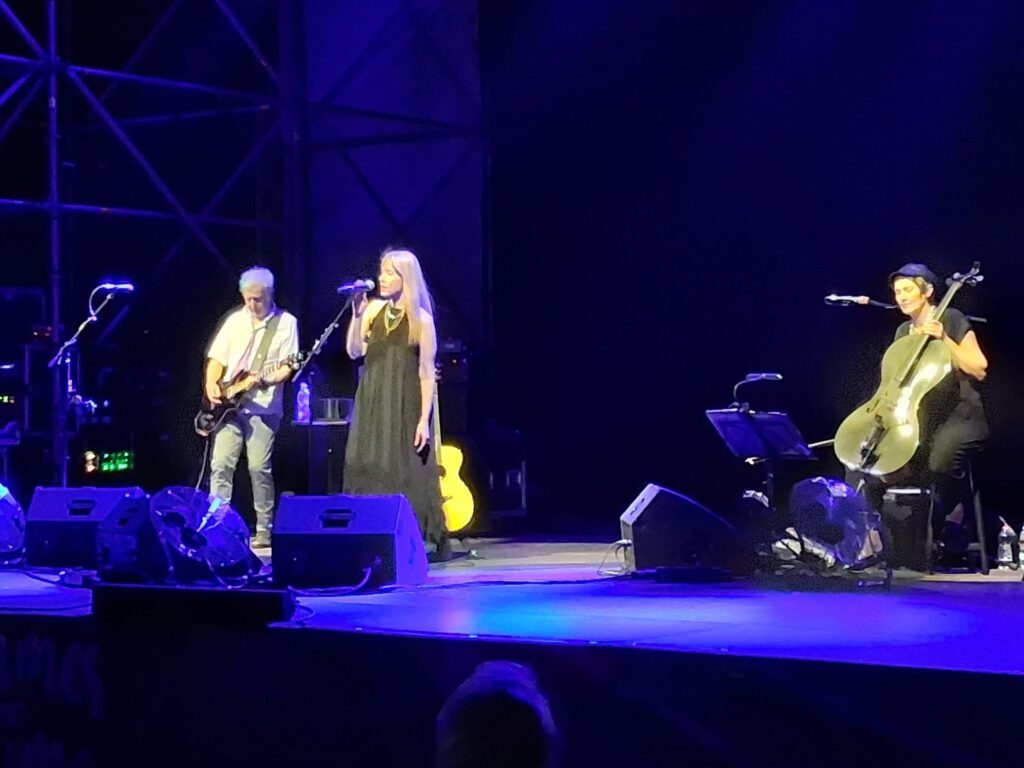
On stage, nestled among the pines with a sliver of moon behind her, Suzanne Vega is fully at ease, with her fan to mitigate the heat. No trace of the incredible shyness that characterized his early performances. He even rattles off a few sentences in Italian with a smile: “Can I have a cappuccino please? Where is the airport?”. And he says he learned it when he often came to Italy at the age of twenty, promising to improve it more and more every time he returns here. “Do you see my dress? It's black, I could never wear white.” And then he explains why, singing: “I never wear white/ White is for virgins/ Children in summer/ Brides in the park/ My color is black, black, black/ Black is for secrets/ Outlaws and dancers/ For the poet of the dark” (“I Never Wear White” from “Tales From The Realm Of The Queen Of Pentacles”, 2014). Then, it's time to pay homage to Elvis Costello with a vibrant, accented “Lipstick Vogue.” Dylanianstaken directly from one of his masterpieces, “This Year's Model” from 1978.
The new songs are finally arriving, starting with title track of “Flying With Angels”, one of his typical acoustic soliloquies on the tip of the guitar, which whispers hopes of a saving intervention in difficult times between soft arpeggios. Suzanne talks about angels supporting us and the exciting visit to the Vatican.
Following is the folk-rock slash of “Speakers' Corner”: “It seems like an easy and easy listening song, but instead it is very serious because it talks about the first amendment of the American constitution and freedom of speech”, explains Vega who uses the metaphor of the corner reserved for occasional speakers to warn about the risks of misinformation and limitations on freedom of speech, very current in Donald Trump's America: “I guess we better use it now/ Before we find it gone”.
Closing the chapter on “Flying With Angels”, comes the bouncy “Chambermaid”, a tribute to Bob Dylan that starts from his everlasting “I Want You”, reworking the original melody, as well as the lyrics, developing it from the waitress' point of view. The anecdote that Vega has for us about Mister Zimmerman is also very funny: “I opened a Bob Dylan concert in Norway in 2012, after my performance I stole a kiss from Bob backstage who told me “I would like to see you again”. I never saw him again. It was the shortest relationship of my life. But if Bob wants to see me again he knows where to find me”. And he attacks “Left Of Center” with his famous line “If you want me, you can find me/ Left of center, off of the strip”. Got it Bob?
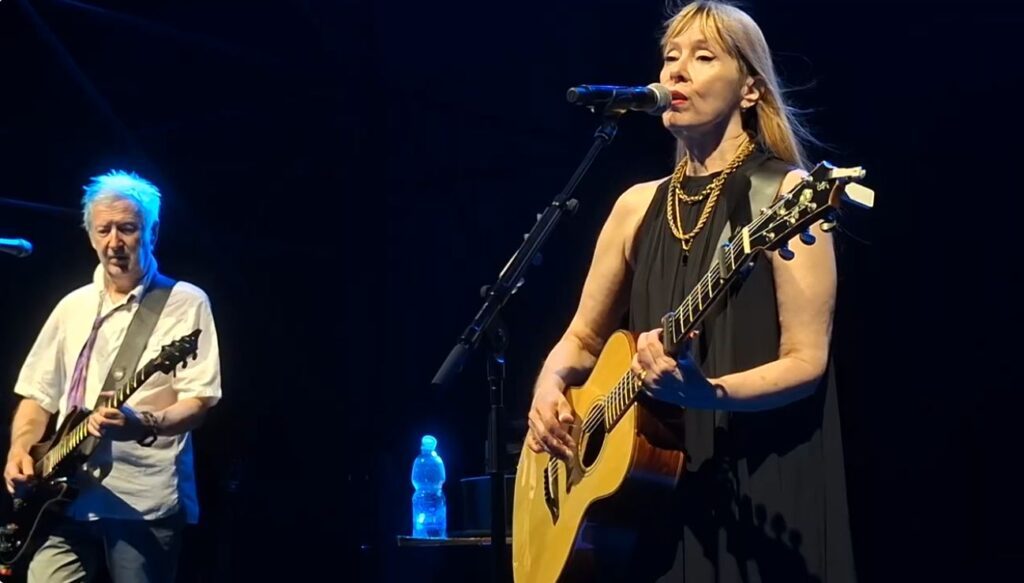
Another blast from the past to close the main set with the double from “Solitude Standing” (1987): first theevergreen autobiographical of “Luka”, in a more electric version than the original, then the metropolitan a cappella nursery rhyme of “Tom's Diner” which also inspired the DNA remix. Suzanne puts her tuba back on her head and enjoys the well-deserved ovation from those present before leaving the stage.
The encores, in addition to the repechage of the gem “Rosemary”, reserve a moving homage to the great New York maestro Lou Reed, the one who in a concert in 1979 struck the young Suzanne on the road to rock: “It was the first time I saw an artist bravely tackle themes such as violence and desperation – he told us in the interview – I understood that I could write songs about the excluded, about the people of the street, that I could become a folksinger”. The tribute – he warns almost mockingly – is his best-known success: a heartfelt and intimate “Walk On The Wilde Side”.
It really seems over, there are those who are about to leave, and instead she's back on stage asking us: “Do you want other songs?”. Of course yes, it's the general chorus. And it is at this point that something that has never happened to the writer happens. In the chorus of the most disparate requests, I shout: “In Liverpool” (perhaps together with another isolated spectator). And she incredibly satisfies me, after conciliation with her cronies. “It's the second part of the story of 'Gypsy' – he introduces it – It's always about that boy I fell in love with at 18… he was from Liverpool”. And she attacks that magically crooning folk-pop for a melancholy picture of a quiet Liverpool on a Sunday, with a soft, subtle light, just like the person Suzanne still turns to, so many years later.
Now all that remains is the epilogue of the evening, entrusted to the dark torments of “Penitent” (from “Songs In Red And Gray”, 2001). The three musicians leave the stage to applause.
Almost two hours flew by and even the heat seemed less intense. It will be the effect of New York state of mind?
Daniel D`Amico for SANREMO.FM