
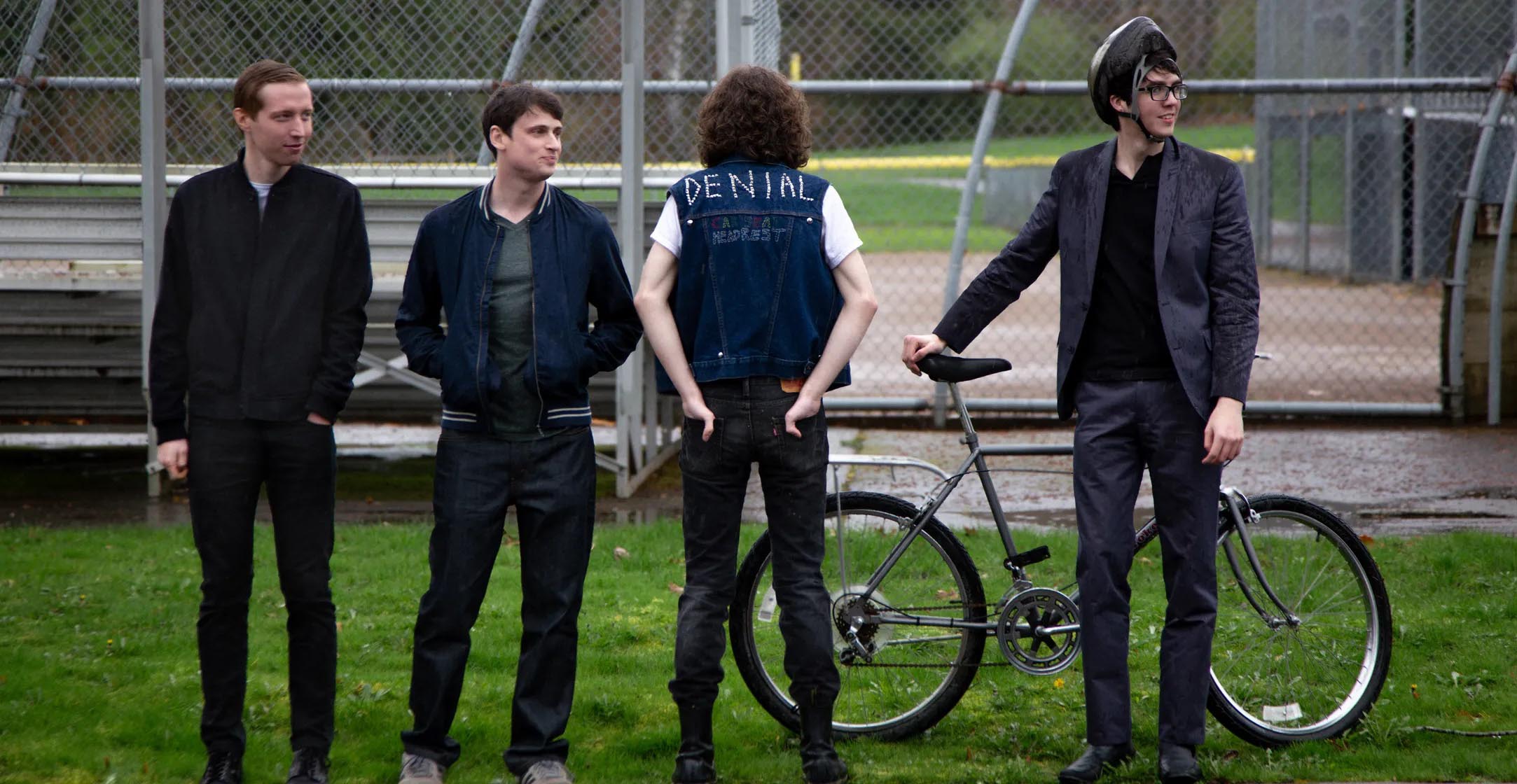
It's nothing new for Will Toledo to return to his old works; having at his disposal a boundless archive of albums recorded in his adolescence, the singer originally from Virginia has always considered it almost a compositional practice to fish out old songs from his repertoire, sometimes limiting himself to modifying them, other times completely reworking them, overturning their meaning and structure.
Maybe it's because more than half of his discography is corrupted by poor audio quality, having been recorded by one-man band in his parents' car. Or perhaps it will be due to a personal conception of the songs which he himself has repeatedly described as never really finished and in constant mutation, Toledo has always found it interesting, perhaps stimulating, to go and dig up the old songs in his repertoire and has repeatedly embarked on the (never banal) undertaking of re-recording.
After signing a contract with the Matador Records label and recording an album of remake of songs recovered from his discography, the young Will came out in 2016 with his first unreleased work from the Matador era. The album “Teens Of Denial” will receive a completely unexpected success, placing itself as a pillar in the world of indie rock of the 1910s, establishing a band that, we can now say, has defined and rewritten the rules of a genre that ten years ago appeared increasingly dull and stale.
It's 2026. 10 years have passed since the release of “Teens Of Denial”, 10 years since one of the last albums that we could qualify as generational, 10 years since a record that consecrated a band, which defined and described a generation of angry but, ultimately, fragile teenagers. And it is after 10 years, after having gone through years of Long-Covid and having become increasingly deeply linked to religion, that Will Toledo decides to get his hands back on the album that launched him on the international stage, on perhaps the most difficult chapter in his discography to rework. One of the reasons for this initial uncertainty – understandable for anyone who appreciated “Teens Of Denial” at the time of its release – is the already excellent production that the original album boasted: raw and frank but at the same time clear and brilliant as had never been heard in Car Seat Headrest's discography.
This new “Joe's Story”, however, is not (at least from a sonic point of view) a re-recording, it is more a remastermeaning that virtually no instruments were recorded from scratch. Each song has instead undergone a more or less evident process, depending on the pieces, of re-mixing and remastering, with the aim of intervening on the original material rather than replacing it.
A separate discussion must be opened instead for the voice, which is largely rerecorded, with the nervous and inexperienced boy timbre of the 2016 Toledo which leaves room for the more controlled and profound tonality of a man now in his thirties, whose maturity is increasingly inevitably perceptible. The choice to re-record the voices is largely due to the rewriting, this time more marked, of some of the texts, or rather to the deviation that the meaning of these takes. The result translates into a real concept album which tells the story of the teenager Joe within a more complete and linear story.
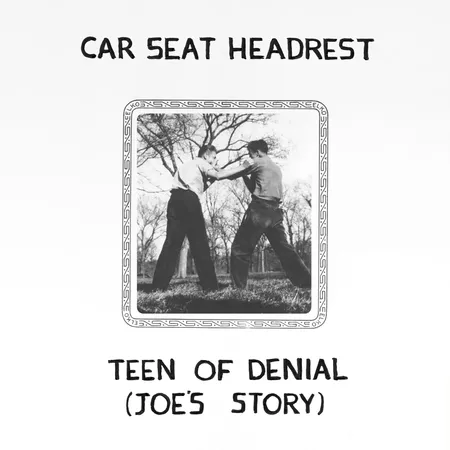
The first track “Fill In The Blank” is one of the generational anthems that made “Teens Of Denial” the album it was and has become over the years. In this new version (musically intact) we meet the protagonist Joe, struggling with desperation over the death of his brother Matt, who is terminally ill. Joe, instead of crying over the loss, uses anger as a comfort to cope with the excruciating pain that pervades him, in a chorus as charged as it is emotional in which relatives and acquaintances attack the legitimacy of his emotions, as if depression were not a real problem but a situation from which one cannot escape due to lack of will and motivation. Joe will respond in the final chorus of the song, furiously claiming and screaming his right (and that of all teenagers who “haven't known the world enough”) to be depressed.
Joe's January and February pass in unruliness and in a thousand nights drifting between alcohol and drugs, together with friends who desperately seek, together with him, a way to satisfy their sense of emptiness. This passage is addressed in the chaotic “Vincent”, a true spiral of self-destruction during which the protagonist, at a party, finds himself clouded by alcohol and therefore, immediately, by emptiness and depression which he prefers not to face anyway. A one-to-one monologue with his conscience that uses an indie-rock with completely new sounds and structure, which sounds like a spontaneous scream, like a cry for help, too confused to be taken seriously.
In the next, very powerful, “Destroyed By Hippie Powers” Joe finds himself having to skip a concert with his band because he is too altered by the “Hippie Powers” (psychedelic drugs). The original song, which featured Joe at a party, matches the ending of this new version in which our protagonist screams in torment and wonders where “that chubby kid who smiled so much and loved the Beach Boys” ended up, going so far as to admit that he had metaphorically killed his uncontaminated, infantile version, to make room for his adolescent “self”, now inevitably corrupted by the “hippie powers”.
In the acoustic “Drugs With Friends,” Joe gets suspended from school and spends his days taking drugs with his friends. After taking hallucinogenic mushrooms, he finds himself lying on the floor talking to Jesus who resents his behavior; Joe has reached a point of such vileness that he feels rejected even by Jesus Christ himself. The final climax reflects on the reason that pushes teenagers to use drugs, posing a question that remains unanswered: Do we take drugs with friends because drugs improve with company, or do friends improve with drugs? In this, as in all the songs of this new “Teens Of Denial”, Toledo has decided to eliminate all swear words and vulgarity from the lyrics, a choice due to the increasingly decisive and marked conversion of the frontman American to the Catholic religion. This “censorship” has left many fans of the band perplexed, who have accused Toledo of distorting an album that has at its core a spontaneity and anger that contribute to making it so powerful and shareable.
The new, unreleased, fresh “Optimistic Son” which replaces “Not What I Needed” from the original album, seems to come directly from “The Scholars”, the band's latest album. The unusual structure which sees the chorus postponed until the last minutes of the song is preceded by harmonically unstable verses, regulated by transitory tonicizations, which lead to “fake choruses” which, as previously mentioned, only act as a prelude to the real, captivating, refrain final.
“Drunk Drivers/Killer Whales”, the true masterpiece of the album, sees Will Toledo's voice completely re-recorded. The structure, identical in intention to the previous “Optimistic Son”, postpones the final refrain until the explosion of the symbolic phrase of this album. Toledo represents the unconscious patterns of our mind such as “drunk drivers”, which lead us to hurt ourselves and others, just like drunk drivers. During the car ride, Joe actually goes on a journey of self-awareness in which he realizes that his ego is formed on the basis of something he has learned and that therefore he, like each of us, has the opportunity to relearn “like a child who has never made a mistake, who has never made the first false step” and be the person he wants. The simple act of trying, of getting out of the car, becomes a battle against a world that “doesn't have to be like this”. While there is “no comfort in accountability,” we can change our behavior by disrupting and stopping feeding a harmful system.
We are now at the end of the album, yet it is here that the most majestic, most elegantly imposing and dense songs appear which will try to make sense, to find an exit from the tunnel of pain in which Joe still seems to be, albeit partially, in the dark. “Cosmic Hero” finds Joe once again plunged into an incessant depression that even leads him to consider suicide. The song is an internal monologue in which the protagonist accumulates anger and continues the narrative of “Drunk Drivers”, according to which it is necessary to build something new from which to start. Joe knows that real change requires a radical transformation of the self and responds with a clear refusal to the consoling voice that repeats to him that “everything will be fine”, convinced that serenity, for him, can only emerge in a direct confrontation with his own ego.
The solemn and elegant “The Ballad Of Costa Concordia” is replaced in this new version of the album by “The Ravenous House”, a musically identical song but with lyrics modified in every word. The piece is divided into three sections, very well connected, which tell the different moods that Joe goes through to get out of his emotional state. The first section, covered in heavy and repetitive guitar chords, shows for the first time a lucid, almost calm Joe, who clearly analyzes what he is going through following the death of his brother. He talks about his alienation, the refusal of acceptance and help from the people who love him, his closure towards them which led to his self-destruction. From these people, from whom he wanted love and attention, he now steals alcohol or a car to get more high. But what is love really, then? Where does it come from: from the drugs he takes or from the people who, despite everything, continue to wait for him at home, still loving him after being trampled on repeatedly. Joe is marked by a sense of guilt, he is clouded by the voices that overlap relentlessly in the second section of the song; How will he be able to even look into his parents' eyes, recover that love that he has rejected for so long? It has hit rock bottom and will likely remain there forever unless we take that necessary step to change.
Will Toledo Chose to Cut Swear Words from 'Joe's Story'; maybe it's his way of changing, maybe religion made him find that love that Joe rejected for the entire duration of the album. Maybe he has reassembled his conscience, his ego and now after ten years he knows where he wants to go. That nervous kid of 2016, like Joe, found the love he deserved, in a world where teenagers are subjected to performances, to the depressive hedonism that keeps them stuck in a system they didn't build but to which they must adapt. Maybe Will Toledo has found his place. On the other hand, to quote his latest album, “You Can Love Again If You Try Again”.
Daniel D`Amico for SANREMO.FM