
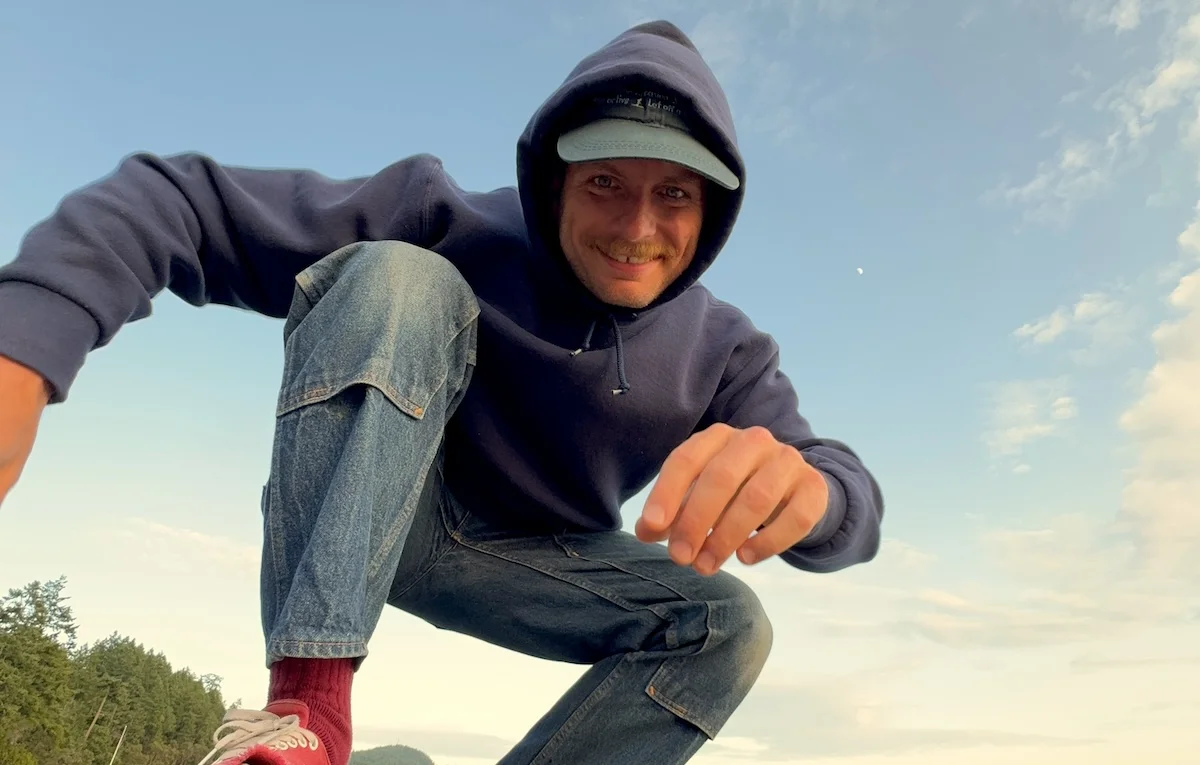
Mac DeMarco answers from Warsaw (“Yes, I'd say it's hot”) and it's exactly as you imagine. Relaxed, ironic, no longer interested in building a mythology around himself. Those who have followed him since the beginning know that something has changed. In recent years he has distanced himself from the rhythms of the music business, released increasingly free records and completely rethought his approach to concerts. On the eve of his return to Italy – Saturday 27 June in Bologna, Sunday 28 in Rome and Tuesday 30 in Milan – we talked about his latest work, Guitarnostalgia, social networks and what it means to have become one of the most influential indie artists of his generation without ever really intending to.
In recent years you have changed a lot, both artistically and personally. What should we expect from this new tour?
We're trying to play everything people want to hear. It seems right to me. But I would also like to surprise you a little. There are new songs, obviously, but we are also recovering pieces that we haven't played for a very long time. The idea is to keep the concert fresh and free both for those who come and for us on stage. So far it's working.
One of the things that struck many fans was the twist it represented Guitar. It doesn't seem like a total break with the past, but it certainly opens a new chapter. Where did that album come from?
There was no precise plan. I didn't say to myself: now I'll do something completely different. It just came out that way. I think it's the natural product of the life I'm living today. Not because my life has radically changed, but because some things around me have changed and this is inevitably reflected in the music.
So there wasn't a programmatic desire to reinvent yourself?
No. A lot of people who wrote about it talked about comebacks or breakthroughs, but for me it was just continuing to make music. I never felt like I stopped.
Listening Guitar you can hear a strong instrumental and cinematic component. There's something ambient, something cosmic American country. What were the listens that accompanied you in that period?
Lately I've been listening to a lot of instrumental and played music, so it fits. I still love Lou Reed and go back to the classics often, but I also spend a lot of time with things that don't necessarily have a traditional pop structure. I think this influenced the record a lot.
But you keep coming back to the song form. What do you find in writing that you don't find in instrumental music?
They are two different processes. To write songs I have to be in a particular state of mind. A specific emotional state. When I work on instrumental material I'm more interested in exploring sounds, experimenting, discovering something I don't know yet. With songs, however, I have to enter another dimension. It's hard to explain how exactly it works.
In recent years you've moved away from Los Angeles and spent a lot more time in Canada. Has this influenced the way you work?
In part yes. Although Guitar I recorded it in Los Angeles, I like being in places where there are fewer distractions more and more. I love seeing friends and going back to Los Angeles, mind you, but sometimes having space around helps you think better. I don't live in a cabin in the woods like people imagine, but being away from a big city can be helpful.
You've gone through 15 years of radical transformations in the music industry. You arrived before the explosion of TikTok, the creator economy and the obligation to always be online. How do you look at what is happening today?
I consider myself very lucky. Today many young artists have to face things that I have never had to do. I don't even know if the labels are asking for it or not, but it seems like a huge part of the job is producing content, making videos, constantly posting. I'm happy I don't have to experience that pressure. At the same time it's a strange time. Everything costs more and more, the world seems to be on fire and I imagine that for those starting out today it is very difficult to orient themselves. But I also believe that every time a situation becomes absurd – like today – a new generation of artists emerges who reacts by doing the opposite. Maybe it will also happen with artificial intelligence and everything we are experiencing now. That's what I hope.
Have you found young artists who make you think this reaction is already underway?
Yes. There is a guy who opens our concerts on this tour (even the Italian ones, ed), his name is Otto Benson. He's had success online, but he's got the right attitude. He knows the history of music, he has his own precise direction. It reminds me a lot of the slightly lost idea of growing up within a local scene and building something organically. It's proof that it can still be done.
One of the curious things about your career is that you now have several “classic” periods. There are fans who want it Salad Daysothers who want This Old Dogothers still Cowboys. How do you experience the relationship with nostalgia?
It is true. Everyone seems to have their favorite Mac DeMarco. And I understand it perfectly. People develop a very strong bond with the records they listen to at a certain point in their lives. A lot of the things I've done over the years have a very recognizable sonic signature. I could add more elements, and I've tried, but it doesn't always feel natural. I deeply appreciate the fact that people care about those records. Sometimes I listen to something again and even wonder how I got certain sounds. It's a strange feeling, but also very beautiful.
You said that today your priority is live. What does this mean concretely?
It means trying to play better (laughs). For years concerts were much more chaotic. We had fun, we drank a lot, unpredictable things happened. It was fun, but today I'm interested in another concert idea. I don't drink anymore, I have more energy and I can invest that energy in the band and in the music. The musicians I play with are incredible and I love working together with them to continually improve the show. I think the band is playing better than at any other time in my career.
And off stage?
I'm trying to be more present. I've traveled the world three or four times and for years I mostly saw airports, hotels and bars. Now, when I arrive in a city, I want to see the market, a monument, any street. I want to experience the places I go through. It's a simple thing, but it's giving me a lot.
Are you following the World Cup?
A bit'. I saw a Canada game and wondered what was going on (the conversation took place the day after Canada's 6-0 win over Qatar, ed). Then I don't understand football very much, even though many people in the crew are fans. The only sport I really follow is hockey.
Then I won't ask you anything about the Knicks winning.
It's impossible not to have anything to say about the Knicks' victory, come on. It was an incredible phenomenon and everyone, even those who don't follow like me, were rightly struck by it.
