
One day in October he left his home in Hendersonville, Tennessee, and drove east for about an hour. He parked his old Jeep on the side of the road, then staggered through brambles and brush to the cave entrance. He entered the darkness of the cave until he could no longer walk. Then he got down on all fours and crawled until he couldn't even crawl anymore. Like a wounded animal, he was looking for a place to die. That darkness that inhabited Johnny Cash could not be explained by the preachers of the old gospel radios he listened to as a boy. It was something that came from a deeper cave. He talked about it in his songs, like Folsom Prison Blueswhen he sang about shooting a man in Reno not over a woman or a duel on a dusty street, but just to watch him die. The dark brutality of Folsom Prison Blues he didn't waste time justifying himself or making melancholy excuses. It wasn't revenge or jealousy: it was death for death's sake. It was the murder ballad side of Cash.
Then there was another ballad in which a woman named Delia was killed. But there was a detail – there was always a detail in those murder ballads. At the end of the songs, Johnny always talked about the guilt the killer felt afterwards. Every time he thought about the man killed in Reno, he lowered his head and cried. When the Law had finally caught up with Delia's killer, he begged the jailer to help him, crying because he couldn't sleep: all around his bed he could hear the ticking of the woman's footsteps. The sense of guilt was always present, and it was precisely that bleeding wound of the soul that made the brutality of sin understandable to everyone.
Johnny Cash had lived on the road for years, and his journey seemed over. He was high, broken, and had no idea who he was anymore. There was nothing left of him but “skin and bones”, as he himself said. He thought that, in the black depths of Nickajack's cave, he could end his life and that no one would ever find his wasted body. Only God would know where he was, and he was ready to let God put him “where he puts people like me,” as he later wrote in his autobiography. That sense of guilt had completely overwhelmed him and he felt that there was no more redemption for him. He was no longer in control: death was the only way to stop the pain of what he had become. He wanted to be swallowed up by the quiet darkness of the earth, the cold, maternal embrace of death. He was lying there, ready to disappear.
«By now I was literally taking whole handfuls of amphetamines, alternating them with barbiturates that I needed to sleep and to reduce the unwanted effects of taking stimulants. I kept canceling dates and recording sessions, and I couldn't sing anymore because my throat was always dry from the pills. I had lost a lot of weight, I only weighed seventy kilos, which for a man over six feet tall is really little. My life was marked by constant visits to prison cells and hospital rooms due to road accidents. I was the perfect definition of the walking dead, and in fact that was exactly how I felt. By now I was scraping the bottom of the barrel. In early October 1967 I decided I had had enough. I hadn't slept or eaten for days and the JR of the past was now a distant memory. I no longer felt like a human being. I decided that I no longer wanted to see the dawn of the next day, I felt that I had wasted my life and that I had moved so far away from God that there was no longer any hope for me. I knew what I had to do. I would have gone to Nickajack's cave, along the Tennessee River, north of Chattanooga, and let the Lord take me and do with me what He wanted.”
(…)
Johnny raised his head. He started to move. He had no idea how to get out of the cave, but he crawled in whatever direction he could find, feeling the ground in front of him with his hands. Soon he felt a draft on his back, and he turned and followed that wind until he saw a light. In his autobiography he dwelt at length on the episode.
«However, I realized that, from a practical point of view, getting out of that situation presented problems. I was surrounded by complete darkness, and I didn't have the faintest idea where I was. Without the slightest clue, a light, a noise that could guide me towards the exit, how would I have managed to escape the death I had so desired? I wasn't able to give an answer, but unconsciously I started to move, slowly crawling towards an indefinite direction while feeling the ground with my hands to avoid falling into some chasm. I couldn't say how much time passed, but at a certain point I felt a gust of wind on my back and I understood that if I followed the direction the air was coming from, I would find the exit. I began to see a glimmer of light and eventually reached the cave entrance. When I came out, I found June and my mother waiting outside with a basket of food. I was confused. I thought June was in California. In reality I wasn't wrong, June was in California, but she had the feeling that something wasn't going right, and she came looking for me.”
“As we drove back to Nashville, I told my mother that God had stopped me from killing myself. I told her that from now on I would no longer act against Her will and that I would stop using drugs. I wasn't lying that time. In the following days I went from withdrawal attacks to full recovery of strength. I locked myself in the only room I had furnished in my new home, the mansion on Old Hickory Lane. June, her mother and father took care of me all the time, preventing me from contact with those friends with whom I shared bad habits. June had contacted Dr. Nat Winston, Commissioner of Public Health for the State of Tennessee, and Nat came to see me every day, providing me with the support I needed to deal with withdrawal. At first it was really hard. In my previous autobiography, Man in BlackI described a phenomenon that repeated itself every night at three in the morning for the first ten days I spent in bed. Every night was a nightmare. I had very strong stomach pains, I think they were due to the fact that that was the organ most affected by years of taking amphetamines. I spent the night rolling around in bed trying to find the best position to deal with the cramps, and eventually I somehow managed to fall asleep. Then suddenly I felt a strange sensation, as if someone was blowing a glowing glass bubble into my stomach. My eyes were closed, but I could feel it slowly growing inside me, until it reached the size of a basketball. At that point I felt myself being lifted off the bed and lifted into the air. I was in a state of half-sleep, and I couldn't open my eyes, but I felt myself floating in the air, higher and higher, until I reached the ceiling and passed through the roof. Then it was as if that glass bubble suddenly exploded and thousands of crazy glass splinters ran through every corner of my body, passing through every vein, every pore of my skin.”
«Eventually I felt myself slowly returning to bed and waking up. For a while I tossed and turned without being able to go back to sleep but, when I fell asleep again, that nightmare would start all over again. It was torment and every time I wanted to scream with all my might, but I couldn't. In addition to this, I again suffered from all the pain that had tormented me in the past, it seemed to me that I was constantly being pierced by thousands of thorns, or that something was moving under my skin. Finally, after a long time and many relapses, I was able to feel better and rediscover a connection with God.”
Cash had never been able to forgive himself for what he had become, but in the darkness of that deep hole without stars and without exit he understood that God had not abandoned him. Traditional symbolism tells us that those black and damp spaces under the earth are the place of a metaphorical return to the maternal womb, in which regression to that “non-being” occurs – therefore spiritual death – necessary for becoming “being”, the non-existence that precedes birth, coming into the world. Descending into the depths – as Dante's Inferno teaches – represents a change of state for man, and re-emergence symbolizes rebirth, the conquest of light, for one's worldly eyes but also for one's soul.
The story of Johnny Cash in the Nickajack Cave fits perfectly into this ancestral symbolism even before it is Christian. He entered the cave like the worst of junkies, broken, road-worn and with a deep darkness in his heart. He entered like a guilty man, at the end of his steps, but emerged saved, ready to resume his journey.
After weeks of detox and prayer, he was even able to return to playing in front of his audiences. No one thought he would succeed in such a short time. Some even thought that it was also because of the music that he was reduced to that state. «On November 11, 1967, I was able to face an audience again, at a concert organized at the high school in my hometown of Hendersonville. Before the start I was terrified, but I was shocked when I realized that tackling the stage without the help of drugs was not as difficult as I had always thought. That evening I was completely relaxed. I even started joking with the audience between songs. I was surprised at myself. But what happened in the following years was even more surprising. Sobriety has been good for me. God did more than talk to me. It revealed itself in all the people around me, in my friends and family. The greatest joy of my life was understanding that I was finally no longer far from Him. He is my advisor, the rock on which I can always rely.”
«I never seriously considered the idea of taking my own life. It's true, as I told you, that I went into Nickajack's cave with that intention, but it wasn't a real suicide attempt, and God didn't let me get away with it so easily. However, there were several occasions when I came close to death. This has happened many times, especially when I was abusing psychiatric drugs, more than I can remember. As I crawled out of the carcasses of the countless machines I had destroyed, I knew full well that I had narrowly escaped, but in many other situations I reached the point where a few extra milligrams of substances would have been enough to decide my fate.”
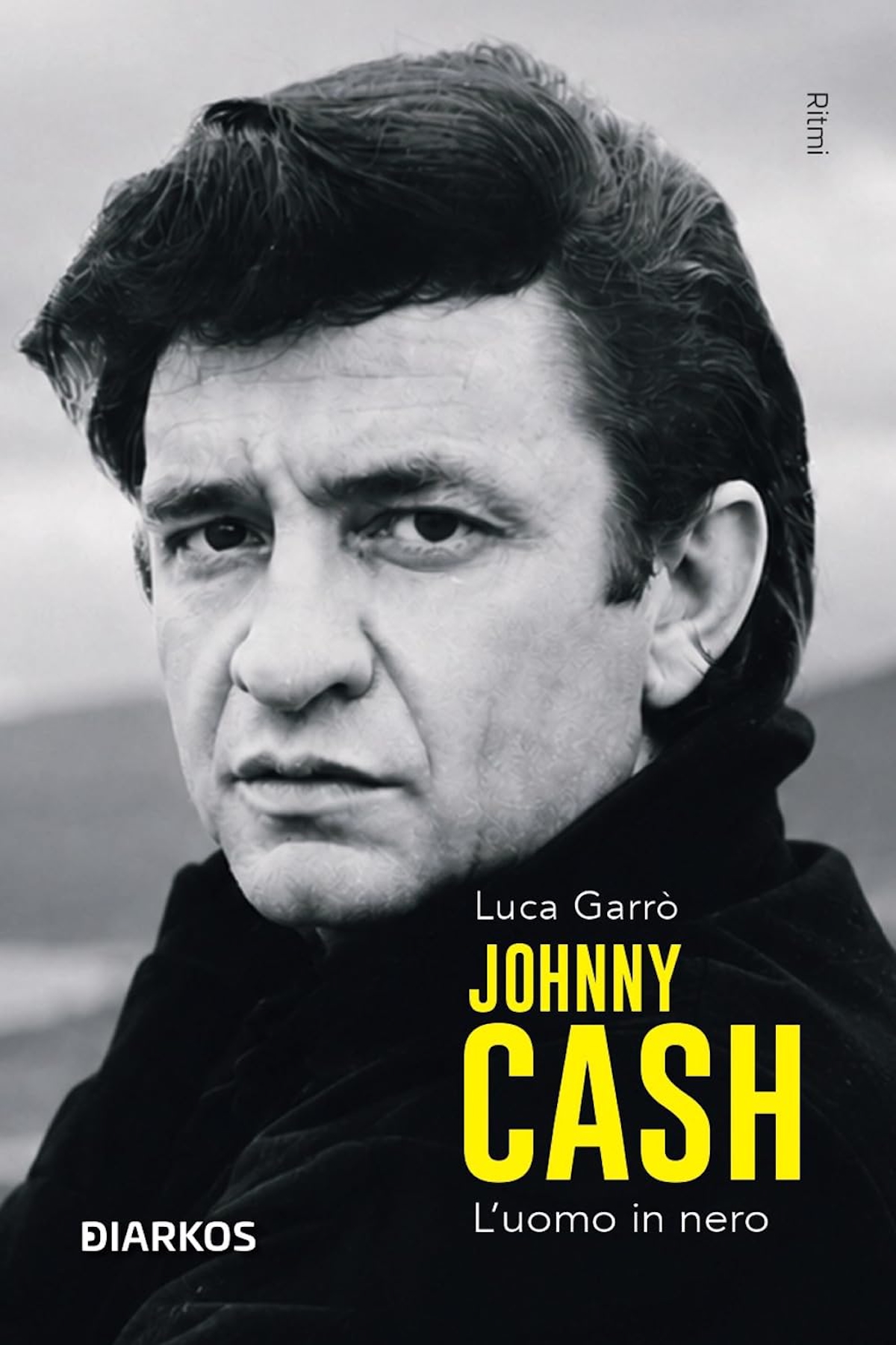
Taken from Johnny Cash. The man in black by Luca Garrò (Diarkos).