
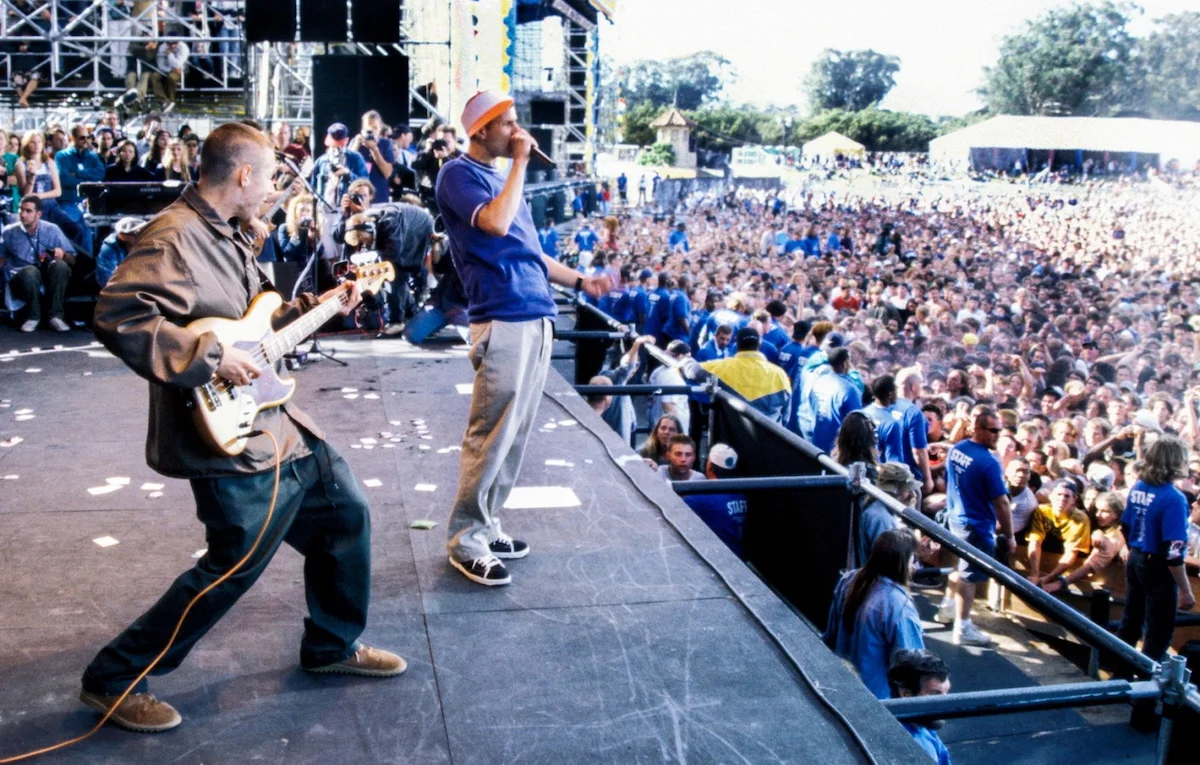
It is the concert that in 1996 transformed a battle for human rights that was barely covered by the mass media into a cultural event of global significance. Born from an idea by Adam Yauch of the Beastie Boys, the Tibetan Freedom Concert in San Francisco brought together great names from rock and hip hop in a line-up that would be the envy of any festival: Rage Against the Machine, Smashing Pumpkins, Red Hot Chili Peppers, Björk, A Tribe Called Quest, Foo Fighters, Sonic Youth, Beck, Pavement, De La Soul, Fugees, John Lee Hooker, Yoko Ono, Cibo Matto, Biz Markie and of course the Beastie Boys.
Thirty years later, the podcast in six episodes Freedom Needs a Soundtrack traces the origins, impact and legacy of the concert by combining archival recordings and new interviews with artists, organizers, activists and members of the Tibetan community who helped shape the movement. At the center is the story of Erin Potts, a fan who became an activist and then co-founder of the concerts for Tibet which, after the first editions, were also held in New York and Washington DC, before expanding internationally in 1999.
She is the one who says that Adam Yauch, who died in 2012 due to cancer, «did not limit himself to performing: he threw himself body and soul into every aspect of the work, from conferences to workshops to organization. With a small group of friends we transformed that shared passion and commitment into the Tibetan Freedom Concerts, adding a good dose of irony.”
The podcast follows Potts' journey, which began with his teenage obsession with U2 and developed through his first contacts with Live Aid and the Human Rights Now! tour. by Amnesty International. «When I was 12, my best friend loved U2 and so I started to love them too. I had never seen them live because I was too young for my parents to go to one of their concerts.” And so she saw them «on a worn videotape passed from hand to hand» of the 1983 Red Rocks concert. That performance changed her life. «Bono waved the white flag and the audience shouted “No more!” against oppression and violence. Music made people feel less alone, alive, willing to be interested in something that didn't concern them personally.”
Potts began to fantasize about a concert that would channel that energy toward the Tibet cause. «I told my mother that one day I would organize a concert for Tibet and that U2 would play there. It was one of those absurd things that teenagers say and instead after about ten years something like this happened.” Bono himself said during the 1997 Tibetan Freedom Concert in New York that «there are those who think that just going to a concert is enough to solve the world's problems, that political prisoners will be freed and the hungry will be fed. That's not how it works, but it's a good starting point.”
Potts and Yauch founded the Milarepa Fund in 1994 after meeting in Nepal and discovering they shared a passion for the Tibetan cause. First, proceeds from some Beastie Boys recordings that incorporated Tibetan monk chants were donated to charity. The idea of using music and youth culture to draw attention to Tibet's nonviolent struggle eventually culminated in the first Tibetan Freedom Concert which was held in June 1996 in San Francisco's Golden Gate Park. The concerts attracted over 325 thousand spectators and reached millions of people thanks to television and radio coverage and the first live online broadcasts.
Freedom Needs a Soundtrackwhose net proceeds will be donated to Students for a Free Tibet and the Tibet Action Institute, does not tell this story with nostalgia, but underlines the ultimate meaning of the phenomenon: a series of concerts that drag a generation of listeners into a political battle that they would not have otherwise known. For Deyden Tethong, who worked with the Milarepa Fund and later became one of the most authoritative voices of the Tibet movement, bringing out this story today has a particular meaning: «Thirty years after the first concerts, I hope that the series offers the opportunity to reconnect with that history, reflect and find new energy for the work that continues today. And make this story known to those who were not born at the time.”
According to Tethong, the impact of the concerts has not worn off. «They didn't liberate Tibet, but they changed lives. They informed people, built solidarity, inspired action for Tibet and other causes. Even today, thirty years later, I meet people who tell me they went to a Tibetan Freedom Concert and left inspired.”
For Potts, what matters is what happens when the music stops. «Don't let the story end up just in your headphones. Let me move you. May it push you towards the cause of Tibet, towards your community, towards whatever is asking you to care more, to participate more. The point is not that everyone should do the same thing. The point is that everyone can do something.”
From Rolling Stone US.