
What can you sing about at 80-odd years of age? What is left to say that is meaningful, true, heartfelt after having written everything, after having played everything? You can look pain and the end in the face, as Leonard Cohen did in a couple of serenely funereal records released shortly before and after his death. You can cancel the distance between past and present and summon an immense cast of characters into songs as Bob Dylan did in Rough and Rowdy Ways. Or you can make it easy and sing about the past, your personal treasure of faces, stories, places.
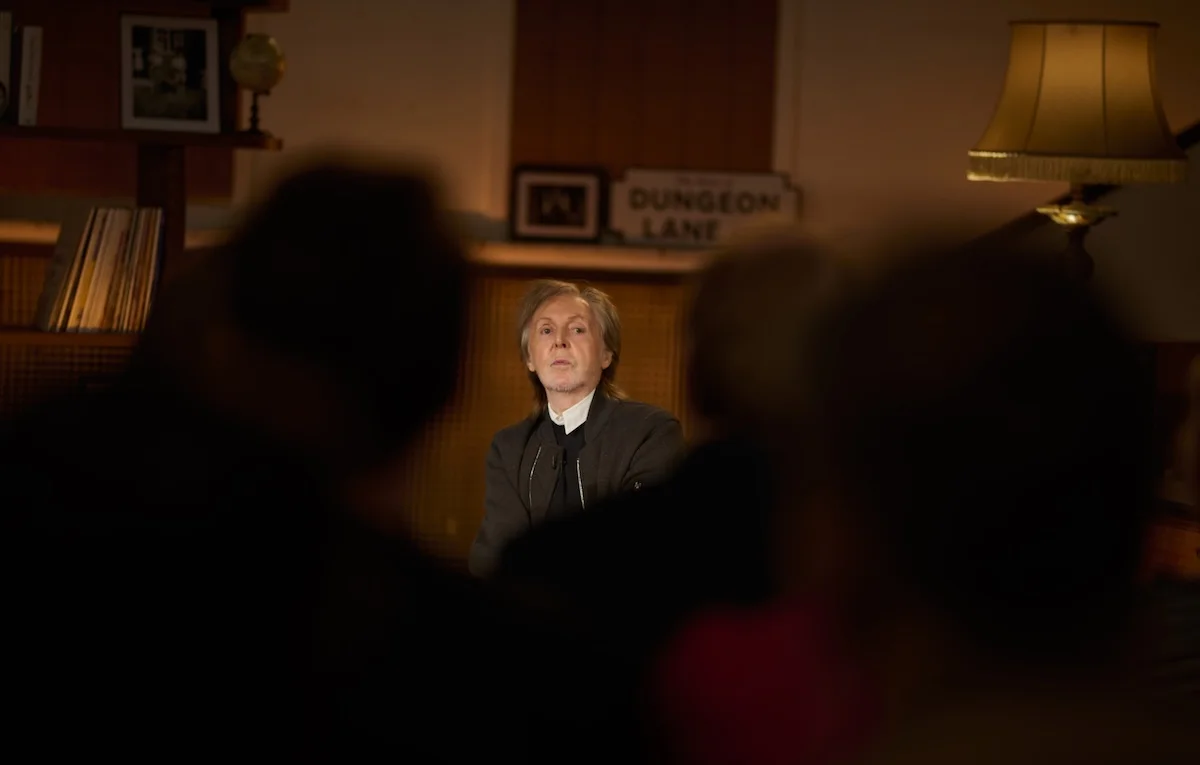
That's what Paul McCartney does in The Boys of Dungeon Lanewhich could be his best album in twenty years now (I use the conditional because I was only allowed one listen). It is not just an exercise in memory, it is not a simple collection of memories and not even a nostalgic look at a world that no longer exists. Of course, you can sense a thread of melancholy here and there and it's natural when talking about the memories of an 83-year-old man, who will be 84 in June. The remote past is present, but McCartney doesn't sing it to regret it. He sings it to do what he has always done, which would then be his artistic mandate, I would even say its historical function: to embody with his vitalism the enthusiasm of being there. The stories he tells on the album are the result of a certain joy in living. And even when he sings about existences that seem written in minor, McCartney resolves them in major.
This time McCartney's musical sidekick is Andrew Watt, who in recent years has carved out the pre-eminent role of producer of musicians and bands with decades of history behind him. He doesn't have a style, he has a method: he recovers the sound of the past making sure that it sounds good in the streaming era and therefore gives back to the greats of rock their classicism making them seem less old than they are. He is the perfect producer for those who surrender to being themselves without looking for anything else, without trying (often clumsily) to sound contemporary. Compared to other recent McCartney records which like this one were played almost entirely by the Beatle, Watt has brought out a more rock tone which is no harm when you're dealing with an author who has been writing songs all his life.
When Macca showed Watt the four-track Studer that the Beatles recorded on A Day in the Lifein addition to probably gawking like we all would have done, Watt wanted to use it for WeTwoa typical little love song from Macca in which the voice has a very vivid presence. As You Lie Therefrom which the project started and which opens the album, alternates acoustic parts and electric surges and like a couple of other pieces it refers to the Wings period, which we started talking about again after the documentary Man on the Run and the book A band on the run. It's one of the songs that draws from memories: the future Beatle passes under the window of a girl he likes, a certain Jasmine, glimpses her silhouette, doesn't have the courage to come forward, fantasizes about her. Also Mountain Topwith its sudden accelerations and echoes of psychedelia, harpsichord sounds and tape loopsit's a fantasy, only freakier: it's about a girl who does mushrooms at the Glastonbury Festival.
The past is present, I was saying. The single Days We Left Behind with its tone somewhere between enchanted and moved and the passage “and nothing remains as it was, no one has to cry, nothing can give us back the days we left behind” sums up the spirit of the album: so to speak, nostalgic, but with judgement. The song paired with Ringo Starr Home to Us recounts the poor-but-beautiful period of the future Beatles (of the four it was John Lennon who lived in a more neighborhood poshsays Macca). Lost Horizon it is literally recovered from the past. McCartney had forgotten that he had recorded it, then one day many years ago his studio manager Eddie Klein (who died in 2020) recovered it and now with Watt it has been played in a version faithful to that of the cassette. Also Down South goes straight to the history of the Beatles before the Beatles, being the memory, guitar in hand, of the hitchhiking trips that Paul McCartney took with George Harrison when the two learned to know each other, “before we learned to twist and shout”.
There is no elderly person who does not remember their parents. McCartney's are at the center of the folkish Salesman Saintimagine a martial trend at the Masters of Wars by Dylan, but with a pop touch. It is a glimpse of an era in which young Westerners did not define themselves as the unluckiest generation of all time. Europe was burning in the fire and the two were content with what they had, “hot tea and cigarettes”, “laughter and a song” like the one recalled by the orchestra conducted by Ben Foster. The piece is connected to the next and final one Momma Gets Byinvented story and vaguely inspired by Porgy and Bess. It is the description of a family like many others in which the woman works, while the man is a wastrel, “momma gets by, papa gets high”. Instead of turning it into a tirade about a toxic relationship as an author a third of his age would have done, McCartney comes up with the most romantic piece on the album, because the woman loves the wretch just as he is: “What do his stupid defects mean compared to what she feels?”
There is nothing profound in these songs with more guitar-like than piano-like tones, at times decidedly pop-rock (Ripples on a Ponddedicated to Nancy Shevell, the usual “I love you more than ever”, oh well), sometimes more pushed towards rock (Like Inside), in one case inspired by the Californian folk season of Laurel Canyon (Never Knowwith a very English break though). Nor are there songs that you remember after listening. The legendary pieces are on other records, as is normal. Today McCartney tells simple stories like that of Life Can Be Hardborn during Covid when he and his wife were hosting a great-granddaughter, or First Star of the Nightabout a star that emerges after a downpour in Costa Rica, little stuff.
However, if many of them work, if you want to listen to them again, if this is truly McCartney's best album since Tony Blair it is for the musical talent, for the arrangements, for the conviction that hasn't been felt in a McCartney album for a long time. He may no longer be the author he once was (thank you very much), but he still enjoys making music and this can be felt and is always positive.
Dungeon Lane is a physical place, it has its precise geographical coordinates, but it symbolizes many other places in and around Liverpool and even various eras. And it is also, McCartney says, an imaginary place where you can go to feel good with music for three quarters of an hour. It's a bit of memory, a bit of fantasy and a bit of escape. Moreover, McCartney has been revolving around the theme of memory for years, it is inevitable for him, so much so that the expression “the boys of Dungeon Lane” was contained in an unpublished piece entitled In Liverpool dating back at least to 1988 in which he was already talking about his childhood, of the memory in which the places merge with the faces of the boys from Dungeon Lane with whom he loitered and got into trouble.
To me The Boys of Dungeon Lane it also seems like a record about accepting the impermanence of things, about the need not to transform memory into the funeral of the present and, why not, about the resistant character of a generation that grew up after the Second World War. Old man stuff, it goes without saying. Few twenty- or thirty-year-olds will be passionate about such an unsexy album made up of anti-contemporary songs written following classic melodic and harmonic canons, performed by today's grandfather who remembers yesterday's boy. Yet with his optimism of reason combined with a touch of dry emotion he also speaks to them and to all of us who live in 2026 and think we are more unlucky than those who lived in Europe in 1946.

Daniel D`Amico for SANREMO.FM