

vote
7.0
- Bands:
WORMS - Duration: 01:02:51
- Available from: 02/13/2026
- Label:
-
Century Media Records
Streaming not yet available
In a black metal landscape that continues to oscillate between revival and experimentation, Worm seem to prefer constant metamorphosis. After debuts suspended between a particularly archaic way of conceiving black metal and notable death-doom intuitions, the latter concentrated above all in the excellent “Foreverglade”, Worm have taken a path more tending towards a rediscovery of the great symphonic black metal season of the second half of the nineties, thus opening yet another new chapter in an artistic path that never seems to want to settle into a defined register.
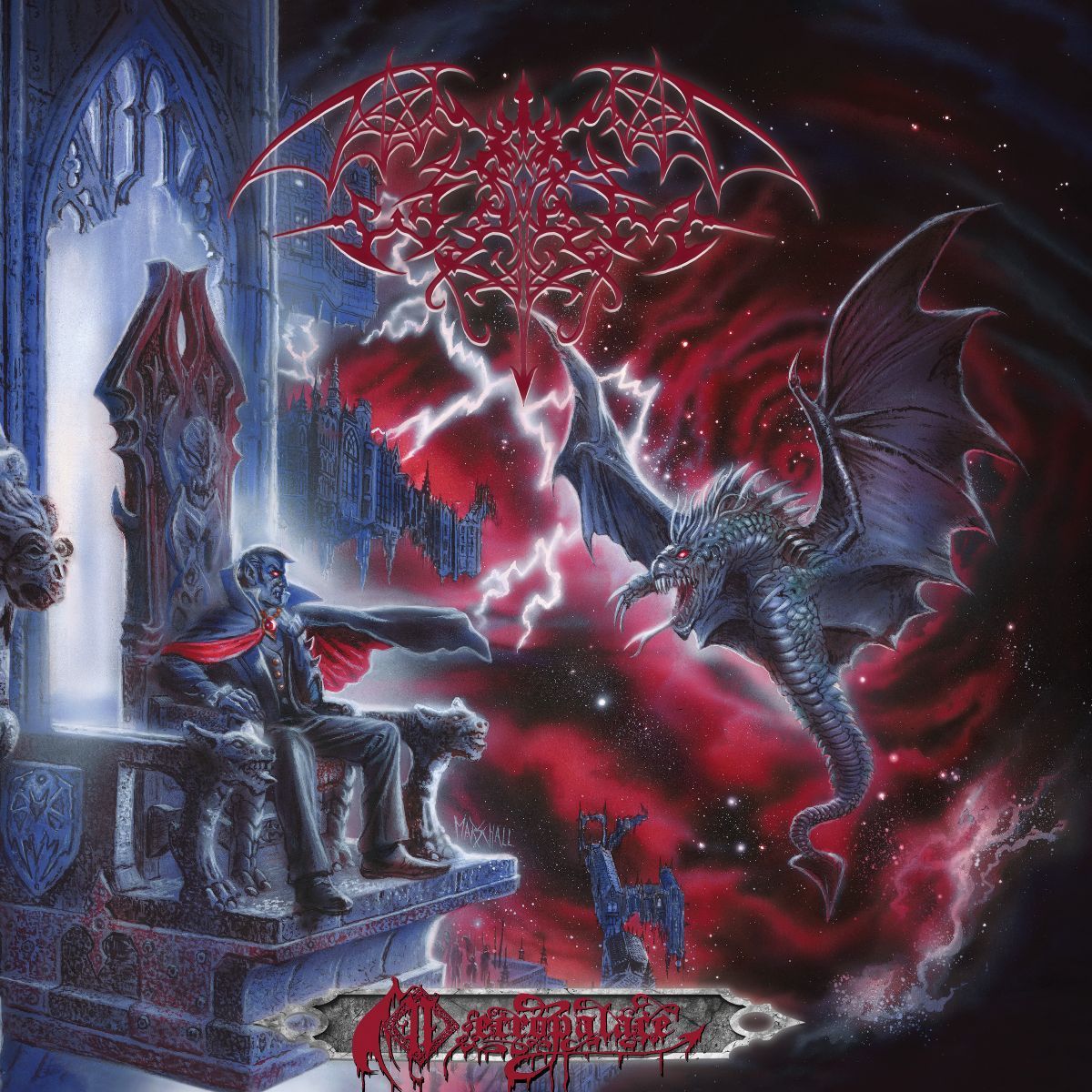
Predicted by the mini “Bluenothing” and the split with Dream Unending, entitled “Starpath”, “Necropalace” is in all respects a thrust into that style that first dominated the underground and then certainly the European mainstream following the release of works such as “Enthrone Darkness Triumphant”. Dimmu Borgir are precisely the most cited group in this new work by the duo, which fishes out and reworks all the elements and clichés of the genre, creating a very full-bodied album in terms of duration, in which everything is played on the interaction between guitars and keyboards, on jagged rhythms, but never too tense and exasperated.
The length of the album, full-bodied and almost ambitious, immediately makes it clear that the duo is not aiming for short frescoes: each track is built like a small theater of melodies and counterpoints, with the keyboards weaving baroque carpets that surround and dialogue with Philippe Allaire-Tougas' guitars. The interaction between the two instruments is the beating heart of the work, with this interplay particularly evident in the midtempos, which allow the plots to breathe and bring out details that would otherwise risk getting lost in the sound density.
The atmosphere, as expected given the starting points, is generally bombastic, with synth phrasings invading practically every track, although it should be underlined how the aforementioned Tougas – even assisted by Marty Friedman on the final, very long, “Witchmoon: The Infernal Masquerade” – does everything to get noticed with endless solos and various subtleties. When the guitar work goes into arpeggio mode – see in the title track – it is primarily the classic Dissection that comes to mind, but these are brief moments in a work which, as mentioned, focuses above all on the teachings of Dimmu Borgir, Covenant, early Graveworm and similar groups.
In the tracklist, the slightly more compact pieces especially stand out – “Blackheart” is a spot-on single, inspired in its melodies and well-faceted, but “Halls of Weeping” also stands out, thanks also to some heavier and more rhythmic cues that recall “Foreverglade” – while here and there you can feel a little tired when the song reaches or exceeds ten minutes. Certain long-lasting suites can in fact put a strain on the ability to maintain narrative tension, and the long sequence of solos can be redundant for those who are not completely immersed in certain displays of technique.
On a stylistic level, “Necropalace” does not pretend to reinvent anything: the instrumental choices mostly evoke without too many variations the glories of the symphonic black metal of the Nineties, with a visual and conceptual imagery that tends to play openly with the iconography of the period; an operation which, on the one hand shows care and dedication, on the other risks appearing slightly sham. Moreover, some metal genres naturally lend themselves to being revisited and updated: death, doom or certain more essential black metal strands offer a relatively flexible terrain, where riffs, rhythms and atmospheres can generally be reinterpreted and brought back to the present day without major forcing. The symphonic black metal of the second half of the nineties, however, represents a more complex case: the baroque orchestrations, the carpets of keyboards, the epic midtempos and the theatrical or gothic imagery are so linked to a very specific historical and cultural period that they cannot be easily reworked today. It's not just nostalgia: it's the very structure of the style that makes it rigid, codified, and this inevitably generates a stronger déjà-vu effect.
In practice, the style, so rooted in a specific era, works well as a tribute or exercise in style, but is less suitable to be reinterpreted in a current key with truly memorable results. The risk is that even the most successful passages are perceived more as quotations than as spontaneous flashes. The modern listener can thus perceive a sort of double temporality: on the one hand the technical wonder, on the other the awareness of finding himself in front of a sound world now 'frozen' in the historical memory of metal. Faced with this result, we return to having nostalgia for the more nuanced and less codified style of “Foreverglade”, even if, at the same time, we recognize that there is a certain hand behind the majority of these compositions. Those who love slightly more recent bands like Carach Angren and were also waiting for this revival attempt probably won't be disappointed.
Daniel D`Amico for SANREMO.FM