

When Swift said she would re-record her old albums, offering fans a way to buy her music back on her terms after her contract with Big Machine expired, things naturally got even more complicated. In an interview that aired on Good Morning Americacorrespondent Tracy Smith asked her if she was planning on making new versions of all her old masters. “Oh, yeah,” Swift said. “Is that a plan?” Smith asked. “Absolutely,” Swift said. “I’ll have a lot of work to do.”
Taylor claimed that Borchetta and Braun told her at the AMAs that she couldn’t perform the songs on their master tapes unless she renounced the idea of re-recording the albums. Swift was desperate to use her material for her gala performance, where she would be named Artist of the Decade, no less. She also claimed that the two businessmen told her she couldn’t use her old material in the upcoming Netflix documentary. “The message I’m getting is crystal clear,” she wrote on social media. “Basically, be a good girl and shut the fuck up or you’ll get punished.” She lamented that she wasn’t talking about just any music, but music she’d “written on my bedroom floor, videos I conceived and financed with money I earned playing bars, then clubs, then arenas, then stadiums.”
There were precedents for this kind of dispute. In 2012, in an epic fight with Universal over a percentage of digital royalties, Def Leppard banned the label from using their music for anything beyond the physical product and began recording fakes of their own hits – from which they would have earned seventy percent of the royalties – solely for download and streaming services. Previously, the English band Squeeze had released new recordings of their old songs on an album titled Spot the DifferenceNotice the difference. Again, they were having a dispute with Universal. Usually, this kind of dispute is settled behind closed doors, with boring lawyers boringly going through boring contracts and bylaws until a solution is found. This one played out in front of the world.
Whenever Swift spoke about the matter on social media, her words reached eighty-five million followers in real time, many of whom immediately reshared her words, helping them reach millions more. The hashtag #IStandWithTaylor became one of the most followed on social media, and Swift proved that the world of economic power did not intimidate her.
Within a short time, Braun and Borchetta were inundated with death threats. They backtracked on the AMAs, though their statement did not provide a specific answer on the Netflix issue.
The discord continued until the Friday before the awards, when Braun published an open letter to Swift, listing the death threats he said his family had received from Swifties. According to the American edition of the SunTaylor was asked to tell her fans to stop sending threats to Scooter and his family. At the AMAs, Taylor arrived in a remarkable costume that she wore while performing a medley of her biggest hits to celebrate being crowned Artist of the Decade. Her simple white ensemble featured the titles of her previous albums – Taylor Swift, Fearless, Speak Now, Red, 1989 And Reputation – in what was inevitably interpreted as a less than subtle jab at Big Machine, especially since it didn't include the title of his most recent album, Loverwhich the label did not own. Some said the style of the suit was similar to that of a prison uniform, comparing his stance to when Prince appeared at the 1995 Brit Awards with the word slave written across his face in protest against his label, Warner, which owned his name and all the music he had recorded using it.
When Taylor accepted the Artist of the Decade award, she gave a message-filled speech. “The fact is, the last year of my life has been the most extraordinary moments and the hardest things I’ve ever been through, a lot of things that never became public knowledge,” she said. “I wanted to thank you for being the one thing that’s been constant in my life. This environment is really weird.”
In April 2020, Taylor disavowed a live album released under his name, describing the move as “shameless greed” and in bad taste. The album Live from Clear Channel Stripped 2008 It was recorded when Swift was eighteen, around the time of Fearless. It was released by Big Machine. Writing on Instagram, he made his stance clear. “This record does not have my approval. I have a feeling that Scooter Braun and his backers, 23 Capital, Alex Soros and the Soros family and the Carlyle Group, have looked at their latest balance sheets and realized that paying $330 million was not exactly a wise choice and that they need the money.” He added: “In my opinion… yet another case of blatant greed during the coronavirus. Very tasteless, but very transparent.”
In the fall of 2020, Braun sold the masters of Swift’s first six albums to Shamrock Holdings, the Disney family’s investment company. The deal, reportedly worth $405 million, was seen as a huge win for Braun, who made a nice profit on his initial investment. Swift was not happy, saying that the masters of the recordings “were not for sale to her.”
“This was the second time my music had been sold without my knowledge,” he claimed. “The letter told me that they were going to contact me before the sale to let me know, but that Scooter Braun had asked them not to contact me or my team or it would not happen.” According to his statement, Braun will continue to profit from his catalog “for many years.”
Looking back on the controversy, Braun acknowledged that he had regrets. “I learned a big lesson from that,” he said. He admitted that he had made assumptions about how things would have turned out. “So my regret is that I assumed that everyone, once the contract was signed, would talk to me, would see my intentions, would see my character and say, ‘Great, let’s do business together.’ I made that assumption to people I didn’t know and found out … I could never make that assumption again.” He acknowledged that he understood that Swift “probably thought that was not the right thing to do” and added that he “wished all parties well.”
As for Swift, she said to Variety who had a clear conscience. “Well, I sleep well at night knowing that I'm right and knowing that, ten years from now, it will have been a good thing to have talked about artists' right to ownership of their art, as well as to have sparked discussions like: Should record contracts have shorter expiration dates? Or: How are we really going to help artists if we don't give them the right to refuse to buy their work if they want to?”
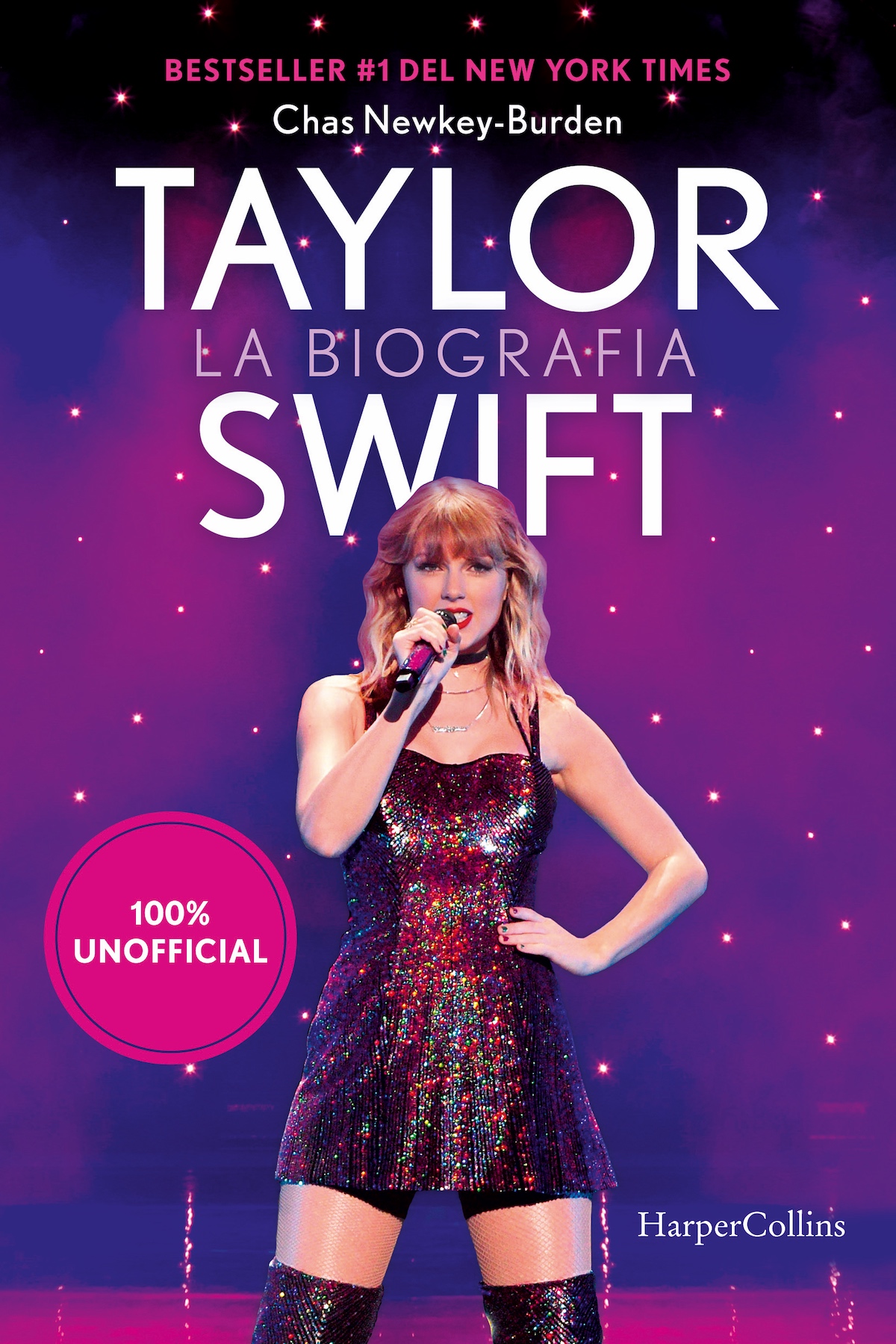
Adapted from Taylor Swift – The 100% Unofficial Biography. © 2014, 2024 Chas Newkey-Burden © 2024 HarperCollins Italia SpA, Milano. First edition HarperCollins July 2024