
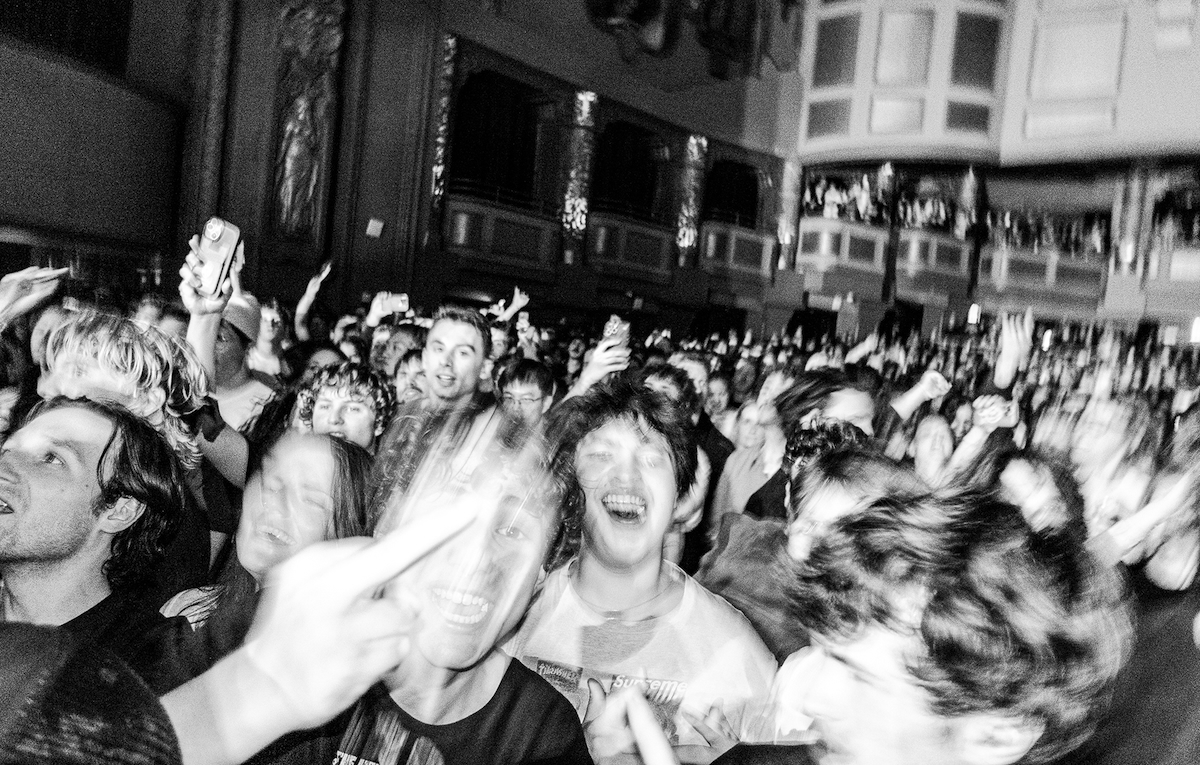
Dry Cleaning had made big plans for 2026. After working for two years on Secret Love were preparing to launch a 21-date tour of North America, a historically strong market for them, with a date scheduled for January 23 in Chicago. The pre-sale was going well, morale was high. The visas for the United States, however, were slow in arriving despite having requested them months in advance. They found themselves faced with thousands of dollars in costs to expedite the process, on top of the already steep expenses needed to organize a tour of that size. “I did some math, cash flow management worried me,” explains group manager Tim Hampson. “There were too many variables at play to be safe.”
And so towards mid-November 2025 Dry Cleaning decided to cancel the tour announced a month before and postpone most of the concerts. In the statement released at the beginning of December they cited “the increasingly hostile economic forces that govern touring nowadays”, giving voice to an increasingly widespread concern in the music industry: today it is more difficult than ever to make ends meet by playing live.
“She's tough,” says Florence Shaw, the lead singer of Dry Cleaning. «Until a few years ago this was much more feasible. Everything has gotten worse. It's no longer even a question of earning something, but of being able to break even.” It's an increasingly common thing, adds bassist Lewis Maynard. “I see a lot of bands canceling tours that are selling well and it's crazy.”
It's especially frustrating for bands like Dry Cleaning, who have spent years working hard to develop their sound and build a live audience. “The demand is there and the supply is there,” says drummer Nick Buxton. “There's a lot of money going around, it's just that the prices of flights, tour buses, hotels, even food are getting crazy.”
«I hope things change», says Maynard, «otherwise a large part of the live activity will disappear. It's a scary prospect.”
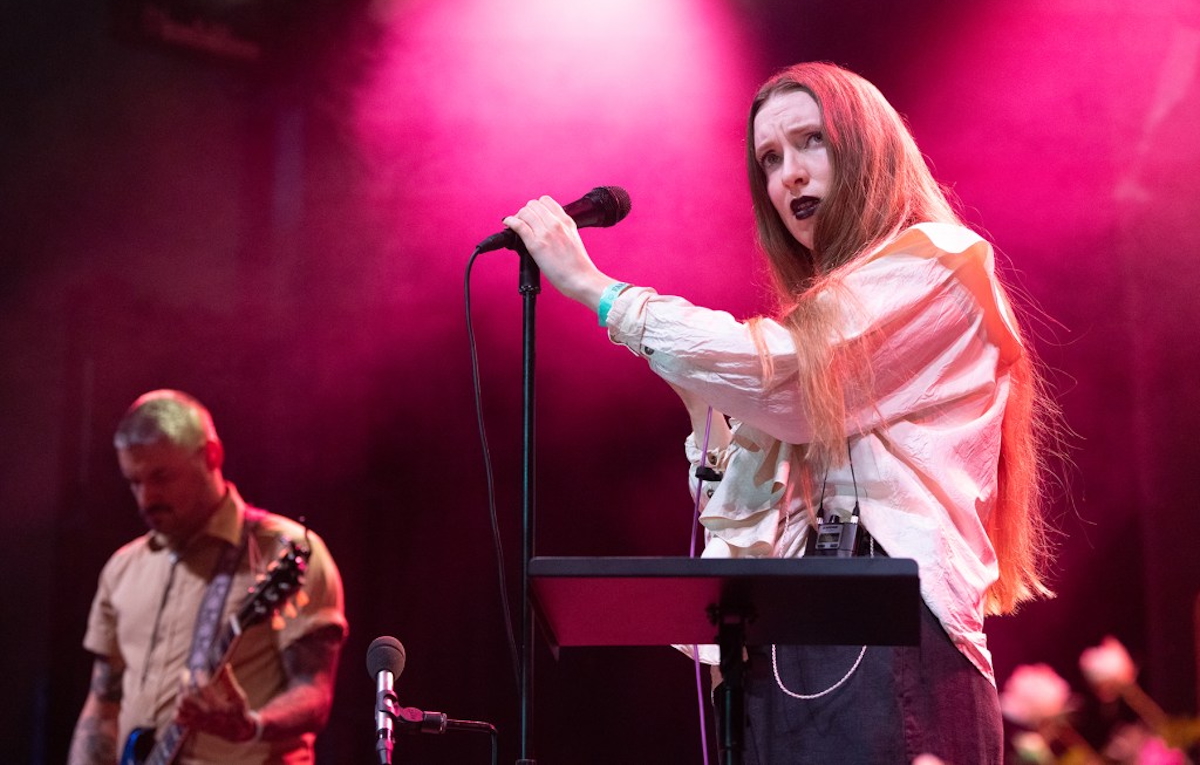
Dry Cleaning. Photo: Amy E. Price/Getty Images
Making a living playing music it's never been easy as anyone who's spent more than a couple of weeks in the music industry can attest. «To make it you need timing, talent, luck», says Karl Morse, partner agent of ROAM which organizes tours for bands like Goose, Khruangbin, Lumineers. It has never been easy, but in recent years it has become even more difficult, especially for emerging and mid-market artists. Even established bands are giving up on touring the United States. This is the case of Garbage, who due to the way the music industry works today made their last headliner in America.
“We're not complaining, we've had a good career,” singer Shirley Manson said in September during a concert in Washington, DC. “I worry about younger musicians who go on tour, people who have jobs, take two weeks off and travel around the country. Sometimes they sleep in the van, sometimes in crappy motels, and it's dangerous, it's unacceptable and it has to stop.”
According to many professionals contacted for this article, the problems began in 2020, when Covid prevented live music from being held for months, leaving many people without work and forcing many venues to close permanently. It's true that when the vaccines arrived, concerts resumed and there was a surge in demand at all levels, but it didn't last. “There were benefits for six to 12 months,” Morse says. «Tickets were selling well and at high prices. Then things became more difficult.”
The live music sector in the United States is still dealing with the staff shortage that arose when, during the Covid period, specialized technicians, promoters and agents began to do other things. The biggest challenge, however, has to do with the affordability crisis. “Inflation and wage stagnation make things difficult,” Morse says. «The availability of tour buses, their cost, fuel, accommodation, taxes, general production costs have squeezed margins. Basically, going on tour costs more than it used to.”
“The price of gas is crazy,” adds Andrew Morgan, an agent who works with MJ Lenderman, Wednesday and Angel Olsen. “It's come down a little, but it's still very high. Inflation makes groceries more expensive, so trying to eat decently on the road and not always end up at fast food is difficult. All prices are going up.”
The same reasons cause fans to have less money for the concerts they would like to see. “If you're Taylor Swift or Beyoncé, you have your nice profit margins,” Morse says. «But from the point of view of a fan, who perhaps lives in a family of four, going to even one of those concerts represents a huge expense. With the same money a person can go to ten smaller concerts over the course of the year… How do you encourage people to see live music when the bank balance is what it is?”.
Morgan gives the example of the Gallagher reunion, which he went to see twice. «The amount of money needed to go and see them sucked up the public's money in every city the tour touched. How many concerts in a live club does one have to give up after spending all that money on Oasis?”. The live music market in 2026 features a clear class divide between A-list stadium-playing artists and everyone else. “The gap is widening.”
Even artists who manage to move from small, informal spaces to tiny clubs and then to larger clubs and theaters and beyond find that they always face new obstacles. Dry Cleaning, for example, will play in large venues for them, including venues of 1500 or more people, and this means higher costs for the crew or lights.
“There's this vicious cycle where as you grow, expectations go up, the cost of the crew goes up a lot, the margins start to get thinner,” says Nik Soelter, who manages bands like Water From Your Eyes and This Is Lorelei. «When you were at a lower level and played in 200-seat halls it seemed like things started to go well. Then suddenly you find yourself in theaters with 500 seats and you realize that you are earning not more, but less than before.”
Very few artists can count on significant revenue from streaming. Finding a way to profit or at least break even on tour has become crucial. “It's one of the last areas where you can potentially make money,” says the Dry Cleaning bassist. “If you make a loss on that front too, you're screwed.”
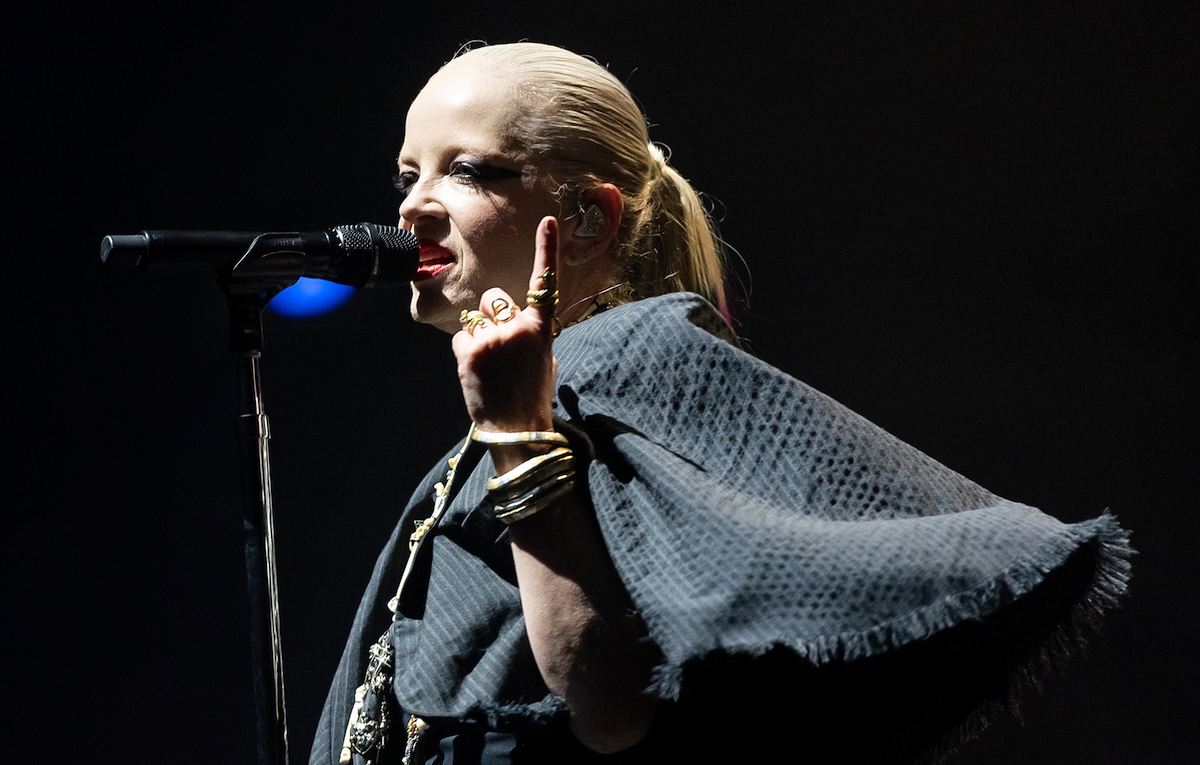
Shirley Manson in concert with Garbage. Photo: Naomi Rahim/Getty Images
In the end, Dry Cleaning managed to save the American tour by postponing most of the dates until spring, organizing new concerts to replace the few canceled dates, and reorganizing travel. Hampson hopes to get a grant in the UK. «But it's madness to have to rely on funding for a band that is on their third album, is critically acclaimed, has appeared a couple of times at Fallon. You ask yourself: how do you make this job work? It's an absurd situation.”
Some non-US artists have decided that it is not worth going through the long and expensive visa application process and therefore have chosen not to tour the States at all. “There are international artists who say it's too expensive to apply without knowing if you'll be stuck in limbo,” explains Morse. “I know foreign artists who are taking this very cautious approach.”
Whoever organizes a tour, whatever country they come from, knows that they cannot take the presence of the public for granted. “It's not easy to ask someone to spend money and dedicate an evening of their life to music,” says Josh Stern, a Ground Control Touring agent who works with Show Me the Body, Mike, Vegyn. “You have to find a way to make the shows unmissable.”
Some try to do this by putting together billboards full of names or by scaling back tours and returning to smaller venues. Others focus on alternative sources of income such as merchandise that is only sold at banquets, although the fact that venues keep a percentage of merch sales is a source of frustration, especially because the venues themselves do not want to share the bar takings with the bands. “People are in the venue to see the concert, not because there is a bar,” says Soelter. «I understand that even the managers of the venues have narrow margins and that keeping the proceeds from the bar helps them to keep open, but if you take a percentage on the merch, you have to give me a percentage on the bar».
One artist who is looking for an alternative path is Colleen Green. It emerged in the mid-1910s thanks to pop-punk numbers played with guitar and drum machines in long-gone venues like Brooklyn's Shea Stadium. As the years passed, his tours became bigger, but not necessarily more profitable. «For the first time in my life a couple of years ago I did a European tour with a full band and I lost 5000 dollars», he says. It's not a rare story. “Breaking even in Europe is everyone's goal,” says Soelter.
Last year, Green toured North America with Rozwell Kid to celebrate the album's 10th anniversary I Want to Grow Up. It was fun to play the old songs, but it was much less fun to deal with the costs of travel, accommodation and salaries for the musicians. «The most stressful part was: will we be able to earn something? How angry that in the end everything comes down to this…”.
So now she's trying something different: a solo tour that she organized herself, just like the old days, playing record stores and pizza joints with her friend Cassie Ramone of the Vivian Girls. When we spoke to her shortly before the tour began, Green was eager to test out some new songs in small spaces like the ones where she cut her teeth. “Maybe it won't work, but I sure hope so.”
From Rolling Stone US.
