
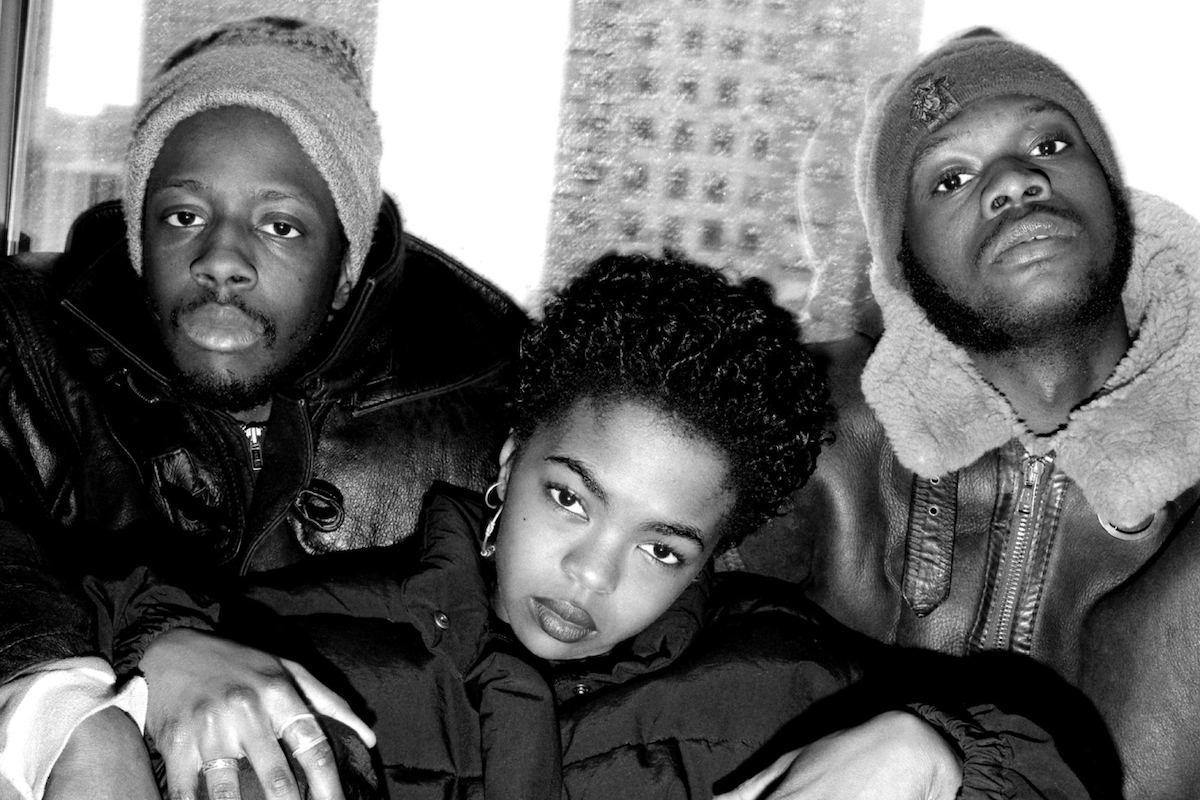
There are scars and scars. Those that you are almost ashamed to tell how you got them and those that can become a beautiful story, sometimes a legend. From the series: you got hurt yes, but it was worth it. The parable of the Fugees, thirty years after the release of The Scoreit's this one. Falls and rises, sporadic performances, legal affairs that are intertwined with personal ones, accusations between former members – such as the denunciation, some time ago, by Pras Michél against Hill for the canceled revival tour – of a group that disbanded immediately after exploding in the sky like a supernova, leaving behind debris of nostalgic fans who look at that scar as an unrepeatable parenthesis and which, perhaps, precisely for this reason, burns even more.
What remains, today, of an epic album that rewrote the rules? Very much. Current not only for the artistic versatility that has set a precedent, but also for its narrative construction and themes: racial discrimination, immigration, institutional violence, brutality of the police, self-destructive street life. In the aftermath of a series of public stances taken in the world of music against ICE following the events in Minneapolis, which cost the lives of Renee Good and Alex Pretti, with Springsteen speaking of state terror and writing Streets of Minneapolis, The Score takes on the characteristics of an act of resistance.
The Score marks a before and an after. A keystone and useful interpretation not only for the R&B/hip hop world from which it comes, but also for the rest of the circuit that is outside that framework. From the individual to the collective, like a zoom out from the street, without losing your own street credibilityleads to having an overall vision and of which anyone has, if all goes well, at least one anecdote.
Mine is this: an awareness with the silencer, in the middle of the 90s, on an ordinary morning in front of a gray cup of milk and withered cornflakes. On TV, Killing Me Softly With His Song.
That cover had been out for who knows how long, Lauryn Hill had even already undertaken, like the other members of the trio, a solo career with what would have been the acclaimed The Miseducation of Lauryn Hillbut I didn't know it at the time; I arrived late – due to my age – almost a journey backwards or, at least, in parallel.
Dark room, a projection, cinema, popcorn. Lots of people around, a cool atmosphere and, then, her. From another planet, stratospheric. A committed, strong, ironic, fast feminine: “Strumming my pain with his fingers / Singing my life with his words / Killing me softly with his song / Killing me softly with his song / Telling my whole life with his words / Killing me softly with his song” his words / Killing me softly with his song”). And that unmistakable sitar riff, sampled by A Tribe Called Quest. Crazy.
The others, afterward, seemed faded to me. Or was it the Fugees who were too far ahead? Someone with a spirit of initiative began to circulate among friends that cover whose fate had perhaps already been written: a black background against which the faces of cousins Wyclef Jean and Pras Michél and Lauryn Hill stood out, portraits, if we want to read an omen, in which everyone was looking in a different direction.
The album – released on February 13, 1996, the day it was also released All Eyez on Me by Tupac, murdered in September of the same year – rightfully enters the history of music and, with decidedly less pretensions, among the listeners – one time/two times and then, many times – of that Italian pre-adolescence who had taken the trouble, partly as a challenge, partly for fun, to try to understand something about the little-known overseas hip hop scene.
In that period, the violent and misogynistic rap of the shootings was counterbalanced by the plasticized and hyperglycemic image of the boy bands. Among her classmates there was no room for bad boys unless, in the common imagination, one already had some debt to justice. Rather unlikely. Yet, that sophisticated, eclectic, irreverent sound that knew how, with style, to alternate strength and lightness, content and vision, melody and lyrical power, spoke a different language and reached everyone. And thirty years later, after more thoughtful listening, the unpredictable tsunami of The Score still impacts with the same, charismatic shock wave.
A complex project which, starting from the first single extract, Fu-Gee-La, with the refrain of Ooh La La LaTeena Marie's song from '88, rewrites the symbolism of a genre that, by certain rules, had remained caged. A record, as Hill defined it, which wanted to be «an audio-film, like the radio was in the 40s» which «tells a story» and in which «there are cuts and interruptions in the music. It's almost a hip hop version of Tommylike what the Who did for rock.”
From the ghetto, but outside the ghetto. Almost an oxymoron that is embodied in albums and preaches on the earth gathering followers, suggesting a subversive concept: you don't need to have a life on the margins to listen to this stuff, you don't need to join the culture lowrider and flaunt chains around their necks. This thing here comes straight to you… ready or not. You can feel this story and be part of it even if you are not part of it because it speaks to an entire community – in particular, for Wyclef Jean it is that of Haiti – but also, across the board, to all (re)fugees of the world with an identity impetus.
The Fugees were the speaker turned on in the center of the room that no one wanted to turn off, a cult that subsequently emerged from that room and established itself globally (the album was awarded two Grammys in '97: best rap album and best R&B vocal performance for Killing Me Softly With His Song). A revolution.
However, with the incipit of independent careers, estrangements and rapprochements follow, failed presidencies (the Haitian one for which, in 2010, Wyclef Jean was unable to compete), legal battles and judicial disputes. Crisis. The beginning of this year then marked the farewell of another prominent figure with the announcement of the death of the historic producer John Forté (Family Business, Cowboys And Fu-Gee-La).
In the meantime, Pras Michél was sentenced to 14 years in prison for criminal conspiracy, money laundering and illegal lobbying, ending up at the center of an international spy story-style intrigue while, again on the occasion of the last Grammys, Ms. Lauryn Hill and Wyclef Jean went on stage together, in the In Memoriam segment, giving a “punctual” duet of Killing Me Softly With His Song.
Almost a hologram from the past that recalls not only the death of the original interpreter Roberta Flack, but also the influence of a work that still remains (monumental), even if the paths of those who made it possible have diverged. The art and the object that contains it – when virtual playlists were not updated but material supports were collected with ill-concealed satisfaction – remain a testament that goes beyond the existence of each one.
They wanted to inspire, they wanted to innovate, they wanted to last. They succeeded.