
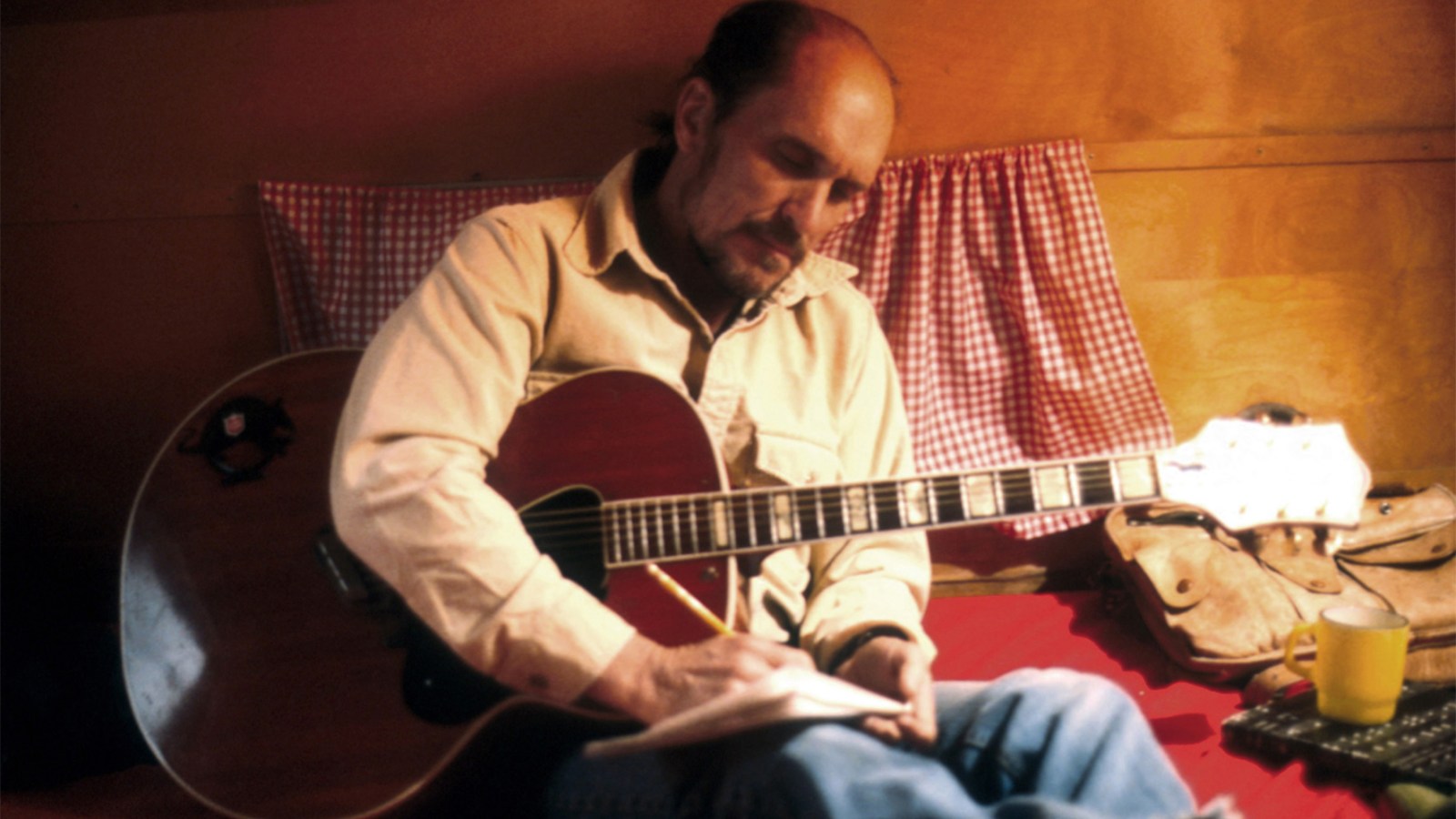
He played everything from preachers to astronauts, network executives to country singers, Jesse James to Joseph Stalin, social misfits to military men. TO lot of military men. (His dad was a Rear Admiral in the US Navy, and he was expected to follow in his father's footsteps; the son naturally rebelled by enlisting in the Army as soon as he graduated from college.) Stoic figures were a specialty, but he also had a bellow that could hit jet-engine decibels in seconds flat. Like Dustin Hoffman and Gene Hackman, peers with whom he palled around with during their days as struggling New York actors — and, in Hoffman's case, shared an apartment — he came of age doing Off-Broadway theater in the late 1950s and TV shows in the early 1960s, then eventually ascended from to character roles to movie stardom in the New Hollywood of the 1970s. Name the greatest American screen actors of the past 60 years, and Robert Duvall's name is among the top five. Try to pin down what might be considered the definitive Robert Duvall performance, and a half dozen or so titles immediately jockey for position in your mind.
Most people go straight to The Godfather and its sequel, where Duvall, who died at 95 on Feb. 15, was Tom Hagen, the lone Irishman in a family of Sicilians, a kid adopted by the Corleone family who'd become a key part of their attempt to go from our thing to corporate-world legit. Hagen is the Corleones' lawyer, a member of the clan who, because of his roots, can never truly be considered “family.” He's the one who calmly leaves movie mogul Jack Woltz's house, given that his “client” insists on hearing bad news ASAP, right before a horse's head shows up in the studio head's bed. Hagen is the one who tells hot-headed Sonny Corleone that “this is business, not personal,” who casually talks an informant into talking his own life, and also the one who begins screaming “This committee owes an APOLOGY! AN APOLOGY!!!” during a Senate hearing on organized crime.
There are so many capital-M Movie moments and memorable scenes in Francis Ford Coppola's two Mafia-cinema masterpieces that rely on a lot of sound and fury. Duvall could hold his own with Brando, Pacino, and everyone else onscreen in that department, to be sure. Yet he knew exactly how to hold your attention in that movie by doing little more than shifting his glance and showing you what Hagen was thinking without a single word. That's great acting.
It is arguably the consummate Duvall turn, the one that showcases how he could be the calm at the center of whatever storm raged around him, or suddenly flip and become the storm itself. But throughout Duvall's long and remarkable career, he showed not just a seemingly endless range as an actor but an inherent understanding of how movie acting operated as a dynamic art form. Everyone remembers “I love the smell of Napalm in the morning. It smells like… victory” from 1979's Apocalypse Now — Duvall's fourth movie with Coppola (fifth if you count his uncredited cameo in The Conversation) — and his Lt. Colonel Kilgore, admirer of both weapons of mass destruction and surfing (not in that order). That quote functions as one of the most concise character studies of the gung-ho warrior mindset to ever be sketched out in a mere two lines. But what's even more impressive than his delivery is what happens right after that. The look of reverie on Kilgore's face turns into a slight frown, he briefly nods in the resignation — all things must pass, even the bliss of conflict — and walks away. It's hilarity, irony, and horror, the horror, all without saying a thing.
He pulls a similar trick in Network (1976), where the head of the movie's fictional broadcast network, Frank Hackett, is best remembered as yelling, with a vengeful gusto that borders on biblical, that they've turned a news anchor's rolling nervous breakdown into a sensation: “It's a big, fat, big-titted HIT!” Do you need someone to dial it up at 11? Duvall's your man. But again, the divine aspects of yet another extraordinary Duvall performance that's not in the spotlight really shows up in the details. There's an earlier bit where Faye Dunaway's mercenary TV producer is pitching him on giving their mentally deranged newsman with a messiah complex the full star treatment. “For God's sakes, Diane, we're talking about putting a manifestly irresponsible man on national television,” he says. Then Duvall takes a beat, and you see him considering what that will mean not in terms of morality, but ratings. A slight smile. A light seems to start beaming behind his eyes. The look says it all: Get the manifestly irresponsible man before those cameras, stat!
Duvall was never a showy actor, even when his characters were losing their shit, and he understood how human beings, especially those who were patriarchs and in positions of authority, were never just one thing. He could give you someone who appeared to be a nightmare authoritarian dad (1981's The Great Santini) and leave you understanding how the man became someone who bounced basketballs off his son's head. He had the ability to start at rock bottom, as he did with the film that won him an Oscar, 1983's Tender Mercies, and show you every bad choice and closing-time brawl that got him there — then make you watch as he clawed his way back to a quiet life of dignity and peace of mind, one day at a time. He showed you how a man dedicated to granting salvation to others could rage against his creator (“I love you, Lord, but I am mad at you!”) and find himself lost during a dark night of the soul in 1997's The Apostlewhere he doubled as the drama's writer-director. Even when he began appearing in roles in the 2000s and beyond that simply asked him to be the craggy face of well-earned gravitas, there was always more going on than a glorified cameo. Duvall somehow made you feel like these marginal figures were main characters just by showing up.
Still, there was one incredible performance left in him after the turn of the century, a performance that should have netted him a statue or three. In 2009's Get Low, Duvall is Felix Bush, a hermit who lives in the backwoods of Tennessee. One day, he comes into town and invites the local community to his funeral; just because he's not dead yet doesn't mean that they shouldn't wait. A gathering shows up on the requested date and time. Bush delivers his own eulogy. “I had to go clear to Illinois to find somebody that had anything good to say about me,” he says, by way of an opening statement. He soon launches into a confession about something he once did, many years ago, that's kept him from feeling like he deserved to be part of civil society.
The recounting might read like exposition on the page. In Duvall's hands, however, you go on the journey with Bush every step of the way, hitting fond remembrances of an old love's nickname and bone-deep shame and regret over his part in a tragedy. It's not a monologue, even though it takes up a good six-and-a-half minutes of screen time. It's an unburdening. Having finally acknowledged to the world what he's done, he exhales. “I don't mind dying for real next time. But please forgive me.”
You don't even have to have seen the film that precedes this sequence to be moved to tears by it. It's suffused with loss. And that, for many of us who worshiped Duvall's work and held him up as one of the best to ever do it, is a feeling we are all too familiar with right now.