
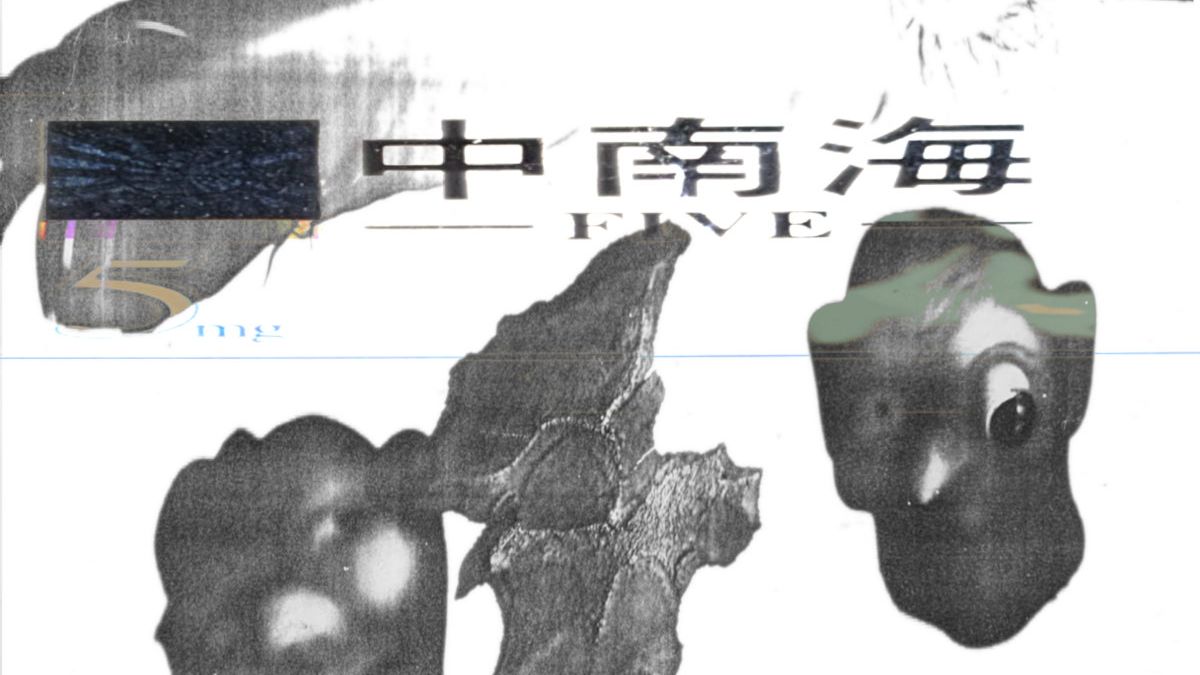
Tim Zha is looking for the soul in the machine. While some might hear Auto-Tune as masking a singer’s humanity, the London-based artist filters his vocals to highlight technology’s inseparability with our notions of self. This is ground well-trodden by Afrofuturist techno pioneers, Atlanta trappers, and PC Music hyperpoppers; for Zha, Auto-Tune represents what he calls the “coincidence of human subjectivity and the networked machine system.”
Zha’s earliest releases as Organ Tapes used reverb like a fog machine on an empty dancefloor, patching up gaps and voids with sublime mist. Reuploaded to YouTube in 2022 by an anonymous fan, those Grouper-esque records showed an early interest in guitar-based songwriting that might seem at odds with the dancehall- and trap-influenced crooning that came after his 2015 breakthrough Word Life on TT (formerly Tobago Tracks). Yet snatches of his past self appeared in the distant jangle of 2019’s Hunger in Me Living, foreshadowing his return to the guitar on 2022’s 唱着那无人问津的歌谣 / Chang Zhe Na Wu Ren Wen Jin De Ge Yao. Zha’s latest EP, 一包烟 (Yi Bao Yan)—which translates as “A Pack of Cigarettes”—continues in the same direction, largely replacing electronic elements with heartland twang and a heightened focus on vocals.
No score yet, be the first to add.
A lot of what makes Organ Tapes sound like Organ Tapes is the way he combines different registers of amateurism, flipping aesthetic norms on their head. The unadorned drawl of an artist like Daniel Johnston might convey an unmediated access to the interiority of the singer; Zha suggests something similar with what sound like GarageBand presets. His out-of-the-box percussion gives his songs an unpolished, strangely intimate feel, like peeking into someone’s diary. The approach works best when accompanied by transcendent, soaring melodies delivered with his signature vocal processing, like on his 2019 track “Condition.” But some songs on his new album struggle to achieve liftoff.
Heartbroken string bends provide some propulsion to the plodding backbeat of “Cigs,” yet Zha’s warbly vocals dissipate the energy into repetitive motifs that futz around a single note. “Comedown” is more compelling, ending its grungy hook with a dissonant chord that seems to convey romantic ambivalence: “Is the comedown/Still worth it,” Zha sings in the low register of someone trying to dissuade himself from a destructive addiction. “Trained,” the EP’s longest cut, is a slow jam that only starts to pick up three-quarters of the way through, with a guitar solo that moves between long tones and thick tangles.
The sequence of “Mainlined,” “lanlianhua,” and “Gun to the World” contains some of Zha’s best songwriting yet. The first of the three feels like a sequel to 2022’s “Line,” opening with a screaming guitar riff filtered so as not to intrude on Zha’s vocals. Instead of stadium-sized snares and open hats, however, Zha eschews percussion entirely on “Mainlined,” letting his layered Auto-Tuned vocals quaver and refract above a wall of overdrive, kaleidoscopic melodies spreading in every direction. Singing with his wife and frequent collaborator Munni, Zha reflects on the Pyrrhic victories of youthful posturing: “And it all came true/It’s not the same as what you dreamed of.” Traces of TT-era Organ Tapes appear in “Gun to the World,” a bright song structured around a short loop of acoustic guitar and piano threaded with sauntering sax and stripped-down 2-step bounce. The image is one of newfound confidence that arises when past worries fall away: “But I don’t really care about that/I put the gun to the world/Like fuck it I guess/Still younger than old.”