
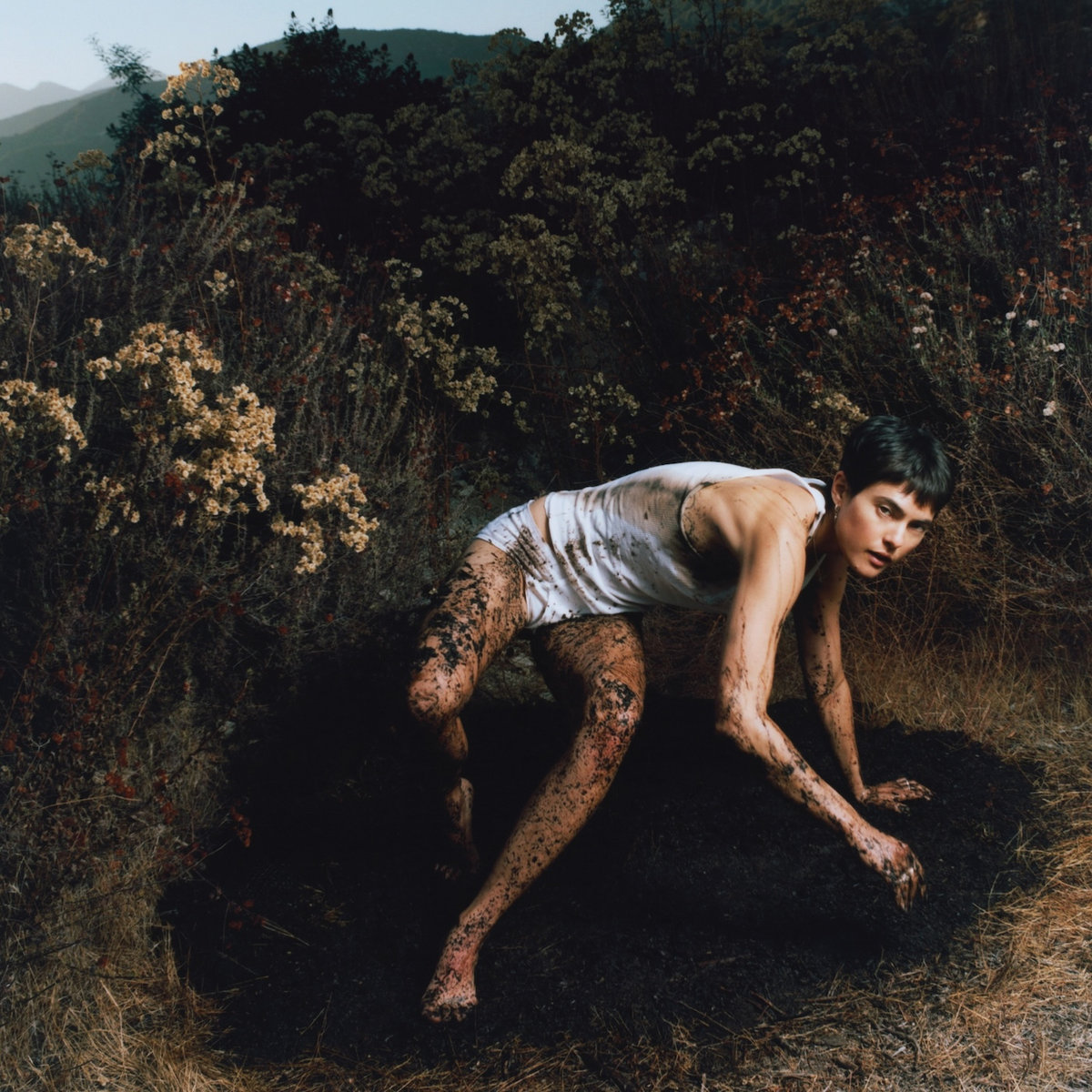
Miya Folick's third album comes as a self -produced and decidedly intimate project, all played on the dynamics of feelings and emotional – often complex, fragile, at times disordered. Despite the emotional density of the texts, music chooses a surprisingly transparent path: a linear power-pop, a melodic that focuses on the emotional impact of the voice, sweet, at times vulnerable, but always clear and controlled.
The opening is entrusted to “erotic”, from whose text the name of the album is taken. It is in all probability the most accessible song of the lot: a delicate and bright pop ballad, built on a simple and immediate structure, which closely recalls Lene Marlin's melodic style. The guitar accompanies discreetly, while the voice floats, telling a complicated desire with light words and melodies that are fixed without effort.
The subsequent songs open to lightly rough and shaded sounds. Here the reference is ideally moved to Waxahatchee: the guitars become drier, the less accommodating rhythms and writing takes on a more direct and less smooth tone. In “La da da”, Folick plays with repetitions and an almost hypnotic trend, creating a suspended atmosphere that tells the restlessness of a protagonist who, despite having a boy who waits for it, lets himself be crossed by saffic fantasies, who lived with a mixture of desire and guilt.
“Alaska”, on the other hand, sinks into a melancholy made of small crescendo and electrical reflections that seem to evoke more cold inner landscapes, more bare. Synthetic flashes emerge in “Hypergiant”, while dilated vocal lines and more scratchy instrumentation (without sacrificing that dreamlike softness that permeates the whole disc) cross “hate me”.
A more decisive change of register arrives with “Fist”, one of the few tracks in which the American artist really breaks in the subdued tone of the album. The song is a controlled cry, a liberation in half, which flows into an impacting refrain that recalls the urgency and theatricality of Florence + The Machine.
For the rest, the album moves on coherent tracks, perhaps too much too much: some waste is missing, some risk that could have given depth to a job that always maintains a balance between emotion and measure. An honest and personal step in the path of Miya Folick, who chooses the simplicity to tell the complexity.
05/05/2025
Daniel D`Amico for SANREMO.FM
