
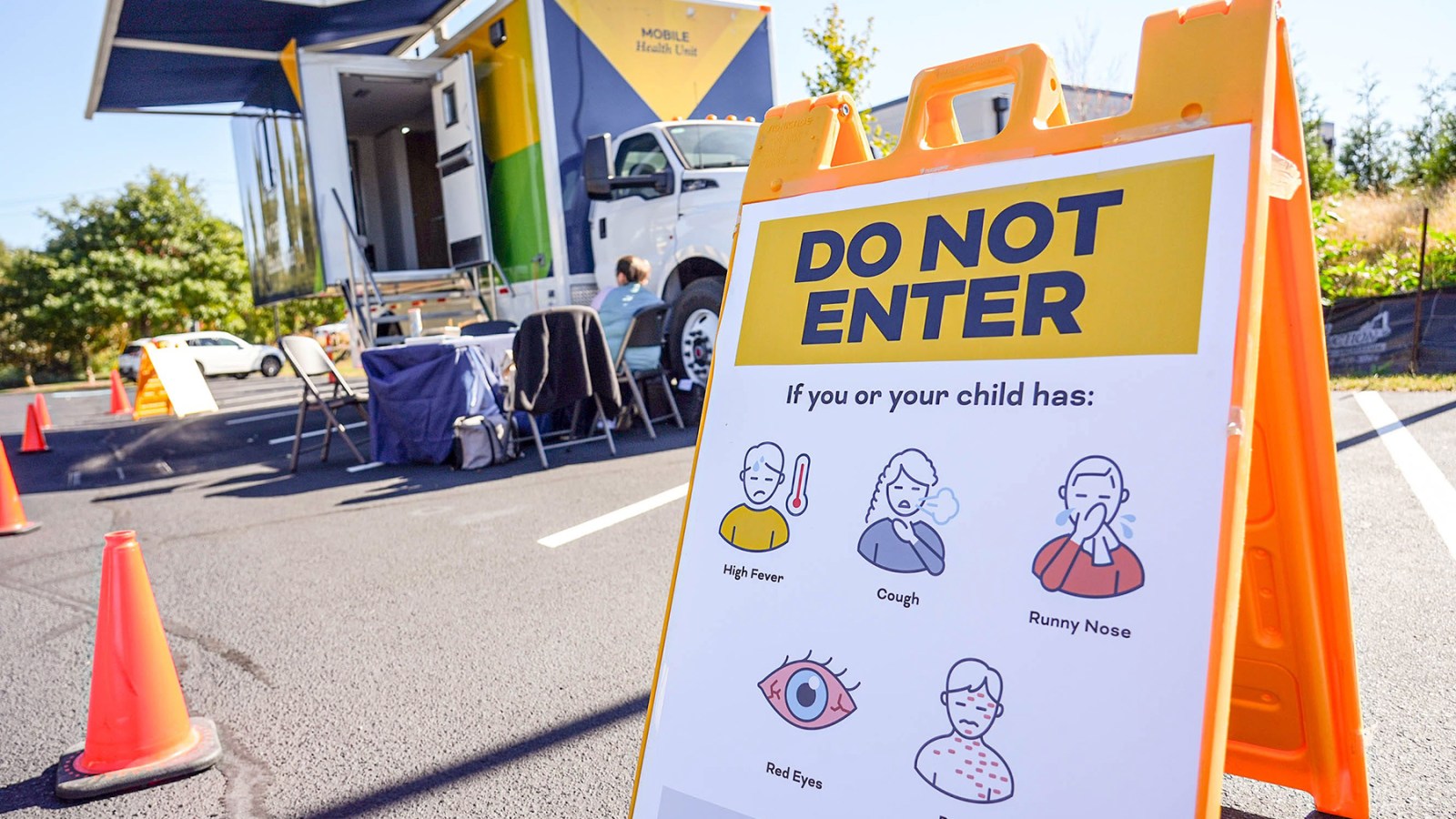
Last year, the United States had the highest number of measles cases in more than three decades — and 2026 is already on track to surpass it. According to the Centers for Disease Control and Prevention (CDC), there were 2,267 confirmed cases of measles — a highly contagious airborne viral infection — in 2025; the most since 1991. This year, 588 confirmed cases were reported in the month of January alone. And experts note that the actual totals are likely much higher, as many cases go unreported.
While the most significant outbreak of the vaccine-preventable disease last year was in west Texas, this year's epicenter is upstate South Carolina — which has already surpassed the total number of cases in Texas in 2025. In addition to another significant outbreak on the Arizona-Utah border, measles cases have also been confirmed in 14 other states so far in 2026.
In 2000, the Pan American Health Organization (PAHO) — a regional office of the World Health Organization — determined that the number of measles cases in the United States were low enough for the disease to be considered “eliminated” in the country. Now, the PAHO is considering revoking that status.
So how did we get to this point? The biggest problem is that despite having a safe, affordable, and highly effective vaccine measures widely available, the number of children receiving it has been decreasing since 2019, as anti-vaccine organizations and politicians have become increasingly visible and influential. These same groups and individuals — including Health and Human Services Secretary Robert F. Kennedy, Jr. — also downplay the severity of measles, when, in fact, not everyone recovers from the infection. Measles can result in complications, long-term conditions, and, in some cases, death.
Here's what to know about the measles outbreaks and the viral infection's long-term effects.
What's causing the measles outbreaks?
What's behind the current spate of cases is not a mystery. “In that way, measles [outbreaks are] very simple,” says William Moss, MD, an epidemiologist and executive director of the Johns Hopkins International Vaccine Access Center. “It's low vaccine coverage.”
During last year's outbreak in Texas, there was a substantial proportion of cases in adults older than 20, Moss says. “The South Carolina outbreak is different than that,” he explains. “It's really driven by transmission in schools.”
The good news is that for now, Moss doesn't think there will be a widespread measles outbreak of the same scale as the one from 1989 to 1991, which was responsible for more than 55,000 cases and 123 deaths. He compares current measles transmission to a forest fire, where outbreaks in places like South Carolina throw off sparks — in this case, infected individuals — that end up in different areas.
“Some of these sparks are going to land in communities where there's high measles vaccine coverage, and so we'll maybe see a handful of cases, but not much more than that,” he explains. “But if one of these sparks lands in another community where there's low vaccine coverage then we're going to see larger outbreaks. I do anticipate that the measles virus will spread out from South Carolina.”
One of the reasons why measles isn't always taken seriously is the notion that it's “just a childhood disease,” Moss says. “There tends to be this public perception that measles isn't a severe disease, and that decreases the urgency of public health importance of promoting measles vaccination,” he explains.
In addition to the rise of vaccine hesitancy, Americans' short collective memory is also contributing to low vaccination rates. “Vaccines have done a really great job at keeping kids healthy, especially over the last 30 to 60 years, so people don't remember seeing kids with measles,” says Claudia Hoyen, MD, director of Pediatric Infection Control at UH Rainbow Babies and Children's Hospital in Cleveland. “They don't remember seeing what happens to kids, and what the complications are.”
Why does measles elimination status matter?
On Feb. 3, following the “sharp increase” in measles cases over the past several months, the PAHO issued a new epidemiological alert for the Americas, urging its members — including the US — to take “immediate, coordinated action” to stop the spread of the infectious disease.
But even if that happens, it may be too little, too late. The PAHO will meet in April to determine whether the US should lose its measles elimination status. “The determining factor is whether there has been continuous transmission of measles for 12 months or more, or whether these are independent outbreaks,” Moss says.
So what would happen if the US lost this status? “The first concern is that measles would become endemic — meaning there would be continued transmission of the virus within the country — which puts more people at risk of serious illness or death if they get infected,” Moss says. That would also come with the financial burden on individuals paying for doctor visits or hospitalizations, as well as on public health departments, which can spend tens of thousands of dollars investigating a measles outbreak, he explains.
To put it simply, it would also make us look bad. “The fact that a country with all the resources that the United States could lose measles elimination status is symbolic that we're not making progress toward our aspirational goals of either eliminating measles from a particular region, or eventually eradicating measles like we did with smallpox,” Moss says.
Are there treatments for measles?
Since last year, Kennedy has been downplaying the risks of contracting measles, promoting the use of unproven treatments over vaccination. This approach is not only misleading, it's also dangerous.
First, there is no cure for measles. “There is no specific antiviral drug [that treats measles],” Hoyen says. “It's all supportive care once the child gets sick.” Kennedy has been encouraging the use of two drugs to treat measles — budesonide (an inhaled steroid) and clarithromycin (an oral antibiotic) — but there is no scientific evidence that either work, according to the American Academy of Pediatrics.
The focus on treatment over vaccination also overlooks the fact that no measles infection is risk-free. “It's true that most otherwise-healthy children who get meals will recover eventually,” Moss says. “But a person doesn't need to have underlying medical problems or be an infant to develop serious conditions after meals.”
Does everyone who gets meals recover?
In addition to complications like pneumonia, dehydration, and ear infections, between one and three in 1,000 children will develop encephalitis — irritation and swelling of the brain — either during their measles infection, or several months later. According to Encephalitis International, 10 to 15 percent of those children will die, and a further 25 percent will be left with permanent brain damage. Awareness of measles encephalitis grew in 1962, after Roald Dahl's seven-year-old daughter Olivia died from it, though it's largely overlooked as an outcome of the infection today.
Though rare, measles can also cause blindness, as well as hearing loss, which occurs in between seven and nine out of 100 cases.
“Any time we see a vaccine-preventable disease, we know that there will be children who are hospitalized with complications,” Hoyen says. “We know there are children who may die from those complications, and we know there are things that we may see years later.”
Along with encephalitis, measles can cause three rare serious neurological conditions — acute disseminated encephalomyelitis (ADEM), measles inclusion body encephalitis (MIBE), and subacute sclerosing panencephalitis (SSPE) — the latter two of which are almost always fatal.
On top of that, measles can also cause what's known as “immune amnesia,” which wipes out portions of the immune system's memory, making it more difficult for the body to protect itself. A 2019 study tracked the antibody levels of unvaccinated children before and two months after a natural measles infection, and found that the virus eliminated 11 to 73 percent of the children's store of antibodies. Immune amnesia can last anywhere from a few months to several years.
“Measles was the first immunosuppressive virus that was described — long before HIV,” Moss says. “These immunosuppressive effects of the measles virus create an increased risk of other infectious diseases.”
Fortunately, these complications are avoidable. “We really are following the science that has been out there for years,” Hoyen says. “If you don't want your child to get sick from the measles, or you don't want your child to have complications from the measles, the best thing that you can do is to vaccinate them.”