
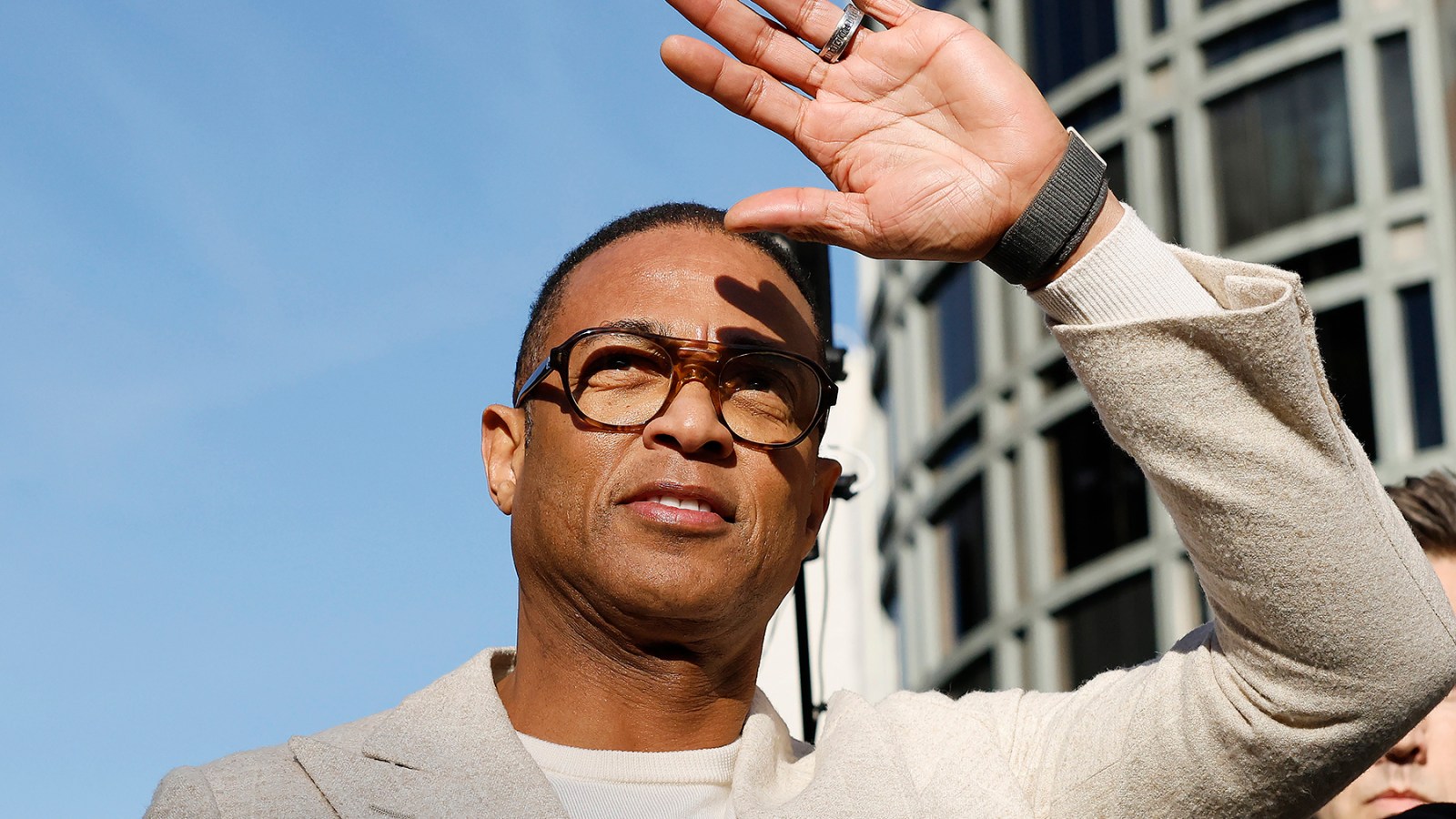
The recent arrest of Don Lemon should alarm every American who still believes in the First Amendment.
Lemon was taken into custody last week after entering Cities Church in St. Paul, Minnesota, and filming anti-immigration enforcement protesters who disrupted a worship service. He now faces charges of conspiracy to deprive rights and interfering with religious freedoms for doing his work as a journalist. Standing outside court after his release, Lemon was unequivocal: “I will not be silenced.”
Those words should not have to be said in the United States of America.
For decades, I have denounced governments that use “public order” and “national security” as excuses to repress dissent. In the authoritarian playbook used by dictators and wannabe dictators, one of the first steps is to go after journalists, to criminalize anyone who is documenting the reality on the ground. If you arrest and therefore silence the witness, you control the narrative.
Lemon's arrest is not just about one journalist or one protest inside one church. It is about how the Trump administration is dragging this United States toward the same dark pattern we condemn abroad.
This administration is decimating the democratic norms that safeguard our republic, and is treating the rule of law not as a sacred trust but as an obstacle to personal power. With policies designed to silence, punish, and exclude, it has violated fundamental rights, including those of voters, women, LGBTQ people, and protesters. Lemon's arrest unfolded amid intensifying federal immigration operations in Minnesota that have sparked deadly confrontations. Protesters inside the church were chanting “Justice for Renee Good,” after she was fatally shot during a confrontation with an ICE officer in Minneapolis last month.
“This administration is decimating the democratic norms that safeguard our republic, and is treating the rule of law not as a sacred trust but as an obstacle to personal power.”
Kerry Kennedy
The atmosphere was already combustible. And Lemon did what journalists do: he showed up to report on the unfolding chaos. When he livestreamed the event on YouTube, Lemon repeatedly stated on camera: “We're not part of the activists. We're here just reporting on them.”
Reasonable people can debate the boundaries between reporting and participation. But no reasonable democracy responds to that debate by sending federal agents to arrest a journalist “in the middle of the night,” as Lemon described, while he was across the country in Los Angeles covering the Grammy Awards.
That is not accountability. That is not the rule of law. That is pure and simple intimidation. One that seeks to create a chilling effect on the media and is consistent with the larger pattern of President Trump describing the press as “the enemy of the American people.” This dangerous rhetoric, long used by authoritarian leaders to delegitimize scrutiny and dissent, have been a hallmark of Trump's attacks on independent journalism since his first presidential term.
President Trump and other senior officials have repeatedly targeted the press and independent voices, calling CNN “fake news,” attempting to revoke reporter Jim Acosta's White House press pass, and encouraging crowds to jeer at journalists at rallies.
The administration also tried to block the publication of Michael Wolff's Fire and Furycriticized reporters such as Katy Tur and Maggie Haberman, and instrumentalized the Justice Department to obtain phone records of journalists from The Washington Post and The New York Times. Daily White House press briefings were largely curtailed, Pentagon press credentials were revoked in some cases, expert voices were sidelined, and inspectors general who exposed internal wrongdoing were dismissed.
A couple of months ago, on Air Force One, when he didn't like a question from Bloomberg journalist Catherine Lucey about the Epstein files, Trump reportedly said, “Quiet! Quiet, piggy.” Days later, he used demeaning language to insult another female White House journalist, calling her “ugly, both inside and out.”
These actions have created an atmosphere in which challenging questions are treated as disloyalty and satire is treated as a form of opposition politics. An emblematic example of how even comedians are not safe from presidential retaliation is Trump's personal attacks against Stephen Colbert on national television, calling him “no‑talent” and “filthy,” and then approving the CBS parent company merger with Paramount, after which CBS announced it would end The Late Show with Stephen Colbert.
But what makes the crackdown so effective is the erosion of any semblance of independence from our top law enforcement officials. Attorney General Pam Bondi accused Lemon and others of participating in a “coordinated attack,” and FBI Director Kash Patel confirmed that their arrests were carried out by both FBI and DHS investigations.
Harmeet Dhillon of the DOJ's Civil Rights Division went even further, declaring: “We're going to pursue this to the ends of the earth.”
The White House, meanwhile, appeared to celebrate Lemon's arrest, posting his photo on its official X account with the caption: “when life gives you lemons,” alongside chain-link imagery.
Mockery is not governance. It is a warning.
Lemon was not the only one arrested. Independent journalist Georgia Fort was also taken into custody, livestreaming federal agents arriving at her home as her children watched. Trahern Jeen Crews and Jamael Lydell Lundy were arrested at the protest, as well.
Even more alarming: Prosecutors first prosecuted charges against eight individuals, but a magistrate judge only approved charges for three of them, excluding Lemon. The Trump administration then escalated the case to a grand jury, which ended up indicting nine defendants, this time including Lemon.
This, together with the recent FBI search of a Washington Post reporter's home, where devices were seized despite no charges being filed, is intended to send an unmistakable message: we can come for you.
Don Lemon's arrest is a test for our country. Will we accept a future where journalists in the United States are hauled away in handcuffs for covering dissent? Or will we defend the principle that the press exists precisely to shine light into moments of conflict?
Because let's all be clear about one thing: when a journalist is arrested for doing their job, democracy is the one in handcuffs.
Kerry Kennedy is president of the Robert & Ethel Kennedy Human Rights Center. A human rights activist and lawyer, she authored New York Times best seller Being Catholic Nowas well as Speak Truth to Power and Robert F. Kennedy: Ripples of Hope.