

There is a moment half hidden in the nine minutes of Blues Jam of 1975 that the Rolling Stones recorded with Jeff Beck and which is contained in the super deluxe edition of Black and Blue. The guitarist stops playing blues like Howlin' Wolf, BB King or Keith Richards and starts fiddling with the volume of the instrument until it emits a mewing sound. There's something sublime about it, that sound, and it's like nothing else the Stones recorded. And perhaps this is also why Mick & Keith didn't let Beck join the band after the defection of Mick Taylor, who had left a few months earlier dissatisfied, among other things, with the fact that they didn't allow him to sign the songs. The point is that Beck was simply too good and too inventive to become one of the Stones. History has taught us that he was not cut out to serve a band in any case.
The three jams Beck recorded with the group – including an impressive rendition of the then-unreleased, jazzy Freeway Jama gem released in Blow by Blow in which Richards seems restrained and drummer Charlie Watts at ease – are the highlights of the reissue which harks back to the Stones' strangest era. Black and Blue of 1976 is often described as a kind of Stones talent show: 40 minutes of rock, ballads and reggae which also served as auditions for Harvey Mandel of Canned Heat, session musician Wayne Perkins and Ron Wood of the Faces. Nobody prefers this album to the Stones classics, but in hindsight we could say that it was underrated. Maybe the idea that it was a Who Wants to Be a Rolling Stone? it overshadowed the songs.
It must also be said and it is significant that the Stones themselves were the first to have little regard for them given that they rarely played these pieces live compared to others of the time, i.e. those just before It's Only Rock and Roll of 1974 and subsequent ones Some Girls of 1978. The music press of the time criticized the Stones because in Black and Blue they seemed like cold professionals, thirty-somethings who, to quote that hit, offered more “only” than “rock and roll”. It's true that the album is more polished than its predecessors (the embarrassing advertising campaign which was canceled almost immediately wasn't), but it came out at a time when rock musicians were still expected to die before they got old. And from a strictly musical point of view, the songs are well constructed, examples of mature rock, and this regardless of whether the Stones themselves liked to admit it or not.
The cover is relatively sober: a simple photographic portrait, the first since Between the Buttons. The two singles are the melancholic ballad with a Smokey Robinson falsetto Fool to Cry and the hybrid between disco and rock Hot Stuff. They didn't have the attitude of one It's Only Rock and Roll (But I Like It) or of Doo Doo Doo Doo Doo (Heartbreaker)but they are on the album Hand of Fate And Crazy Mamaalmost as explosive as any other piece from the post period Exile. The Stones simply didn't seem as bloodthirsty as they had been in, for example, StarStar.
The ballads Memory Motelan ode to the Long Island groupies who were apparently unforgettable in the worst sense of the word, and Melody (hey, at least they remembered her name!) are soft and soulful, they have a tone appropriate to the Stones' age especially thanks to the piano parts and Billy Preston's backing vocals. Cherry Oh Baby by Eric Donaldson is as convincing as any white reggae produced by English rockers in the 70s, but if anything it has aged better than I Shot the Sheriff by Eric Clapton. These are all songs that disappeared or almost disappeared from the Stones' setlists after the tour Some Girlsthe album that made us understand why Wood could only win the Great Guitar War.
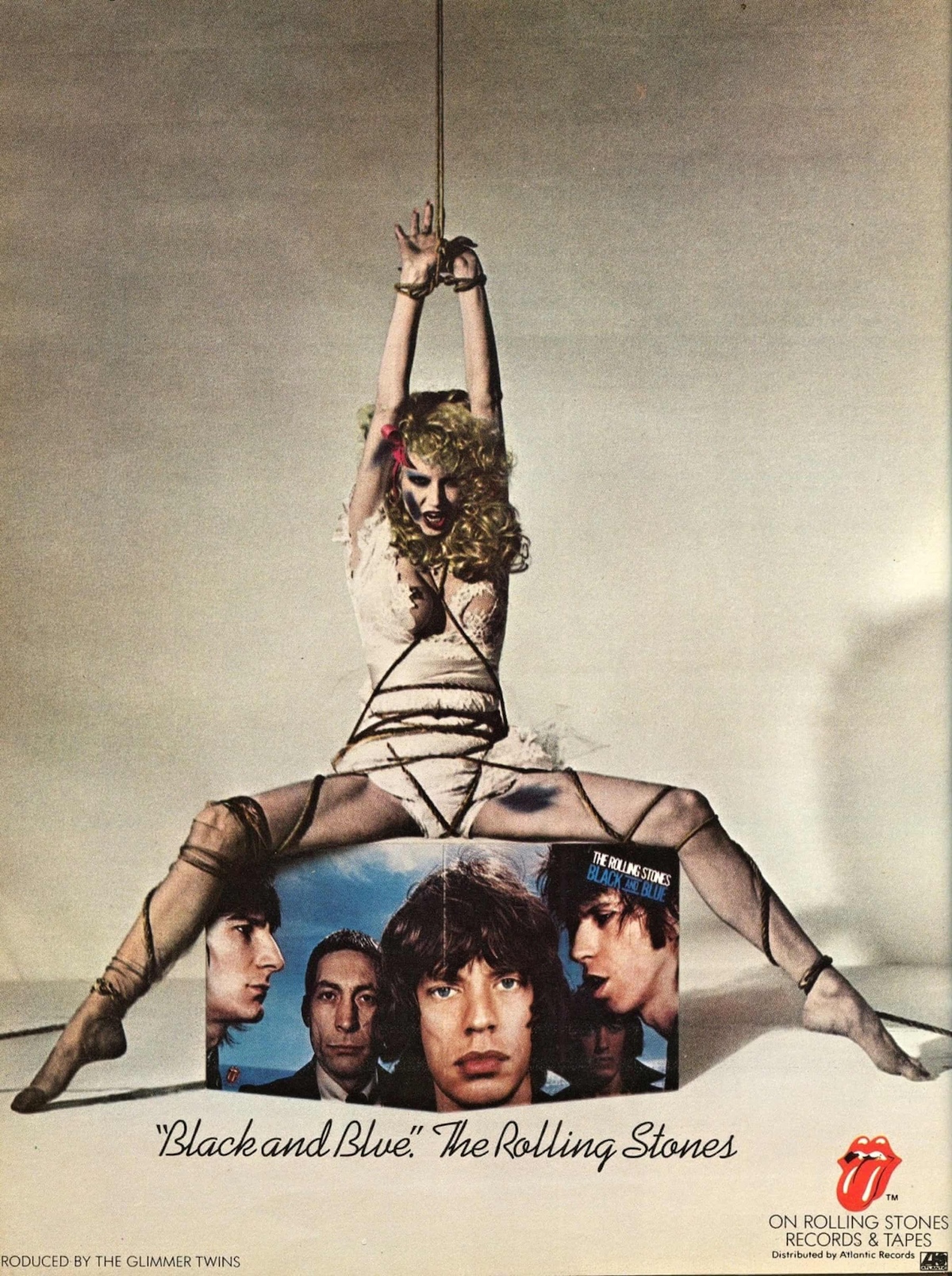
The controversial Stones advert that played on the meaning of the expression 'Black and Blue', to be bruised. Photo: Atlantic
Listened to again today, in the context of the box set, the album sounds good, sharp, lively. Sound wizard Steven Wilson livened up the masters just enough to let the instruments breathe a little more without affecting the songs. As he said to Rolling“some say it's the best-sounding Stones record of the '70s and I might even agree,” which perhaps explains why they went easy on the mix. The songs are nuanced in the same places as they were in 1976 and there are no alternative guitar solos dug up for the occasion, nor Jaggerisms that we didn't know.
Wilson's 2025 mix excels at making the ballads feel “new” and shiny, with more prominent piano parts in Fool to Cry and Richards' soulful bridge “she's got a mind of her own” in Memory Motel more pronounced. The only place where the new mixes suffer is in the disco and reggae influenced pieces, which sounded deliberately claustrophobic in the 70s due to musical taste, coke use or both. Wilson has broadened the sonic spectrum a little too much Hot Stuff and of Cherry Oh Babywho in any case have not lost their spirit and Bill Wyman's bass has never sounded better. In general it is right that the mix is not too dramatic and therefore distracting.
The bonus tracks, I Love Ladies and a cover of Shame, Shame, Shame by Shirley & Company, anticipate the atmospheres of Emotional Rescuewith Mick Jagger who has the vocal exuberance of a Mickey Mouse partying at Studio 54. They're fun, but they wouldn't have fit well inside Black and Blue How much Slaves or the reggae version of Start Me Upboth recorded in the same sessions and then published on Tattoo You.
However, they are two good unpublished works and one wonders what else is in the archives and whether sooner or later someone will officially publish them Carnival to Riothe funk number that the Stones and Preston recorded with Eric Clapton around that time. And then, Chuck Berry Style Jam with Harvey Mandel is fantastic and in Rotterdam Jam Robert A. Johnson alternates his solos with those of Beck and Richards, but where have the other jams gone, starting with those with Rory Gallagher, who according to legend was too good to join the Stones?
In the end, however, even the live pieces included in the box set dating back to the 1976 concert at Earls Court (some extracts had already been released in Love You Live) prove that the right man was Wood. Not only was he English (unlike Perkins, who was on the verge of joining the band), but his parts mesh perfectly with Richards'. Hear how it sounds Hey Negritaa Jagger-Richards song for which he received an “inspiration” credit (he claims in the liner notes that he wrote everything except the lyrics), or as in Hand of Fate And Fool to Cry he replicates Perkins' parts as if he had written them. With Preston's help, Ain't Too Proud to Beg it sounds more funk than usual and Get Off of My Cloud It has a honky-tonk vibe. Jagger also appears particularly wild and changes the words of It's Only Rock and Roll, Brown Sugar And Street Fighting Man with provocative verses that are well suited to the aforementioned advertising campaign. It's clear that he didn't care much about being considered a moderate.
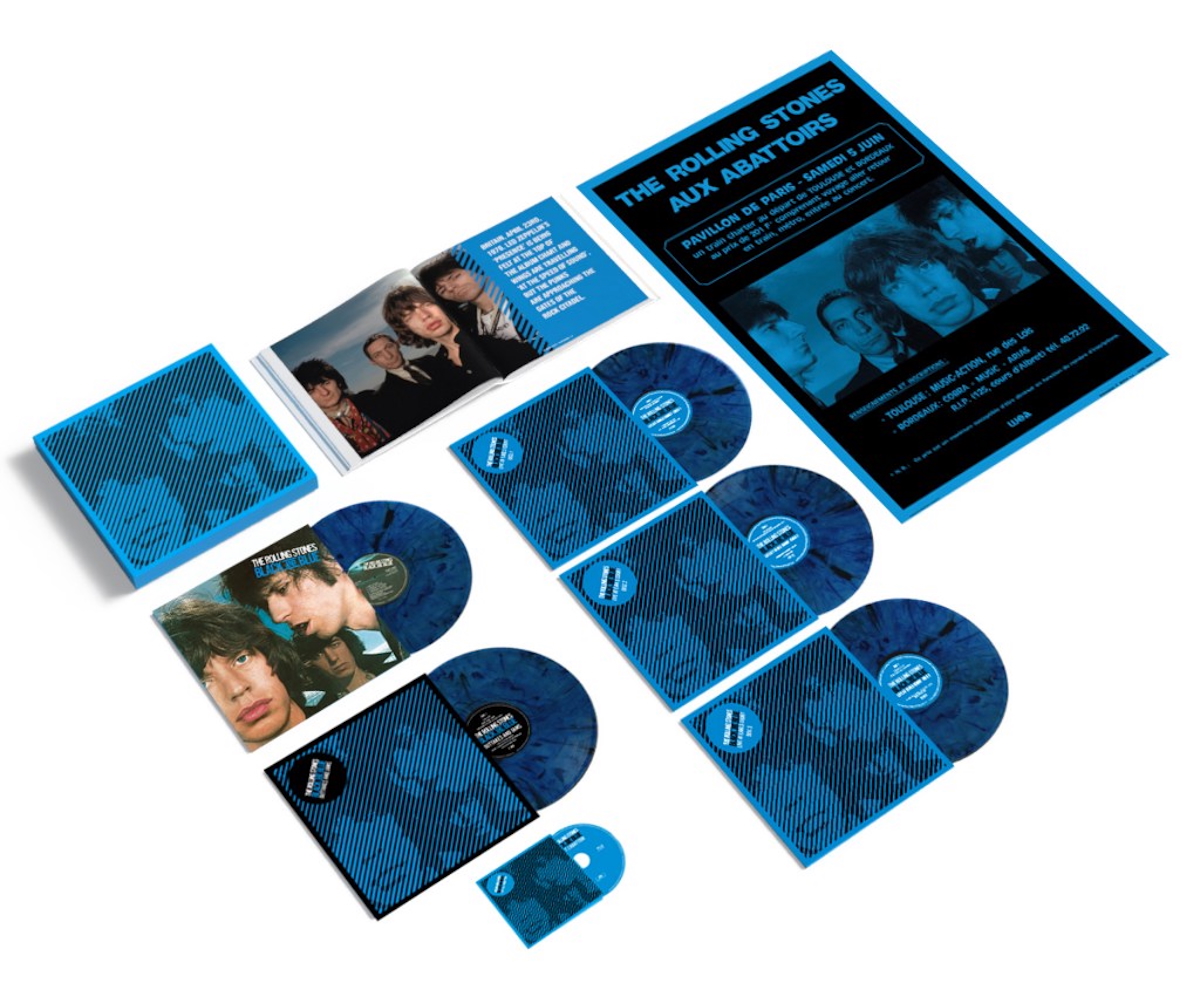
The Blu-Ray concert film at Les Abattoirs in Paris (some recordings had ended up on Love You Live) instead shows them a little subdued. Maybe the inflatable penis that Jagger rides during StarStar he needed some Viagra. Jagger tries to liven up the atmosphere by throwing water and confetti and swinging above the audience hanging from a rope like Tarzan, a gimmick that in 1976 was altogether new. Wood's charisma is evident. Perkins was a recording studio man, Woody had already logged miles on tour with the Faces. Again: there is no doubt it was the right choice.
The Stones have liquidated Black and Blue like a transition album between Mick Taylor and Ron Wood, and instead the box set shows them grappling with a crucial point in their career, open to new sounds and musicians without derailing. These are songs that deserve a second life. If the title Black and Blue evokes bruises, the Stones were recovering from those beatings at the time. What a shame though that there aren't many more recordings with Beck and the other musicians: we would have had a taste of the Rolling Stones' style in a parallel universe.
From Rolling Stone US.
Daniel D`Amico for SANREMO.FM
