
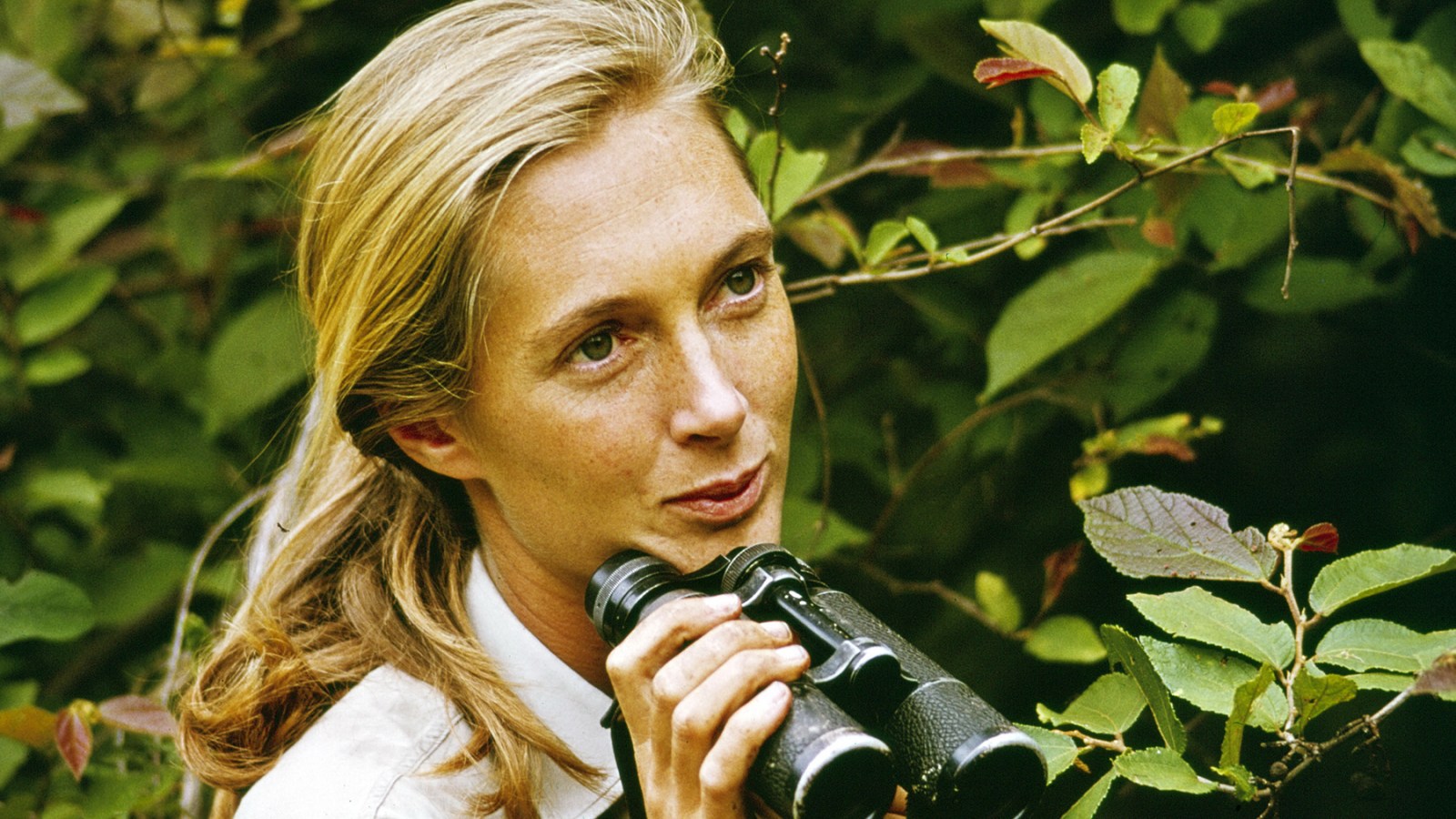
Jane Goodall, the celebrated primatologist and conservationist best known for her work studying the behavior of chimpanzees, died Wednesday, Oct. 1. She was 91.
The Jane Goodall Institute confirmed Goodall’s death in a statement. The organization said she died from “natural causes” while in California on a speaking tour. “Dr. Goodall’s discoveries as an ethologist revolutionized science, and she was a tireless advocate for the protection and restoration of our natural world.”
Goodall’s work observing primates at the Gombe Stream Chimpanzee Reserve in Tanzania during the 1960s yielded several major scientific discoveries. She observed the chimpanzees eating meat, engaging in ritualistic activities like rain dances, fighting and showing affection, and — maybe most significantly — using tools.
These findings refuted longstanding preconceived beliefs about humans and animals. And in a 2020 interview with Rolling Stone, when asked to share one key fact from her research, she homed in on this sentiment: “That we humans have been terribly arrogant. We are part of and not separated from the rest of the animal kingdom — we are not the only sentient, sapient beings on the planet.”
In the decades after she published her work at Gombe, Goodall would continue to study primates, while also advocating for an array of environmental causes. She published numerous books — from scientific tomes to memoirs to children’s books — and appeared in an array of films and nature documentaries.
Stevie Nicks even wrote a song about Goodall, “Jane,” which continued the chorus, “There are angels here, angels/There are angels here on earth, angles/Angels, sent from God/You will never feel, that you have ever done enough/But you have, Jane.”
Born Valerie Jane Morris-Goodall on April 4, 1934 in London, Goodall exhibited a love for animals a child, especially after her father gifted her a stuffed monkey doll, which she named Jubilee (via The New York Times). But Goodall wasn’t originally lined up for a career in science. She did not attend university, and instead completed secretarial school and worked odd jobs around London.
An invitation to visit a friend’s family farm in Kenya in 1956 led to an introduction with the archaeologist Louis Leakey, who hired Goodall as an assistant and secretary. Leakey had long been interested in sending a researcher to study wild chimpanzees in Tanzania, and ultimately assigned Goodall the task in 1960. Three months into her observations, Goodall observed a chimp she’d named David Greybeard stick a long grass stem into a termite mound, withdraw it, and eat what he’d pulled out.
“It was so obvious that he was actually using a grass stem as a tool,” Goodall wrote.
Goodall continued her work at Gombe over the next several years with funding form the National Geographic Society. Her early findings were so clearly significant that the University of Cambridge admitted Goodall into its doctorate program in 1961, even though she didn’t have an undergraduate degree. In 1962, National Geographic sent a Dutch photographer named Hugo van Lawick to capture her work, and after some initial trepidation, the two became close and later married. (They divorced in 1974.)
In 1963, Goodall published her first major findings from Gombe in an article called, “My Life Among the Wild Chimpanzees.” A 1965 National Graphic film about her work, Miss Goodall and the Wild Chimpanzees, helped bring her international renown.
Goodall’s work was notable not only for her scientific discoveries, but the way she blended her research with first-person anecdotes from the field — encounters with leopards, bouts of malaria — as well as stories from her personal life. She also spoke often about what she learned from the chimpanzees she studied: “I took many lessons from one of the very best Gombe mothers, Flo, as I raised my own son,” Goodall told RS.
This story is developing…