
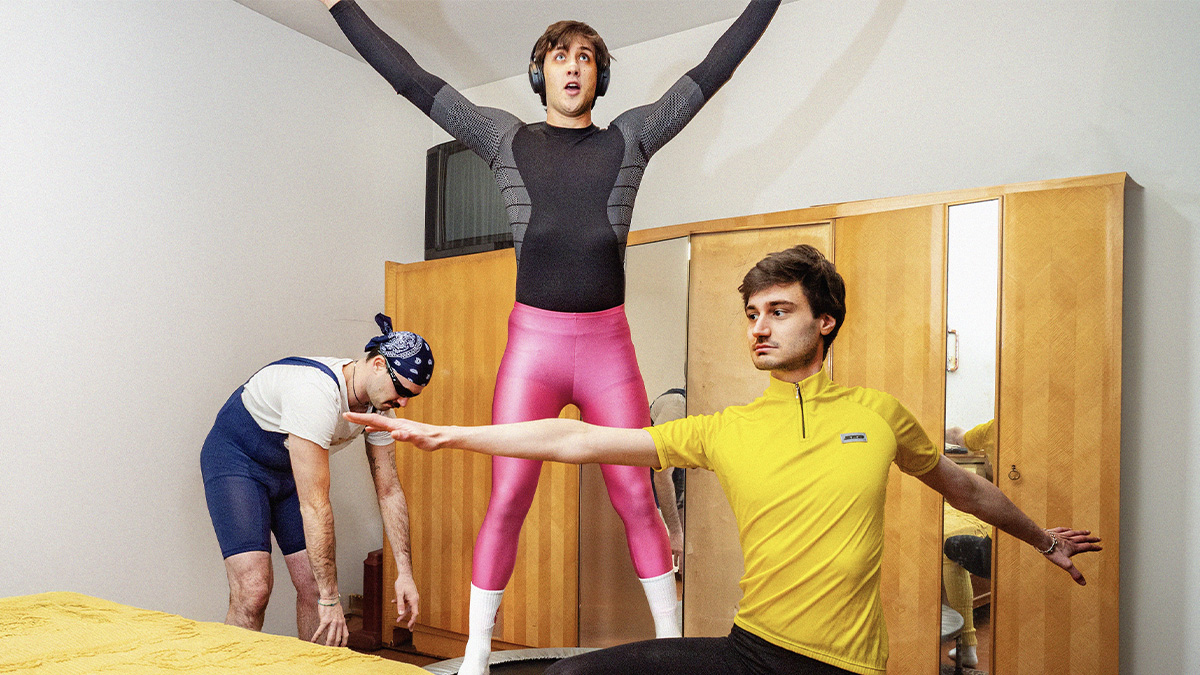
A record that doesn't console, but wakes up. The ADA they come back with VACUUM PACKEDa ferocious and necessary album that turns up the volume on daily discomfort, on emotional exhaustion, on the constant anxiety of those who feel out of time or out of place. From the first tracks to the final “End of the world”, each song is a punch in the stomach that does not seek catharsis, but awareness.
We caught up with the band to talk about uncomfortable truths, emotional resistance and how making noise is – today more than ever – a political act.
An urgent, necessary record. A declaration of intent, a direct thrust against indifference. But how do you write – and how do you sing – anger? Anger is not something you sit down and write down, if you do it becomes fake. For us it's a gut thing, it's almost physical. It's written like you're throwing punches and it's sung like a scream you've had stuck in your throat for too long. When you're tired of the apathy you see around, the only honest reaction you have is to vomit it all out without too many filters. It must sound rough, awkward, because the stale air we breathe suffocates us and the only way to get out of it is to make as much noise as possible.
Things don't change on their own. Yet, it is the anti-hero who chooses the truth, not the hero. Why? Because the hero in the end is a boring figure, he is the one who seeks consensus, who must do the right thing by force. The anti-hero, on the other hand, is someone like us: messed up, full of flaws, who makes wrong choices almost all the time. Choosing the anti-hero truth means admitting that we are not perfect and that we are not going to pretend that everything is fine. He is the only one who can afford to say things as they really are, even the uncomfortable ones, because he doesn't have to save anyone, he just has to survive his own disorder.
What is the most uncomfortable truth that this album brings with it? That there is no guaranteed happy ending. Music often tries to sell you a solution or catharsis, but the uncomfortable truth of this album is that the disaster remains there. Anxiety is a background noise that doesn't go away and sometimes the only thing you can do is accept that you are fragile. It's an annoying concept because people want to be told that all you have to do is want it and everything will work out, but instead we clearly say that sometimes things go wrong and you have to learn to deal with it.
THEn Under vacuum it seems that even breathing weighs heavily: what was the exact moment in which you understood that the album would be about exactly this? There wasn't a specific moment, it was more of a feeling that grew on me over time. Years spent feeling this pressure, the general indifference, as if we were always holding our breath. When we started working on the pieces we realized that we always went back there, to that sense of suffocation, of feeling frozen while the world goes on. When we wrote the lyrics for Sottovuoto it became clear: we desperately needed air and the record had to be precisely this scream to catch our breath.
Between Paranoia and Heavy Days, an anxiety emerges that never really explodes, a disturbing noise. Why disturb rather than comfort, in such a complex world? Because comfort is often just an anesthetic to keep you calm. In such a complex world, if music just consoles you, you risk falling asleep. We prefer to be an alarm. That anxiety that doesn't explode, that annoying buzz, is everyday reality. We want to disturb because perhaps that annoyance forces you to react, to move instead of passively accepting the routine. It's a way of saying: there is total delirium, we feel it too, and we won't pretend otherwise.
A dog (as it feels) tells of certainties that often not even human beings are able to grant themselves: what question should we ask ourselves today regarding our fragilities? We should ask ourselves: why do we make so much effort to admit that we are not well? The dog is pure instinct, he has no superstructures, if you ask him how he is he tells you that everything is fine because he lives in the moment. We humans, on the other hand, build castles of lies to hide our cracks. The real question is why we are so afraid of our weaknesses. If we could accept them with the same simplicity as an animal, we would all be much freer.
In the ending of Finimondo there is a surrender: when is the time to “let go” if chaos continues to burn around? When you realize you can't put out the fire. There is a moment when struggling to control everything becomes useless and only consumes your energy. Letting go doesn't mean giving up or losing, but stopping being defined by that chaos. If it's all hell outside and the streets are burning, you might as well sit down and watch it without going crazy. It is the acceptance of the crap that is around, which paradoxically is the first step to regain control over oneself.
A deliberately provocative question. Is music “helpful” in some way? And if so, what is your record for? In a practical sense, music is useless, it doesn't solve your problems. But it helps you not feel alone while you have them. For us this album serves to throw out the poison, it is our outlet to feel alive. And we hope it helps those who listen to create a crack in all this indifference. If someone puts on the record and manages to feel less wrong in their mess, or finds the desire to scream in the face of bad luck, then the record has served some purpose. Ultimately it serves to make noise, which is the only thing we have left.
Daniel D`Amico for SANREMO.FM