
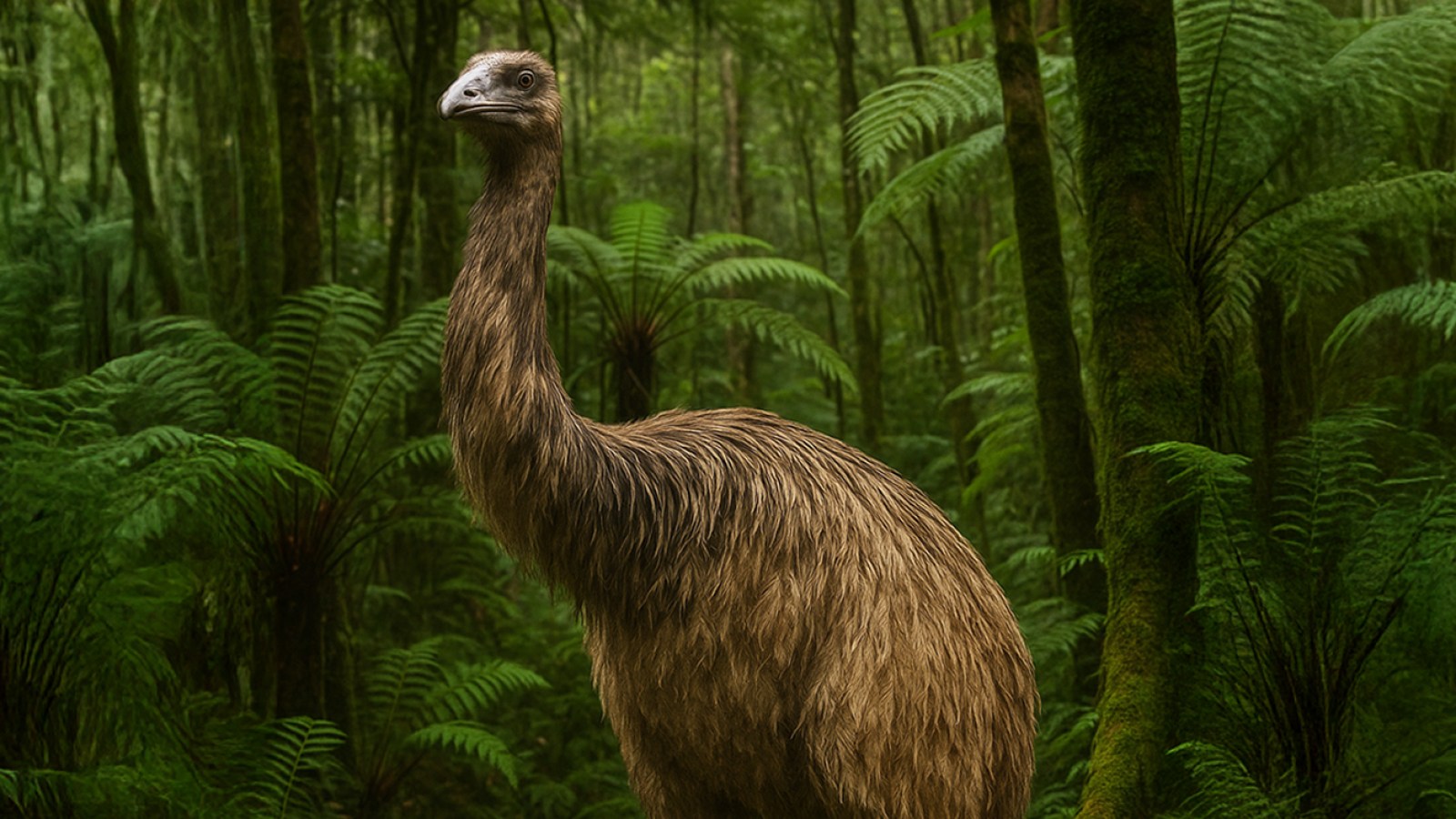
On Tuesday, Colossal Biosciences AnnoMenced Their Plans to BRING BACK THE TALLEST BIRD THAT EVER LIVED, WHHH HAS BEEN EXTINCT FOR Nearly 600 Years. The Giant Moa – A Husky, Wingless Bird That Couuld Stand Almost 12 Feet Tall – Once Boobed It Across New Zealand's Landscapes On Legs That Loked Like a Cross Bethaeen An Ovgrrown Chicken And A Tyrannosaurus Rex. The Moa Has Become Closely Linked With New Zeado -Sading Cultural Identity, and for the Māori, The Nation's Indigenous Polynseian People, It's a Symbol of ResourceFulness, AS Well As a Reminder of the Importance of Caring for the Environment. Colossal Hopes to Welcome The First New Moas Within Five to 10 Years, After they finish Collecting Enough Ancient Dna Samples to sequelce the bird's genome.
This isn't the first such ninuancement for the biosciences startup, which recently revealed they'd Created Three Living Dire Wolves, A Species Not Seen Since Roughly 10,000 ECB. The Dals-Based Company Has Also Been Working To Bring Back The Dodo, The Tasmanian Tiger, and the Woolly Mammoth-Their Flagship Project, Which has I know produced some headline-make (and heart-chapuring) Woolly Mice.
Colossal's Work Has Attracted a Lot of Attention From The Public, and Some Controversy Amag Conservationists and Gene-Editing Scientists. In April, they Debuted Their Dire Wolf Pups, Which Were Created by Editing Parts of Genomes Sequered from Ancient DNA Fragments Into the Genome of Gray Wolves, Giving Them Dire Wolf Attributes. This prompted some in the Scientific Community to Say they weren't actulinry Say Wolves, Just Genetically-Modified Gray Wolves with a Stellar Pr Team. Colossal's Chief Science Officer Beth Shapiro Responded to Taxonomical Criticism by Arguing That Species are categories We use to Group Animals With Similar Attributes: “If it Looks like to say wolf and it acts like to say wolf, i'm Call it a say wolf,” she tald. Rolling Stone At the time.
The Company's “De-Extination” AnnoUNCements, As the Company Calls Their Efforts To Create Animals with the Attribes of Species That Have DaD Off, Have Also Attracted Some Major Celebrity Investors. While the say Wolves Were Promotted by Investor George RR Martin, This Latest Project Started with a pitch from Lord of Rings Director and Unofficial New Zealand Tourism Czar Peter Jackson, Whose Films Introduced the World to the Stunning Mountain Ranges and Grassy Plains of His Homeland. He Had Long Dreamed of Breaking Back The Moa, Right Alongside Wishing for Personal Submarines and Jetpacks.
“Growing up in New Zealand, where the moa is such a preominant part of our national identity and culture, it was just like, wouldn't it be fantastic if the moa couuld be brought back?”? He Tells Rolling Stone. “For Decades, It Semed Like a Harebrained Thought, Just a Pie In The Sky. But then, when I Spoke with Colossal for the first time a coupe of Years Aug, I Got the District Impression That Such A Thing was no Longer Harebrained.”

Director Peter Jackson and Ben Lamm, CEO of Colossal Biosciences, Holding Moa Bones.
Courtesy of Colossal Biosciences
Jackson suggests adding the Moa to Their Roster for de-Extinction. He Also Encouraged a Partnership Bethaeen Colossal and the Ngāi Tahu Research Center at the University of Canterbury, at Leading Institute of Māori Indigenous Scholarship in the Region.
According to Ngāi Tahu Research Center Director Mike Stevens, Hunting The Moa For Food – and Using Its Bones and Feathers for Tools and Decoration – Played a Crucial Role in Helping The Māori People Adapt to Living in New Zealand After They Migrated from Polynesia in the 1300s. “[The moa was] The Key Resource That Allewed This Relatively Small Founding Population to Survive and Grow and Flourish, “Stevens Says.
The ngāi tahu are the principal māori tribe of the southern region of New Zealand – Home to the south island Giant Moa, The Largest of the Nine Moa Species Colossal Plans to Restore Over the Next Five to 10 Years. According to Māori Lore, The 500-Pound Herbivores Were Fast Runners Who, Once Cornred, would Defend Themselves by Kicking With Those Dino-Chicken Legs.
Over time, The Māori's Rate of Harvesting The Moa Caught Up With The Bird's Population – In part Because Crops Grew and Replenished ThemSelves Less Quickly in New Zealand's Subropical Climate Than in The Tropical Polynesian Islands. “[The Māori] Figured Out That These Islands Offered a 'Fragile Plety,' To Borrow a Phrase from the Esteemed Archaeologists Within Our Tribe, “Stevens Says, Referring to the Nation's Abundant But Vulnerable Ecosystem.
After Millions of Years of Shaping the Nation's Grasslands and Forests Through Their Feeding Habits and Seed Sagersal, The Moa Went Extinct Roughly 150 Years After The Māori Arrival. In Researching The Moa Through Their Partnership with Colossal, Stevens Sees An Opportunity for the Māori People to make New Discovery ABOUT THEMSELVES. “We'll Learn More About Our Earlier Ancestors And Their District Interactions With This Landscape,” Heys. “The Way Nature and Culture ContinuLyy Shape One Another.”
For the Next Six Months, Colossal Scientists and Archaeologists from the Ngāi Tahu Research Center Will Focus On Collect Ancient Dna Samples. They have recently Been Searching for Moa Fossils in New Zealand Caves, and they've Almedy Managed to Extract Around Two Dozen Samples from Jackson's Personal Collection of More Than 300 Moa Fossils. They'll combine these with some samples from the canterbury museum in Their Quest to Have Enaughter DNA to Begin Building Moa Genomes for All Nine Species – The First of Which They Aim To Complete in the Summer of 2026 A South American Bird Thought to Be The Moa's Closest Living relative.
Colossal CEO BEN LAMM SAYS The Partnership With The Research Center Signals in New Step in The Company's Work With Indigenous Groups. “The Stewards and the People of This Land, The Māori, Inviting US In, and Working with them in a True Collaborative Fashion, where the ngāi tahu research center is the driver of the project is not a way we've ever collaborated before,” he says. “This is a long term partnership. We have gone so deep now in Not Just the ecological or Environmental Benefit of this Species, but in the Cultural History, It's Been Awesome.”