
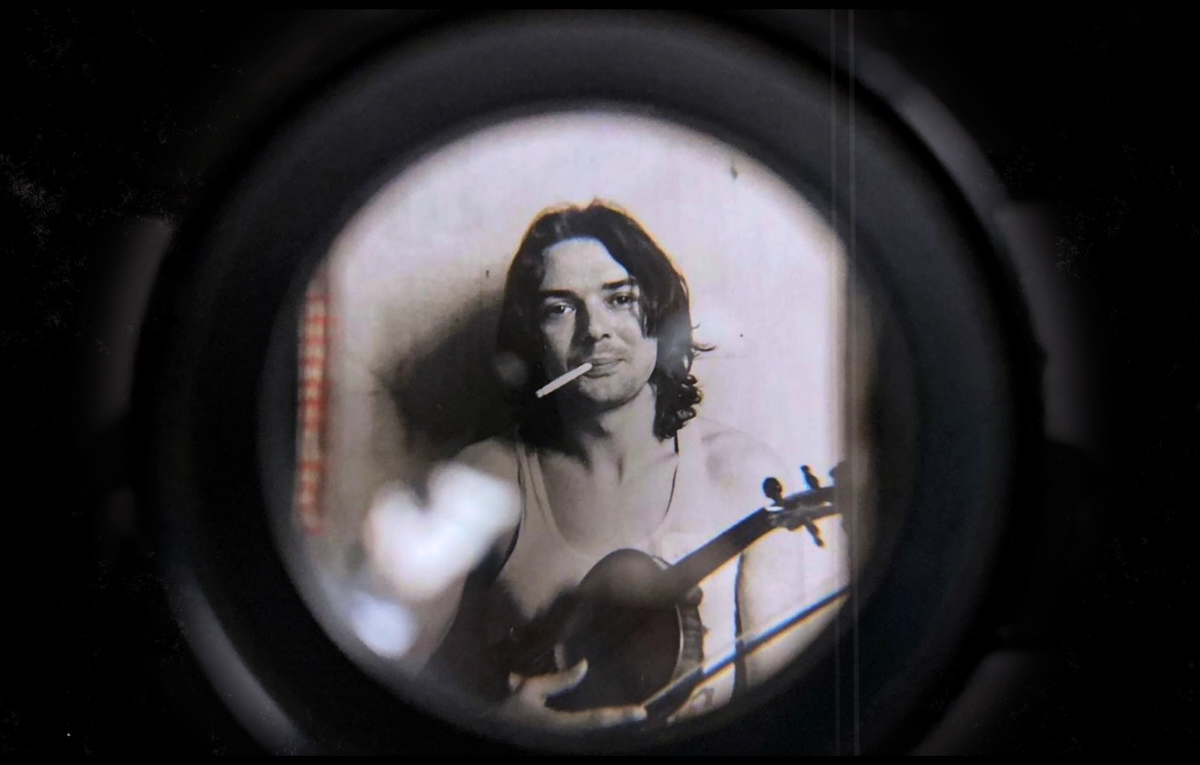
At the beginning of Going where I don't know Mauro Pagani says that his generation – the one that lived the dream of fantasy in power – is forgetting the utopias for which it fought. Like a vision that slowly fades, only fragments remain to be retained and passed down at all costs. Pagani lived such an experience firsthand: in January 2020 a neurological problem caused him general amnesia: names, faces, episodes of his existence, everything erased, disconnected, without order and meaning. Fortunately he recovered quickly and the awareness of his identity and his profession returned: that of a musician without borders.
After a priest points out that his lively nature could get him into trouble, his parents decide it's best not to let him leave the house too much. From that moment, confined within the domestic walls, he creates an alter ego: the Fugitive, a restless figure, constantly looking for stimuli and adventures beyond the usual. Thanks to his passion for music and his self-taught study of the flute and violin (which his father, exhausted by countless and harrowing exercises, at a certain point broke in his head) Pagani goes out into the world, discovers how curious he is, experiences music in a totally open way, not becoming stuck in just one genre but immersing himself in all of them. That's fine with him, because those are the years of music that knows no barriers. Shortly thereafter, PFM would arrive, success, world tours, the idea that technique matters, but it is even more important to use the stage to communicate. And he has a great desire to communicate, and that desire will never abandon him.
At the age of 80, which he celebrated on February 5, Pagani is at the center of a docufilm that tells the stories and peculiarities of a musician launched towards lands to discover and explore, Going where I don't know as the title says, on a journey as an eternal Fugitive.
Directed by Cristiana Mainardi, Going where I don't know (in cinemas on 16, 17 and 18 February) is a dialogue/confrontation between the musician and those he crossed paths with. Clearly starting from the memories with the Premiata Forneria Marconi, which Pagani abandoned in 1976 not out of disaffection, but to escape once again from a cage. Prog is too tight for him, his goals are different, he wants to explore everything he's passionate about. His first solo album from 1978 clearly shows that the stage of his music is now the world, with jazz, rock, ethnic and songwriting traits intertwined harmoniously. From there the trips multiply, Mauro becomes one and many, cultivates a solo career and at the same time makes himself available to other artists. The adventure with Fabrizio De André is well documented in the film, and it couldn't be otherwise, starting from Creuza de mäa work that would have deserved to be published under the name De André/Pagani to demonstrate how much Mauro's contribution contributed to making it the masterpiece that it is.
The testimonies of Manuel Agnelli, Ligabue, Giuliano Sangiorgi, Ornella Vanoni, Marco Mengoni, Mahmood, Arisa and Dori Ghezzi are reverent for the master and for the positive, constructive and instructive things he gave them, his partner Silvia Posa is careful to describe his most intimate sides. We then find ourselves at the Officine Meccaniche, the recording studio which is almost the physical representation of Pagani's ideas, who speaks about them with pride and emotion. Those who frequent it describe it as a sort of music paradise with large spaces, many instruments available and the right atmosphere to stimulate creativity. Then there is the adventure as musical director of Sanremo, the friendship with Demetrio Stratos and a thousand other encounters that are a pleasure to hear about.
Finally, the film offers a gem: Pagani and his musicians busy recording the new album Everything is already here which will be released on October 16, 23 years after the previous one Tomorrowwhose title track was re-recorded in 2009 by the big names of Italian pop to raise funds for the earthquake that hit L'Aquila and Abruzzo. The fragments heard in the documentary film confirm, if any were needed, that the Fugitive is still fit and always travelling. To where he doesn't know.
