
When was the last time New York dance music was “hot”? Some would probably argue the answer lies in the culture’s initial Brooklynification in the early 2000s, as chronicled on the margins of Lizzie Goodman’s Meet in the Bathroom. Older heads might cite the decade leading up to 9/11 when local rhythm undergrounds, hip-hop and house, became world conquerors. Historically minded utopians often argue the city is always popping, a kernel of truth held onto most tightly by romantic transplants.
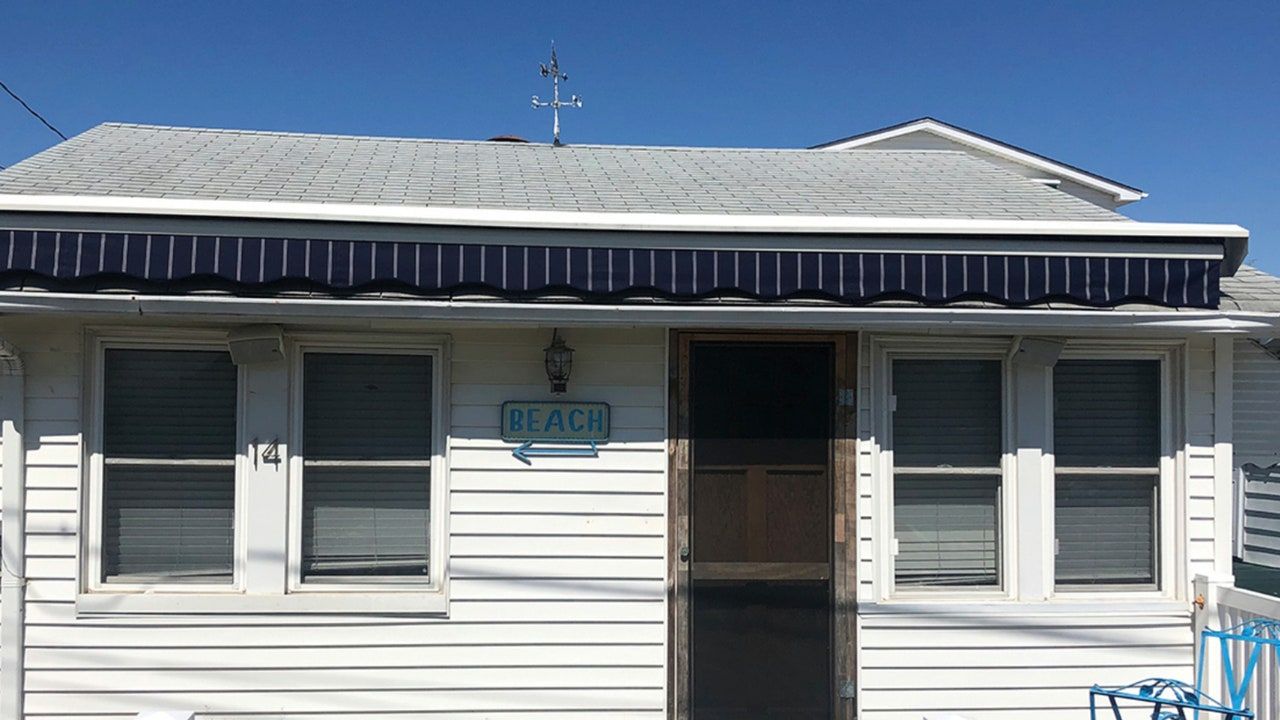
When you come of age in New York club culture, as Eli Escobar has, you recognize how connected its ups and downs are to the state of the city. By that measure, everything great happening in those clubs right now (hint: a lot) takes place in the shadow of 2020: the pandemic, the protests, the failed civic response, the officially shuttered nightlife and its roar back to life. All this turmoil is at the heart of Escobar’s The Beach Album, which got its title because the forty-something New Yorker recorded it in a house on the city’s Ramones-immortalized Rockaway Beach, where he and his family spent lockdown. Here is not only the period’s trauma, but the deeply complicated joy taking place afterwards.
An Upper West Side kid who began playing records, throwing parties, and making beats as a late-’80s/early-’90s teen, Escobar has been a presence across the city’s clubbing spectrum ever since. His career began in the dusk of hip-hop’s golden age and hit professional cruise while he paid his dues as an all-night-selecting worker bee during Manhattan’s bottle service days and blog-house phase. Now Escobar is one of the city’s most popular and hardworking DJs, sidestepping the festival and global circuit to gig locally several times a week: playing specialty big-room house or techno at queer party nights, street-soul and classic hip-hop on hotel rooftops, or a signature ’80s-heavy “sad boy electro” at Bushwick dives. At Tiki Disco, the decade-long outdoor summer institution he throws with DJ Lloyd and Andy Pry, the sound is an endless string of iconic dance tracks for packed Sunday afternoon crowds. The selections are egalitarian, the crowd-reading is precise, and the layered mixing superlative.
Escobar brings this sociological awareness and cultural fluency to The Beach, the latest and best in a series of sample-heavy mixtapes he produced during a creative burst early in the pandemic. 2020’s There Are Ghosts Everywhere in New York City grafted soul music onto community monologues and throwback interviews with neighborhood residents, while 2021’s Lullabies for a Sleeping City was a downtempo beat-tape on the theme of quiet urbanity and resilience. Though dancefloors were shuttered at those times, Escobar never stopped making songs for movement and release: grimy funk-house loops, pop-techno compositions, modular synth experiments. What ties The Beach together is how its tracks—which in Escobar’s eclectic style runs the gamut from hip-hop interludes to epic Balearic fantasias—accept the weight of the pandemic without getting swallowed by it, the context deepening the grooves. Another generation’s death disco—or, more precisely, Midtown 120 Blues—comes into view.