
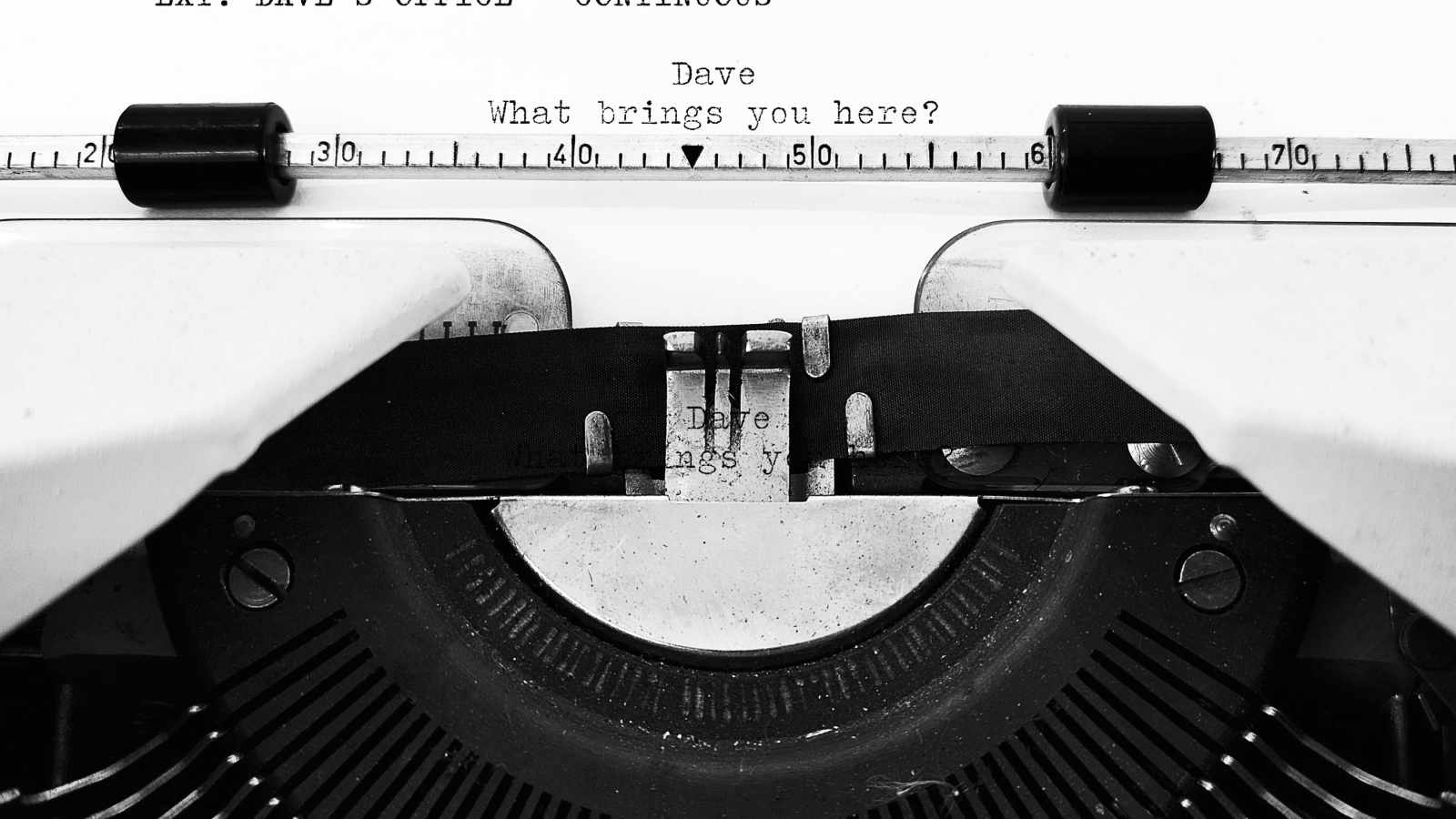
Dialogue shouldn't sound natural.
Maybe that's a hot take, especially given the sage advice that usually comes from well-meaning writing teachers or trusted mentors. Because of course we need dialogue to sound natural, like something someone would actually say.
To a point.
The thing to keep in mind is that when you are writing dialogue, you're engaging in a very specific and nuanced activity. You're doing something unnatural in order to convey something we engage in every day.
Here's what to remember: You're not transcribing real life. You're not recording something for the record. You're writing fiction. And in fiction, natural isn't the goal. Precision is.
Dialogue isn't a mirror. It's more like an abstract painting. It doesn't replicate how people talk but instead reveals how they think. If you're doing it right, your characters will say things they don't mean, mean things they don't say, and sometimes say nothing at all.
But the reader will know exactly what's going on.
Real Dialogue Is Boring, Great Dialogue Is Engineered
Listen to a real conversation sometime. Listen to the filler — the umsthe incomplete thoughts, the recycled clichés. Listen to how people meander, and how long it takes them to get to the point.
Real conversations can wander off the path altogether, and you'll suddenly find yourself talking about something else entirely.
You don't want that in your book.
Fictional dialogue has to strip all that away and compress meaning into digestible chunks that readers actually want to consume. It doesn't just serve as communication — it serves as pressure. Tension. Momentum.
It also conveys information indirectly. If your characters are saying exactly what they mean, you're probably writing exposition, not conversation.
Great dialogue sounds like it could happen in the real world, but it only works because it's been stripped down, sharpened and shaped to reveal subtext.
Think of Dialogue Like a Magic Trick
A magician never tells you what they're really doing. They keep your eyes on the wrong thing. The hand in motion, the fluttering scarf, the sparkling outfit. Anything but the trick.
Dialogue is the same way. It's misdirection. The real story is happening underneath the words.
In Jawsthere's a scene in which Chief Brody, oceanographer Hooper, and shark hunter Quint are comparing scars. It's funny and relaxed. But then Quint brings up the Indianapolis. The mood in the room shifts. The tone darkens. What seemed like banter becomes character revelation. We learn everything we need to know about Quint without him ever saying, “Here's my trauma.”
Good dialogue lets the character think they're in control, while the truth leaks out through the cracks.
The Rolling Stone Culture Council is an invitation-only community for Influencers, Innovators and Creatives. Do I qualify?
Subtext Is the Real Text
One of the biggest dialogue mistakes that new writers make is that everyone says exactly what they mean.
“I'm scared.”
“I love you.”
“I don't trust you.”
And for sure, there are times when this is appropriate. But truly good dialogue engages the reader and makes them do a bit of the work.
Working with the three examples above, here are some takes that make them stronger as dialogue:
“I can't go in there. I just can't.”
“I never want to do this without you.”
“You go ahead. I think I'll take my chances with the biker gang.”
Now we're cooking. The same three feelings as above, but the reader has to interpret what the characters are saying, rather than have it spoon-fed to them.
If you want your characters to feel real, let them dodge the real conversation.
Dialogue Isn't for the Characters — It's for the Reader
In this fictional world you're crafting, your characters already know the story. Or at least know their own thoughts, their own perspectives. The dialogue is there for us, not them.
In Aaron Sorkin's The Social Network (2010), the scene between Mark Zuckerberg and Erica in the opening minutes is a masterclass in tension. The words are sharp, but the emotions underneath — frustration, ambition, resentment — are volcanic. The characters aren't just exchanging information. They're exposing motivation, desire, imbalance.
It's not about what's being said. It's about what the audience discovers by watching them shoot.
A rule of thumb is to cut any dialogue that doesn't do at least one of these three things:
• Advance the plot.
• Reveal characters.
• Create or sustain tension.
A throwaway joke is fine if it deepens character or sets up an emotional beat. A line that only relays facts? Put it in narrative.
Don't waste your character's breath on things we can Google.
Tips to Level Up Your Dialogue
• Read it out loud. If it feels wooden in your mouth, it'll feel wooden in the reader's head. But remember, it doesn't have to sound natural —just intentional.
• Strip the greeting. You almost never need to include “Hi, how are you?” Start the conversation at the beat that matters.
• Overlap your lines. Let characters interrupt each other, mishear, deflect. Real conflict happens when two people aren't actually talking about the same thing.
• Use action beats like punctuation. A shrug, a drink, a glance at the clock — these add rhythm and reveal inner state without tagging every line with “he said.”
• Cut it in half. If a line works, see what happens when you cut it in half. It usually gets better.
• Write the lie, then reveal the truth. If you want to write dialogue that lives off the page, stop trying to mimic real people. Start writing real psychology. Let your characters lie. Let them posture. Let them avoid the thing that's eating them alive. Then, over time — or all at once — let it slip.
Readers don't fall in love with witty one-liners or mic-drop monologues. They fall in love with the moment when a character finally says what they've been trying not to say for a hundred pages.
If you want readers to walk away quoting lines from your story, this is the sort of thing to keep in mind.
Don't write like people talk. Write how they think.