
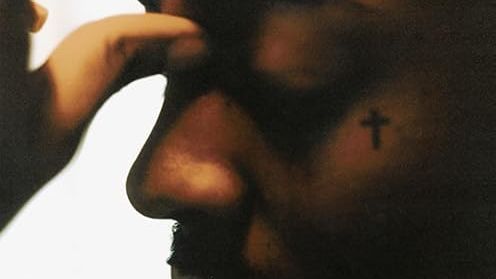
No more fucking models in the back of Uber XLs. No more brooding alone at house parties. No more ditching women in random cities on a whim. No more sending girlfriends to therapy by labeling himself a “walking erection” or basking in his hedonism with rhetorical questions like, “I like to run the streets ’til it’s dark out and then come home and blow your back out/I hope that’s OK?” After years of cold-hearted, gothic mood pieces that cribbed from The-Dream’s writerly breakup ballads and Jodeci’s sex-crazed fantasies, Brent Faiyaz is leaving all of that baggage in the past. Icon is his gentle and mature pivot into the grown folks R&B canon.
The Oh shit, I’m pushing (or just hit) 30 album is a rite of passage for the R&B playboy. What comes to mind: the Don Draper-like commitment crisis of Dwele’s 2008 project Sketches of a Man; Life Goes On, Donell Jones’ regret-fueled 2000s time capsule, looking back at all the games he played throughout his 20s. But Faiyaz’s emotional growth on Icon—stamped with a Raphael Saadiq executive producer credit that seems like it’s just for show—isn’t nuanced enough. The talk of settling down and staying in the crib feels like moodboard fodder, without any of the scraps of conversation and vivid stories that give a fly-on-the-wall view of actual personal relationships.
No score yet, be the first to add.
The problem is that his writing about being ready for love is not nearly as candid as his writing about running away from it. Fuck the World and Wasteland are full of thorny self-observations and critiques (“Who can I love when they tell me I can’t love myself?/How in the hell could I possibly love someone else?”) that explain his descent into clubrat deviance. On Icon, I don’t get a sense for why, all of a sudden, Brent is ready to take that next life step. For instance, on “wrong faces.,” he’s telling this girl to leave the streets and come home to him, but he doesn’t explain to her (or us!) what exactly has changed about his mindset. Likewise, the lyrics of the almost-engagement anthem “strangers.” has a good amount of melodrama (“Baby, you were supposed to change your last name/And then it came all crashing down”), yet his chronicles of what went wrong are vague and one-sided: He did everything he could; she messed it up. I’ve been listening to him be a demon for five projects straight and now I’m supposed to believe he’s a hopeless romantic just because he says so?
Brent’s uncharacteristically shallow pen leaves a lot of the emotional heavy lifting to the vocals. That probably should be a disaster, considering he’s never been a strong singer, but there’s some life to his pitch-shifted riffs on ’80s and ’90s male R&B melodies. He doesn’t have the church choir technicality to pull off the Jodeci-style stacked vocals of “world is yours.,” but it’s fun to hear him try with helium-tinged chirps. The fat snares and cloudy soul of “pure fantasy.” have the weightless bounce of a new jack swing slow jam. The croons on “other side.” might have had a similar effect, if it wasn’t shameless Benny Blanco co-produced funkless funk chasing that The Weeknd bag. On “have to.,” his producer team (including longtime collaborator Dpat) laces him with a thunderous Jimmy Jam & Terry Lewis bassline and sway to go with his computerized falsetto. There’s a little bit of welcome uneasiness when he lilts, “I’m in a race with time to get where I belong,” like the pressure to get his shit together is weighing on him—an evolution from the nothing-matters dicking around of lines like Wasteland’s “We both still young, so what’s the rush?”
“have to.” teases the feeling of walls closing in on him, but Faiyaz fully explores that state on “butterflies,” one of his best songs to date. Dreamy, stripped-down production makes it seem like he’s walking down the wedding aisle in slow motion with no idea what he’s going to do. He toggles between excitement and tenderness and doubt and uncertainty, from the smoothly sung opening line, “Maybe it’s a little bit rushed, but I’m falling in love.” Meanwhile, pitched-down vocal echoes sweep into the hook, intensifying the anxiety that’s creeping in. By the time he chooses her and the mood turns celebratory, with swelling, crushed-up vocals that turn him into a one-man Mint Condition, the euphoria still has a hint of nerves. It’s so raw. It’s the exact sort of emotional dilemma that humanized his womanizer antics. It’s one of the few times on Icon where he makes love feel like more than a catalyst for a rebrand—the rare moment he brings the playful specificity and honesty of his player music to the frightening thrill of commitment.