
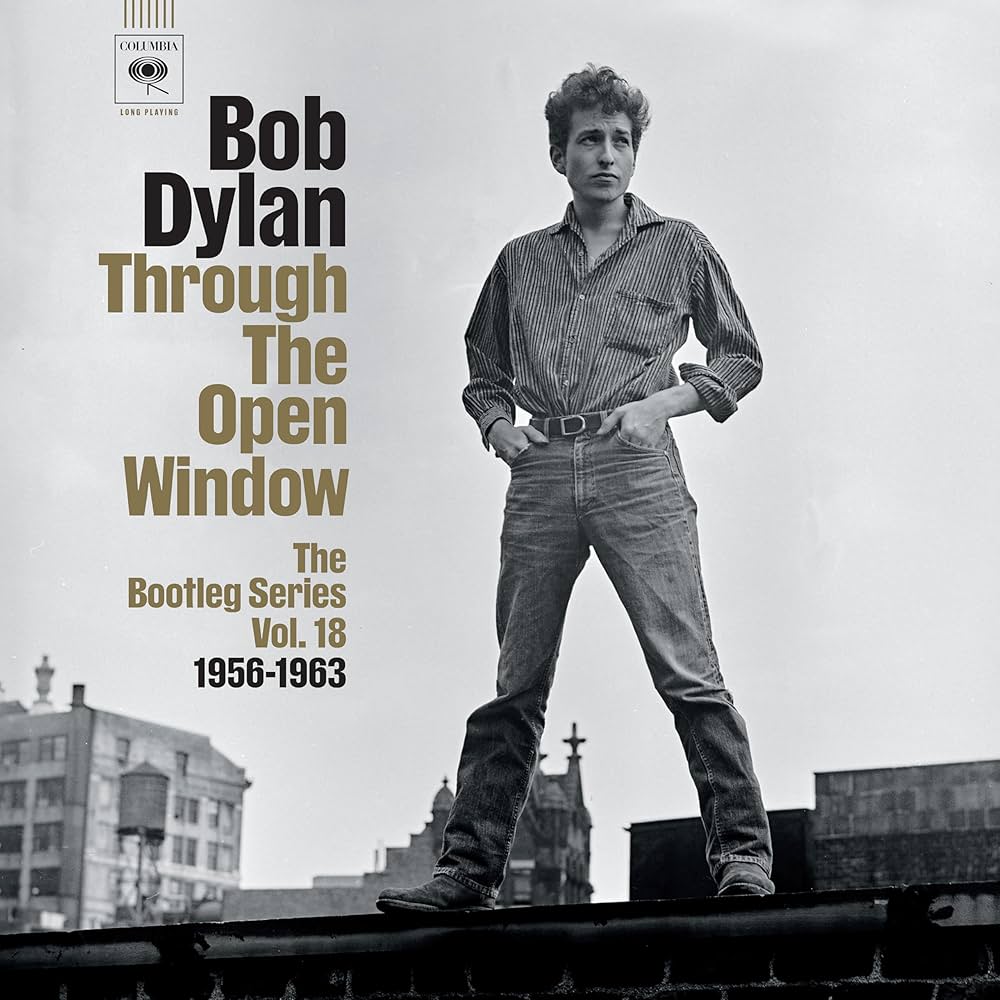
It's Christmas Eve 1956 in Saint Paul, Minnesota. A fifteen-year-old from Hibbing boldly enters a record shop in the company of two friends: they have saved a few dollars to record an acetate, a do-it-yourself 78 rpm sample lasting just half a minute. “Let The Good Times Roll,” the song they chose, is the latest hit by a New Orleans duo, Shirley & Lee. The three friends call themselves the Jokers: Larry Keegan and his cousin Howard Rutman do backing vocals, Robert Zimmerman stands in front of the microphone and bangs on the piano keys. On the Greyhound bus that takes them home, while they continue talking about music wrapped in their winter jackets, their hearts are still racing.
That recording, today, sounds like the relic of a world that no longer exists, or perhaps like the first preview of the world we know now. Sacred relic of worship Dylanianbecause – you will have already understood – this is Mr. Bob Dylan's first testimony on record. This would already be enough to get people talking about the new volume of the “Bootleg Series”, number 18, “Through The Open Window”. But in the eight discs of the collection there is much more: a true encyclopedic miscellany of the beginnings of the great doyen of American singer-songwriters, an ideal philological counterpoint for the first part of that portrait of the artist as a puppy brought to the screens in “A Complete Unknown”. A precious historical document, even if – as with the almost contemporary “Witmark Demos”, also published in the “Bootleg Series” now about fifteen years ago – it remains to be recommended more to completionists than to occasional listeners.
It all begins with dreams of rock 'n' roll, as expected: “We lived under a cloud of death; the air was radioactive. There was no tomorrow, it could all end from one day to the next. Rock 'n' roll made you unaware of fear”, recalls Dylan. “It was skeletal music, emerging from the darkness and riding the atom bomb, and the artists had heads made of stars, like mystical deities.” In May 1959, at the house of a friend from Hibbing, we heard him playing doo-wop, imitating another of the hits of the moment, “Sixteen Candles” by The Crests.
Just a year later, however, everything has already changed: Dylan enrolled in university, moved to Minneapolis, discovered folk music. And here he is grappling with Woody Guthrie's first sketches (a devout rereading of “Jesus Christ”), in search of a new identity. Ready to land in New York. It is there that “Through The Open Window” comes to life, rewinding the film of three legendary years (from 1961 to 1963). There are the first performances in the clubs of Greenwich Village, from the Gaslight Café to Gerde's Folk City, where Dylan begins to address the traditional songbook (listen to the ballad “The Girl I Left Behind” to believe it). And there is also the fateful moment in which Dylan enters the Columbia studios to accompany Carolyn Hester on harmonica in “I'll Fly Away”, definitively convincing John Hammond of the risk of signing that disheveled twenty-year-old.
On November 4, 1961, Izzy Young – owner of the Folklore Center record store, the nerve center of the community of folk revival – organizes Bob Dylan's first solo concert at Carnegie Chapter Hall. However, only about fifty spectators showed up, leaving three-quarters of the room empty. The initial tracks of the second album of “Through The Open Window” document precisely that temporary defeat for the ambitions of the young Dylan, between the opposites of an overly forced “Gospel Plow” and a “This Land Is Your Land” stripped of any emphasis: the only autograph song is the denunciation against the indifference of “Man On The Street”, while the best comes from the sharp tones of the classic murder ballad “Pretty Polly.”
1962, which occupies the third and fourth discs of the collection, is dominated by the outtakes of “The Freewheelin' Bob Dylan”, with a special mention for the attempt (strongly desired by manager Albert Grossman) to emulate Sun Records records by taking Arthur Crudup's “That's All Right, Mama”: the band is the same one that accompanies Dylan in the first 45 rpm of his career, “Mixed-Up Confusion”, but the ghost of electricity has yet to manifest itself. Meanwhile, also on the side live the material is not lacking, from the brilliant set at Finjan in Montreal (already bootlegs beloved by the followers) up to the unmissable performances of the traditional “Barbara Allen” and “The Cuckoo” at the Gaslight Café, passing through the first, immature performance of “Blowin' In The Wind”. Among the rarities, there is even one that comes from the BBC archives: “The Ballad Of The Gliding Swan”, sung by Dylan in the lost film “Madhouse On Castle Street” (his first try as an actor).
At the end of the set, a triptych of concerts traces the arc of 1963. The first, the one at the Town Hall in New York on 12 April 1963, practically represents the redemption of the fiasco at the Carnegie Chapter Hall: Dylan's name is once again the only one on the bill, but this time (despite “The Freewheelin' Bob Dylan” not having yet arrived in record stores) the setlist is magnetic, made up almost entirely of autographed songs. There are the topical song inspired by the news (in “Who Killed Davey Moore?”, Dylan even denounces the death of a boxer which occurred just a couple of weeks before the concert), there are the folk homages (a lively “Pretty Peggy-O”, loudly requested by the audience). But the most intense moment is reserved for the nostalgic arpeggio of “Tomorrow Is A Long Time” (not surprisingly the best-known version of the song, the one that will be included in 1971 in the “Greatest Hits Vol. 2”). In the end, Dylan leaves the guitar aside and (with a little less confidence than usual) reads the lines of his poem “Last Thoughts On Woody Guthrie”, almost as if to close his debt to his master.
Three months later, the Newport Festival reserves him a triumphal welcome both when he presents his latest unreleased songs (“Playboys And Playgirls”) and when he duets with Joan Baez (“With God On Our Side”), up to the collective chorus of a “Blowin' In The Wind” which has already become an anthem: Dylan has now become the face of the civil rights movement, and it is not surprising to find him at the end of August at the Washington March singing “When The Ship Comes In”.
The last concert of 1963 (which is also the only one reported in full in the collection) occupies the final two discs and marks Dylan's definitive consecration in October: in one of the most prestigious settings in the Big Apple, that of Carnegie Hall, the new “prince of folk” takes on the role of storyteller, entertainer and poet at the same time, previewing many of the songs destined to be included in “The Times They Are A-Changin'”. The audience (in which Dylan's parents also sit for the first time) is enchanted by hypnotic and solemn ballads such as “Lay Down Your Weary Tune” and “Percy's Song”, identifies with the anger of “Masters Of War”, participates intimately in the drama of the activists (Medgar Evers in “Only A Pawn In Their Game”) and of the common people (the waitress in “The Lonesome Death Of Hattie Carroll”). In the end, the scene is from beatlemania: “the girls clung to the car”, say witnesses of the time, “while the police chased them away to allow Bob to get away unharmed”. They're no longer folk fans, they're Bob Dylan fans.
But fame, as we know, is unforgiving. Just a couple of days later, Newsweek comes out with a real “character assassination”, exposing the truth about all the bizarre inventions created by Dylan around his own biography. In response, he spends Halloween in the studio recording a new song, intended to close “The Times They Are A-Changin'”: “The dirt of gossip blows into my face/ And the dust of rumors covers me”, he sings lividly. “I'll make my stand/ And remain as I am/ And bid farewell and not give a damn”. The song is called “Restless Farewell”, but in “Through The Open Window” – significantly – it does not appear: because it is not an epilogue, but the beginning of a new chapter. The first chapter of those betrayals with which Dylan will learn to escape his own shadow.
04/02/2026
Daniel D`Amico for SANREMO.FM