
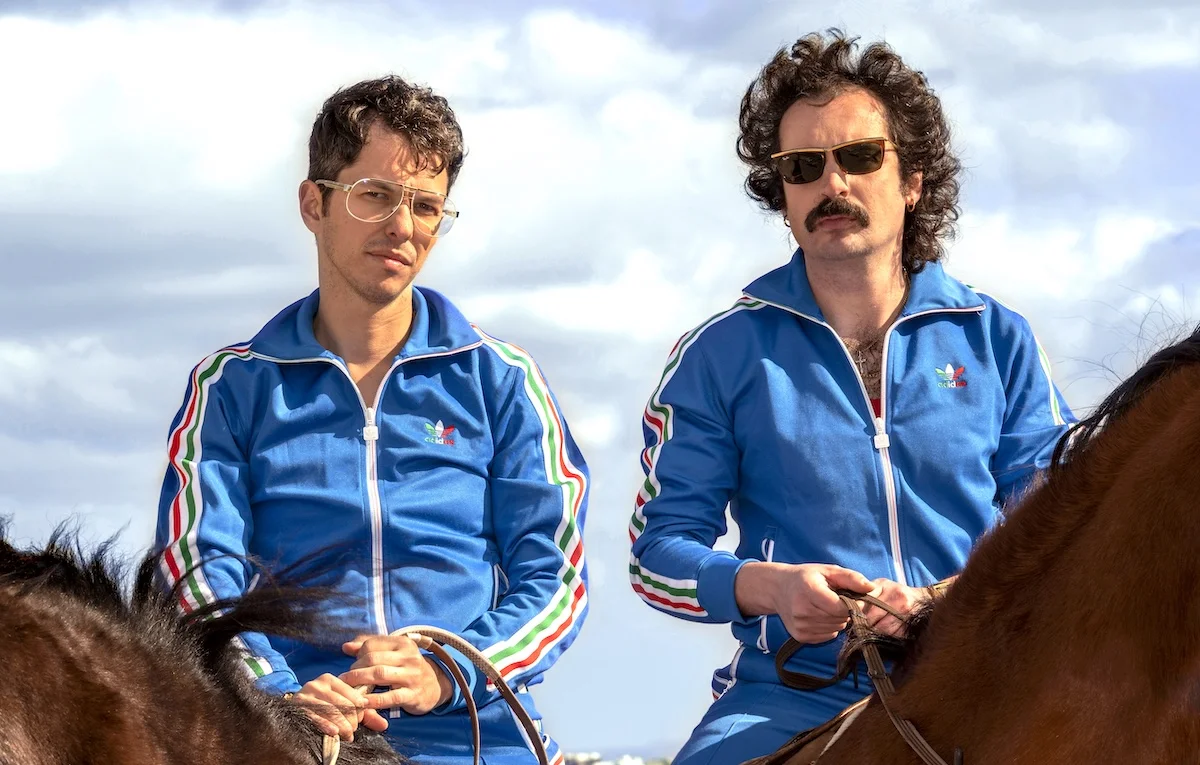
Take an Italian postcard image, sift it through TikTok and Instagram and package it for clubs around the world. The transnational success of Mind Enterprises, a duo composed of Andrea Tirone (nicknamed Secco) and Roberto Conigliaro (Baffone), moves on this ridge and has the ability to transform the cliché of Italianness into a pop brand. An operation which, at first glance, seems like a banal trick to chase the algorithms, but which is turning out to be a real anthropological case study.
Andrea and Roberto are two survivors of the Italian indie who in London have erased the past to rebuild a synthetic alter-ego. Waiting to see them starting from May 30th on the stages of Italian festivals, the two manage a nostalgia company that sells out abroad, exporting a geometric, colorful Italy made of fetishes. The new album Negroni Love represents the manifesto of this bizarre short circuit, bringing together the national-popular sentiment of Umberto Tozzi, the popular rereading of Bach, the yuppie universe of Ezio Greggio, the paninari outside Burghy in Piazza San Babila, the colored Sergio Tacchini-style polo shirts and the crumpled pages of Tuttosport at the table of a bar in the shadow of the Mole.
«Abroad we use a series of clichés that Italians try to forget, but which are deeply attractive in the world. The power of Italianness matters a lot and without a doubt social media amplifies this aesthetic”, says Andrea. «There is an idea of Italy linked to fashion and an illusion that others don't know how to enjoy life like us. But it's an almost fake image, a stereotype, because then we spend our lives in traffic. But we Italians have this sense of beauty within us and it re-emerges as soon as we leave our national borders.”
Listening to your songs, the question arises spontaneously: how much cunning is there in your sound?
Andrew: Zero cunning, all naturalness. We make the music we like, in the end it's always the best choice.
How it was born Negroni Love?
Andrew: When I start writing I hunt for tools. Last year I recovered a Jupiter 6 synthesizer from the 80s from a techno producer in Cagliari and started combining Italo disco with the right elements to make a good party. Then Roberto joined me in Barcelona and we wrote the album. We were testing the pieces live on Instagram and an alignment of planets was triggered with the algorithm which generated a crazy response. This gave us definitive confirmation that the sound worked without having to necessarily overturn it.
Which artists have you taken the most inspiration from?
Roberto: All the Italo disco stuff from the golden years, from 80 to 83: records by Kano, Koto, Cyber People. We chewed a lot of it.
Andrew: Italo disco lives on singles, not albums. Take one's track, the other's piece and it's that overall sound that gave us the inspiration.
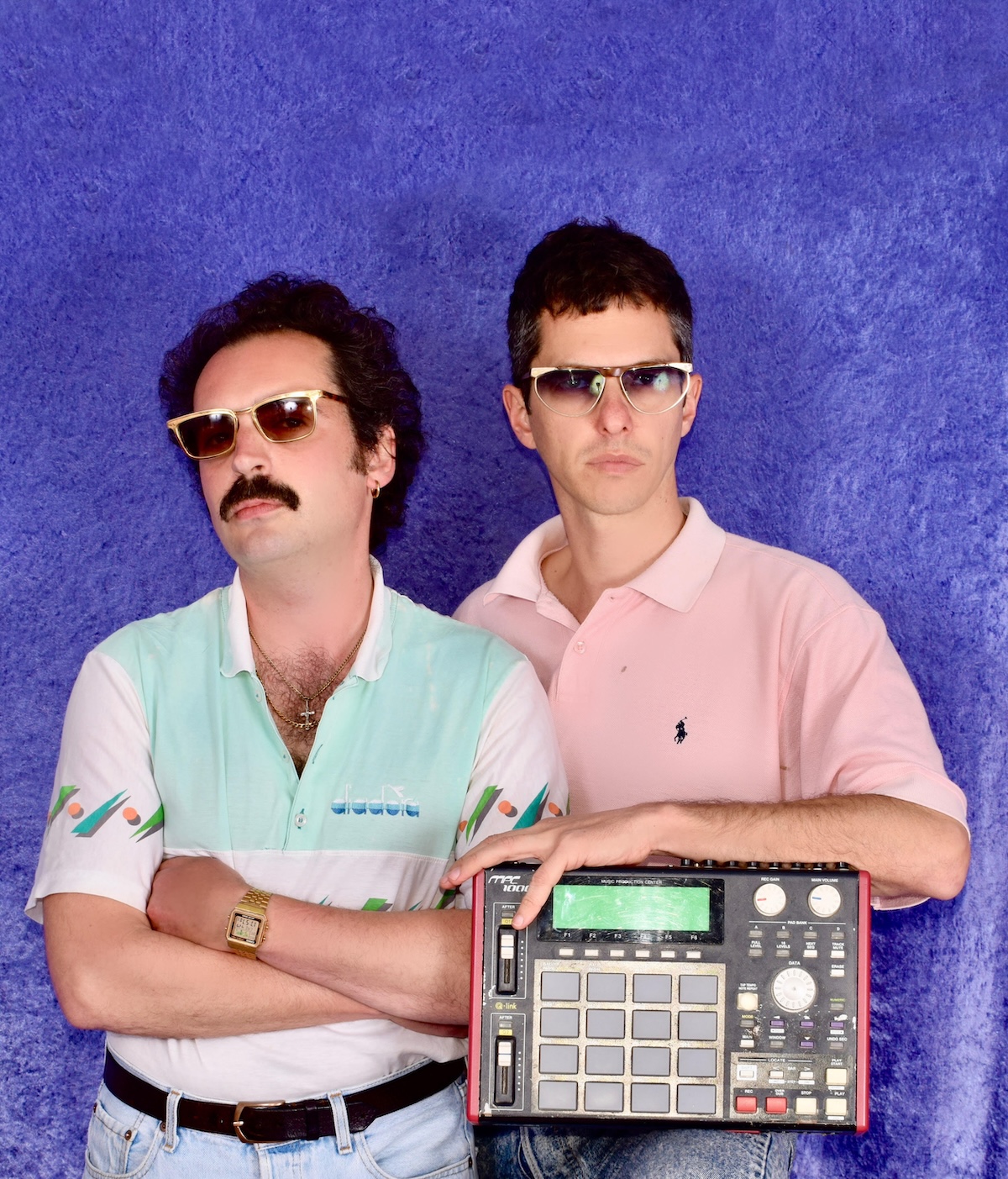
Photo: press/Infamous
Let's talk about the songs on the album. Another World it reminded me of the atmosphere of Children by Robert Miles. Is that the inspiration? Where does the initial ticking sound come from?
Andrew: You got it right with Robert Miles, it's one of our historic listens. There's a more '90s inspiration there. Perhaps the ticking of the clock had occurred to me unconsciously Time by Pink Floyd, or I felt that the intro was empty and I put it there.
Why theAir on the fourth string by Bach? Why the classic?
Andrew: I think there is a lot of affinity between Italo disco and the Italian baroque music of Scarlatti or Vivaldi. A violinist told me that Bach has a mathematical structure that recalls pop music and it's true.
Why resume Glory by Umberto Tozzi right now, with his farewell to the stage and the musical starting in autumn?
Andrew: Pure luck. It is a piece born in January 2025 in the studio by Lauer, a DJ friend of ours from Frankfurt. He was the one who told me that we had to do a dancefloor piece by Tozzi. We arranged it together because we were so excited, without the thought of having a marketing strategy.
Another of your songs quotes the Turin sports newspaper Tuttosport. What relationship do you have with sport?
Roberto: I play and follow tennis a lot, I am fascinated by the vintage aesthetic of polo shirts from the 80s and 90s.
Andrew: I don't care about sport, I'm a total layman. But football as a collective ritual fascinates me, as does the graphic aesthetic of Tuttosport.
At the time of your first album Idealistreleased in 2016, the sound was very different. What has happened in these ten years?
Andrew: Idealist it was bizarre, all written on the computer with the risk of getting wrapped up. We wanted to transpose Afrobeat into an electronic key. Then we understood that Italo disco comes easier to us because we were born as a band and we think of synths as a real group.
Roberto: At that time we hung out with Stefan, the drummer of the Klaxons, a lot. In his studio we started experimenting with a mountain of synths, the LinnDrum, and a different vision opened up.
Andrea, before Mind Enterprises you had a band in Italy, Did. Then you moved to London. What happened?
Andrew: I just wanted to make music. In Italy I believed in it at most with the recklessness of my twenties, but when I saw that the other members of the band were hesitating between university and the idea of opening a bar, it broke my heart. I realized that I had to depend only on myself. So I bought a computer and went to London, without a plan B and without speaking English, thinking that there was real industry there.
And how did the apprenticeship go at the beginning?
Andrew: I got incredibly lucky. As soon as I arrived I released a 7 inch and immediately signed a recording and publishing contract. I had the money to make music full time without having to work other jobs. I am convinced that in this job there is 80% luck and 20% obstinacy in believing in it.
Roberto: I too was disillusioned with the Italian scene and bands without a precise direction. Andrea and I met in Sicily at the Ypsigrock Festival, we played with different bands and we had both just moved to London for the same reasons. We exchanged numbers and started collaborating.
How did you end up performing at Coachella?
Andrew: The news reached us while we were in an ordinary bar, during a call with the American booking agent. They didn't believe it either, because it's very rare for a project that has never played in the United States to be called there. We were positioned as headliners of the Sonora Tent stage and it was a huge pride to see Italo disco on such an important stage.
What kind of audience is Mind Enterprises' audience? Who's coming to hear you?
Andrew: It's a very varied audience. There is a nostalgic segment of forty- and fifty-year-olds who dust off their Sergio Tacchini t-shirts and put on fake moustaches, looking like paninarians at best. Then there are the very young. In Germany, university students follow us because they are looking for a fresh and melodic sound that contrasts with the dark techno of Berlin. In Australia, however, we sell out, but people look at us as if we were aliens from space, intrigued by this sound so far from them.