
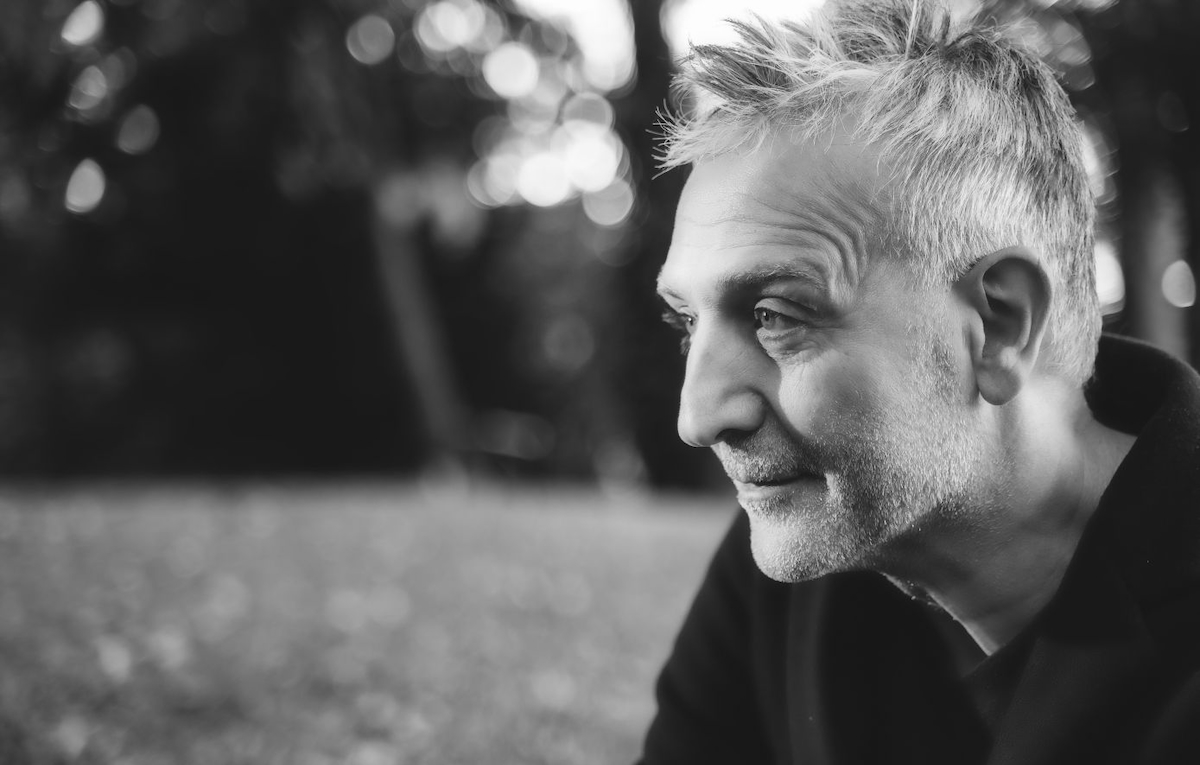
In this age of permanent streaming, the music industry is a form of “digital neo-feudalism” in which the lords are the owners of the platforms, the major labels and investment funds are the vassals, the journalists, playlist curators and influencers represent the clergy, while the serfs are the musicians. Corrado Rustici says it in The transmodern musiciana monthly podcast that was born, as he explained to us in this interview, “from a need of mine” and from a series of reflections used as a compass to “go back to healthier shores for musicians and also for me personally”. But which, from the first episode, becomes something broader: an x-ray of the contemporary music industry.
It is not a provocation, because Rustici speaks with the authority of someone who has gone through all the eras of modern popular music, “from the bubble of how music was understood from the '30s onwards”, passing from the flourishing '50s and '60s, up to the explosion of the '80s and '90s. Then something broke in the mid-2000s and now “the middle class has disappeared”, the one who could live decently with 15 thousand copies of a record, while now with a million streams they earn “barely 3000 euros”. A system that he openly defines as “a disaster”, governed by logic winner take all and where “1% of artists get 90% of streams.” This is where the urgency of the podcast comes from: «These are little stones that needed to be removed, because they are getting bigger and bigger. I decided to do it especially for young people.”
The timing is not accidental. While he dismantles the rhetoric of “algorithmic meritocracy” piece by piece, Rustici is also the protagonist of Cervello's return. Fifty years after the cult album Melosthe band produced Chaire, published exclusively in physical format. It is built on thirteen songs written between 1974 and 1983 and left buried “on cassettes and reels that were never released”. At the center, the original voice of Gianluigi Di Franco, who passed away in 2005, regenerated thanks to technology: «It moved us to hear it again». Clarifying the lights and shadows of current possibilities: «It would not have been possible without technology that brought his performances back to life».
Thus, podcast and album dialogue on the same axis: radical criticism of the present, which has forgotten the artistic aspect, and absolute loyalty to the idea of music as a cultural act. On the one hand the denunciation of an industry that “transforms music into assets, as in real estate”, on the other the demonstration that time, memory and community can still produce meaning: “Music cannot stop because humanity will always need it”.
Meanwhile, why a podcast?
I created it, like everything I do in music, starting from my personal need. These are thoughts and reflections that I have developed over time and that I try to use to return to healthier places for musicians and also for me personally.
In the first episode, which is titled “From minstrels to algorithms: the neo-feudal order of the contemporary music industry”, you openly talk about a digital neo-feudalism applied to the music industry. Why does this metaphor describe the current functioning of the streaming system better than others?
It's not a joke, it's reality. Luckily for me, I experienced music as it was understood from the '30s onwards, with its flowering in the '50s and '60s and the definitive explosion in the '80s and '90s. Now it has degenerated, not so much on a business level. Because this is the basis of every market. But first there was a method of selling that was able to reflect and enhance the artistic or cultural nature of what was being conveyed. Today, however, the neo-feudal order is dominated by the owners of the platforms who dictate the law, who are the real lords. Then there are the vassals, which have become the majors and investment funds. There is no shortage of clergy, represented by playlist curators, influencers, social media managers and journalists. To get to the serfs who, unfortunately, are the musicians.
In this way, you say, the middle class in the sector has disappeared. If until a few years ago selling 15 thousand copies of a record could allow a musician to earn between 15 and 30 thousand euros, today with one million streams he barely earns 3000 euros.
This is how the market has transformed. Among other things, I am preparing another episode of the podcast on the topic of the post-music world, that is, after the advent of artificial intelligence. Not so much from a creative point of view, because technology will always be used by some genius to create something wonderful, but how the industry has appropriated this new discovery and how it is using it to build free products that will cause the market to inflate. It's a dark side of music that we will have to deal with in the coming years.
You also talk about a power law that governs the platforms, where 1% of the artists take 90% of the streams and the rest divide the remaining 10%. It is called winner take all economy. What consequences does this model have?
It's a disaster. It works for the moment, because the labels, like the feudal dukes and barons, have bowed to these new realities since it is convenient and they earn a lot without much effort. Furthermore, this situation also reflects a global condition, where in general the middle class has disappeared from our society. It is even sadder that all this manifests itself in music, because it is from this sector that the most beautiful and changing ideas have always come. Even more so from independent, niche and free artists, who after a record sold in 15 thousand copies and with concerts could make a dignified living there and continue to experiment.
How much does this mechanism affect personal freedom?
Many are forced to bow down, otherwise they won't work. As a guitarist, I know how musicians are victims of their own myth, of mannerism and vanity. Today, many of my colleagues do things to work that have nothing to do with the technique they have acquired over time. They are little stones that needed to be removed, because over time they become bigger and bigger and I decided to make this podcast especially for young people. They must know other possible models and understand that the only goal is not to become a superstar. If you are an artist you can even end up dying of doing. Not everyone is an artist and making people believe that is the trick.
Some were then re-evaluated later.
I experienced it first hand with the band Cervello. After the first album, 50 years ago, no one followed up on it. Because we were too prog for prog and Martians for those who listened to Italian pop songs. But then, in this period of time, we received signals and respect from all over the world, so much so that we decided to publish Chairethe album with 13 unreleased songs written between 1974 and 1983 and which remained hidden for decades on unreleased cassettes and reels.
Despite this neo-feudalism, is there still room for music?
There is space because music cannot stop, humanity will always need it. It is a natural manifestation of the human being. All artists are always ignored at first, because art shifts the focus and horizons a little further, which is the opposite of the familiarity of the music they offer us in recent years. Everything seems the same or similar, otherwise the algorithm puts you at a disadvantage, but the artistic expression will always be there. Those who are truly artists continue to be so, because they cannot do without it regardless of the economic return.
With technology you have reconstructed the musical and singing parts of Gianluigi Di Franco, who passed away in 2005.
Absolutely yes, because I am not against technology. I am convinced that it has always determined the sound of various musical eras. Indeed, this album would not have been possible without technology that allowed us to bring Gianluigi Di Franco's performances back to life. Not to put something new on him, but to repair the quality of the recordings from 50 years ago which today, if reproduced without some help, would be unworkable. Today the original voices can be regenerated and we were moved to hear it again.
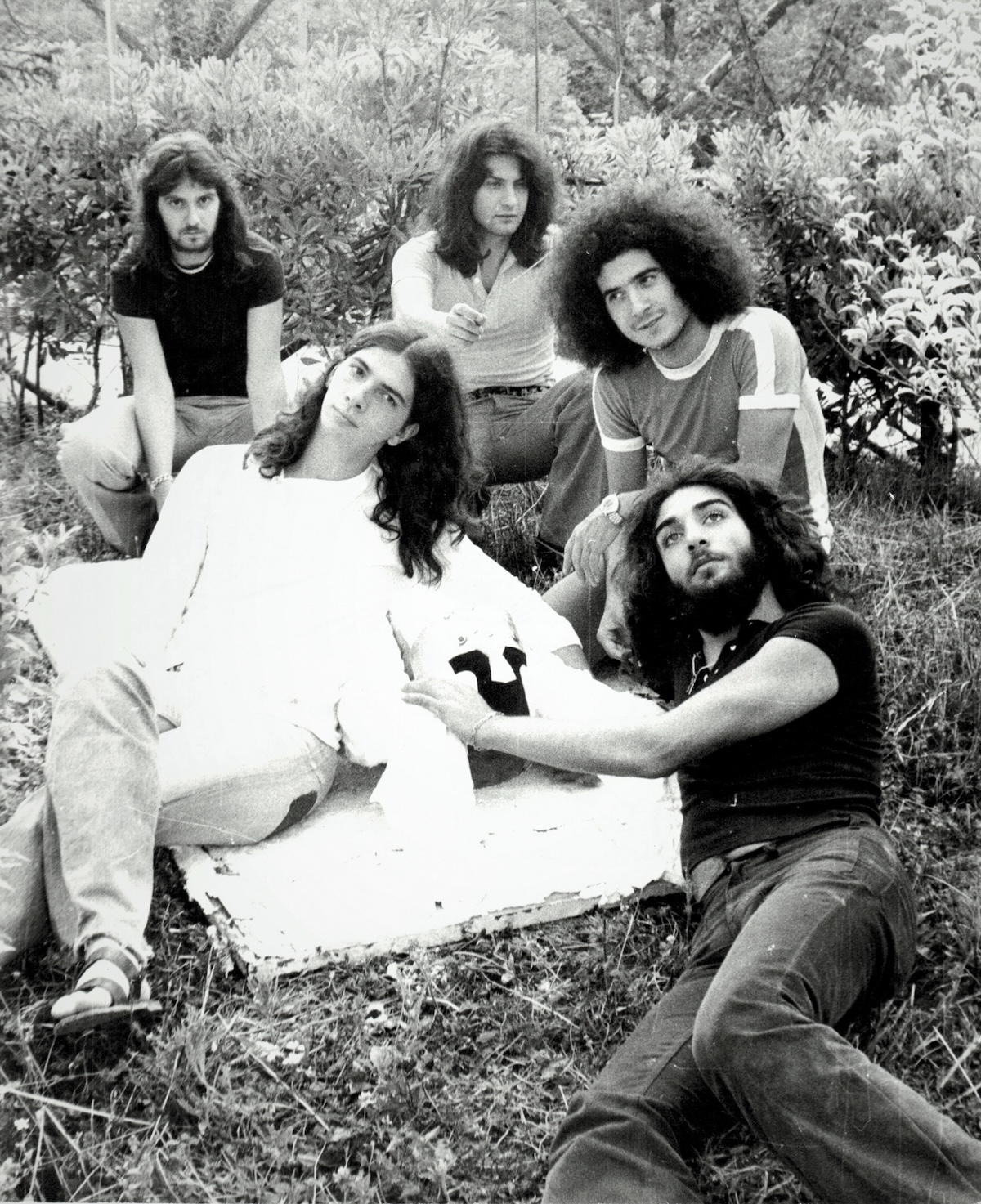
Brain. Press photo
Another phenomenon that has been triggered is the acquisition of catalogues. From Bob Dylan who sold his to Taylor Swift who, instead, regained ownership of the masters.
And no one talks about it, isn't it strange? There is no major that has not acquired the catalog of a great artist, but because they are able to restore credibility to him, as well as fixed income, which they risk losing. A lot of the music coming out in this period is already made with AI and is often better than that made by humans, so they take action in this way. This allows enormous revenues from music as an asset, a bit like in real estate where profits are made from more difficult to perishable goods. At the same time, however, they continue to see music that is useless and has no future.
In the podcast there are signs that, due to musical homologation, regional diversity is also disappearing. You who contributed to his career, do you think that Zucchero would have more difficulty establishing himself today with his peculiar characteristics?
Today it would not be valued as it was then. Zucchero, like others, were supported by a sector with completely different logics compared to now. Speaking of majors, Zucchero at the time represented an artistic investment, even before a financial one. There are still artists like that, but outside the major labels. They are rebels who, sooner or later, will manage to assert themselves, perhaps with new logics that will question the sector.
You worked in the United States and took part in the first records of Whitney Houston, one of the most beautiful voices ever. Should you also deal with Auto-Tune today?
Whitney was unique, she had one of the most powerful voices ever heard. He never made mistakes, like all the greats of that period because, otherwise, you didn't even have a chance of making it. That was an era in which you brought the guitar and auditioned, singing and playing in front of the presidents or managers of the labels, that way they understood if there was potential. Currently we have artists like Adele, who is very good, but she uses some Auto-Tune too. But, at least, let's say that he basically has a beautiful voice.
In the end of the podcast you also add some solutions for young people and for a new, more equal music market. Isn't everything lost?
I am not hopeful about unions or institutions, even if they will be part of a process in antitrust regulation. But first it would be useful to develop decentralized blockchain systems for royalties. A way that would allow those who write music and songs to receive the rights in the appropriate manner and quantities. Then I also believe very much in a return of the communities. As was the case during the feudal system, when a model no longer meets our basic needs, then that is when it is questioned and an alternative is created. However, I also want to reiterate a concept that I had already expressed in my book, Breviary of the artistic producer: We are not all artists. The perception of the democratization of art, because we all have access to certain dynamics thanks to technology, is incorrect. It will always remain an activity for the few.