
If there is a rock equivalent of the four notes that open the Fifth by Beethoven are the power chords that give way to Good Times, Bad Times of Led Zeppelin. The introductory motif of the symphony is the sound of destiny knocking on the door, Jimmy Page's fifth chords are the announcement of the arrival of the barbarians who will kick that door down. It's 1969 and those chords herald the arrival of the most ferocious, dangerous, horniest, loudest generation of rockers we've seen up to that point. Led Zeppelin will overcome Good Times, Bad Timesbut those double sdengs placed at the beginning of the debut are the signal of an epochal change, of the arrival of a generation that rewrites the rules.
The first solo album by Thomas Raggi of Måneskin opens with pairs of staccato chords with the hatchet that recall the intro of Good Times, Bad Times. It can only be a deliberate quote, perhaps the evocation of the right spirits, certainly a wink to the public who appreciates the history of rock and perhaps even an exciting novelty for those who don't know that history. But it is also symbolic of a way of making music and of what a certain type of rock has become: no longer evolution (or revolution), but maintenance.
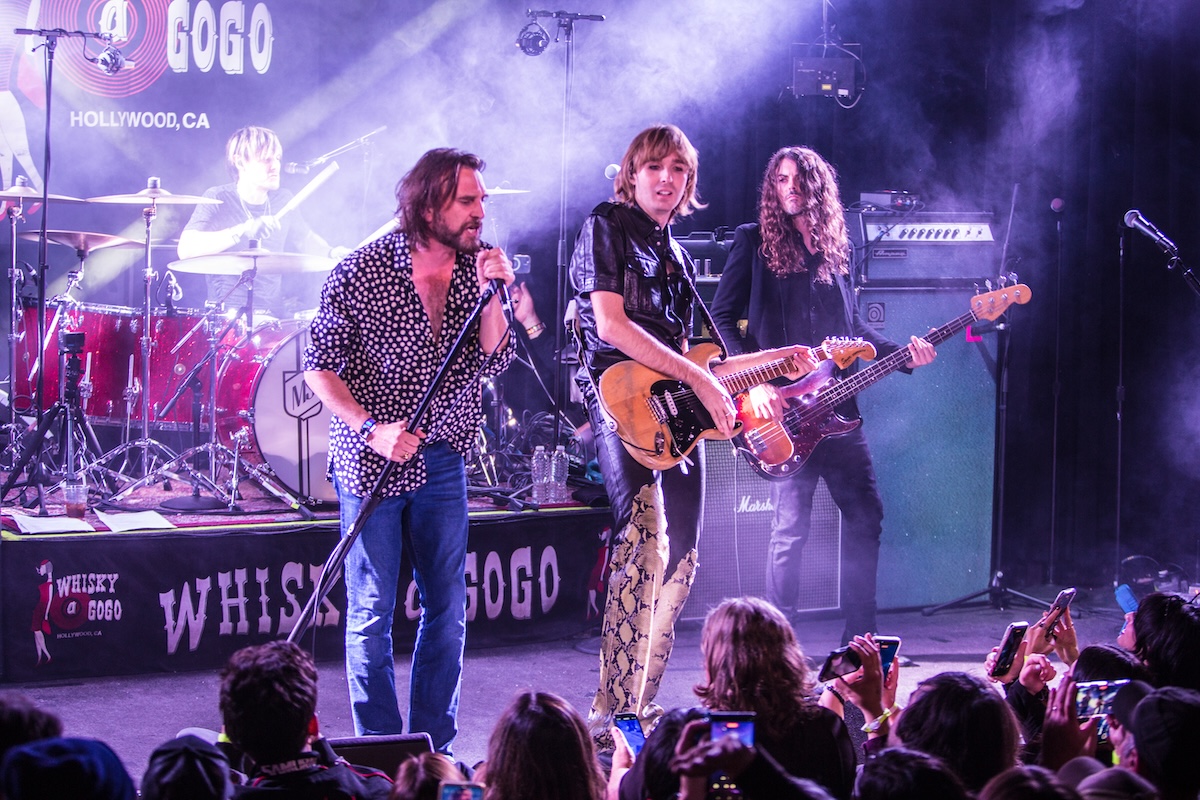
I don't want to compare Thomas Raggi to Led Zeppelin here, I'm not that stupid. But the intro of Getcha! which opens Masquerade it is emblematic of the merits (they exist) and the limitations (evident) of the scant half hour of music with which the guitarist presented himself to the world as a soloist. Raggi is the rock in Måneskin, yes, okay, but which rock? He called Tom Morello as producer and guitarist and it shows. He gathered musicians such as Chad Smith of the Red Hot Chili Peppers and Matt Sorum, ex Guns N' Roses, co-authors such as Beck (in Getcha!which then becomes decidedly more funk-rock), a roster of singers ranging from Alex Kapranos of Franz Ferdinand to Nic Cester of Jet. He recorded the album in Los Angeles and presented it at the Whiskey a Go Go with a lot of nice people on and below the stage. He also took singing lessons to perform some pieces on his own (though he doesn't have a voice with a strong identity). They are choices that say one thing: I am a more credible musician than you think, I am less pop than Måneskin, I am legitimately part of the international rock community. Or as he says, «I feel as if those who have made the history of music are placing a hand on my shoulder, telling me: “You're on the right path”».
Or maybe it isn't. The problem, the first, is that Raggi modeled Masquerade on sclerotic styles, denying themselves the possibility of making a record in tune with contemporaneity. It's rock reduced to its rhetorical shadow, it's a masquerade party that evokes a sense of belonging to a great collective history, without however the ambition of saying anything original. Fifty-six years later i power chords Of Good Times, Bad Timeshalf a century later Physical Graffitia certain type of hard rock deriving from the blues has become so institutionalized that it has become style and not substance. And so when Raggi evokes Rage Against the Machine, the Red Hot Chili Peppers, Muse, Guns N' Roses or Nirvana we recognize the sources, sometimes the timbres, even the skill with which he does it, but it tells us nothing, it doesn't move anything, it doesn't break down doors, it doesn't have the visceral impact that this music should have. In fact, it often sounds like a watered down version of those models.
You don't need to be Led Zeppelin, no one is in 2025. But in an era of revivals, nostalgia and reunions there is a need for someone who tries to make sense of the present without taking refuge in the past. Perhaps a change of perspective, a renewed sound dictionary, the desire to challenge the listener would be enough. And instead Masquerade suggests the wrong idea that the revolution has been over for a while, that the only possibility we have is to replicate more or less well the deeds of the great rock artists, to maintain a language, with the possible positive effect of capturing the attention of a segment of the public that has never experienced these things due to age issues and because contemporaneity has taken them elsewhere, as is normal. Tom Morello said that for him this album «is another opportunity to support rock'n'roll and demonstrate that it is still important. I see this project as part of maintaining this tradition.” The key word is maintenance.
And then, what does it represent Masqueradewhat does Raggi want to tell us? What is your way of being in the world? I'm not just referring to the meaning of song lyrics which are sometimes vague enough to not say anything. Great rock music almost always transcends pure aesthetics. The eight songs of Raggi's debut never do that. If nothing else, Måneskin had an advantage: they never made great music, but they contributed to bringing into mainstream rock a representation of sex in which a drive towards freedom was recognized and the conversation about bodies and gender that was happening elsewhere was reflected.
I know that in a time when Olivia Rodrigo is considered punk, Thomas Raggi risks looking like Jimmy Page. And there's nothing embarrassing about it Masqueradeis well produced, there are musically exciting passages such as the battle of solos in Keep the Pack or the Jack White riff of The Ritzto name a couple. However, charisma, ideas, desire to take risks, even the cover of You Spin Me Round (Like a Record) by Dead or Alive with Alex Kapranos by Franz Ferdinand is terribly ordinary. Masquerade it's an album by talented people without great things to say. These eight songs don't displease us also because we feel like we know them, but they don't make us want to listen to them a second time for the exact same reason. What a shame: Thomas Raggi hasn't turned 25 yet and is already thinking of rock as a revival.
Daniel D`Amico for SANREMO.FM