
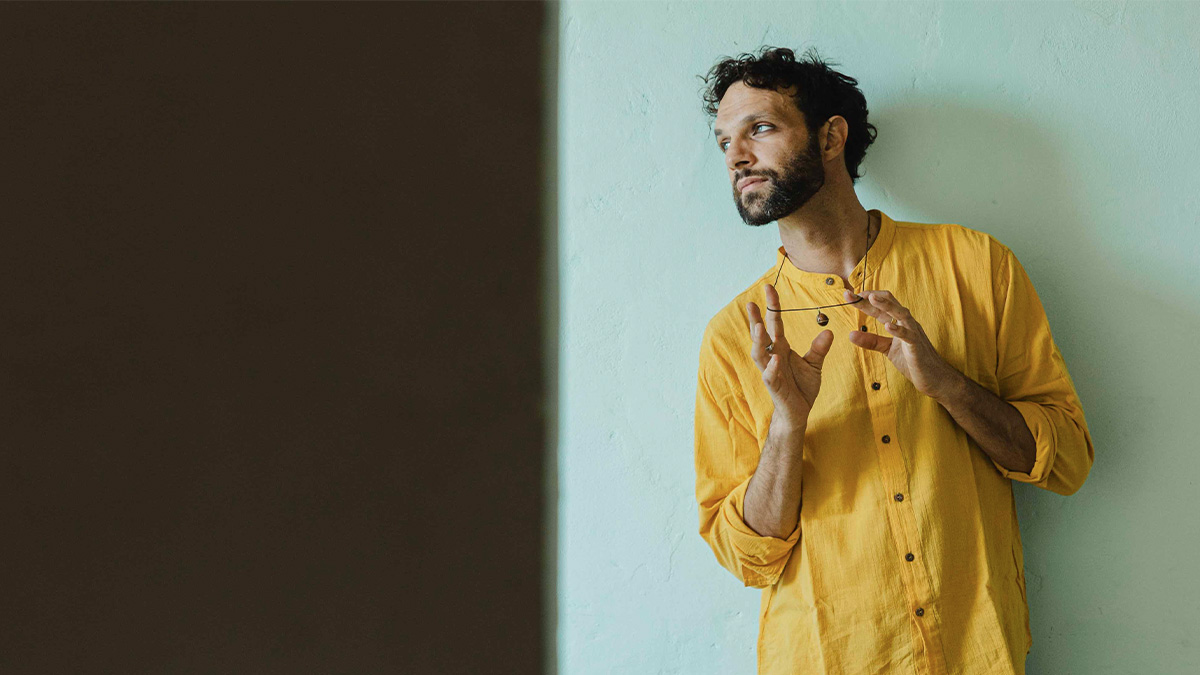
LimarraSicilian singer -songwriter with a refined sensitivity and deeply linked to the inner dimension, he returns to tell himself with his new single “Have cure”intimate and powerful song that invites you to slow down, to recognize and find yourself in an ever faster and more distracted world.
Limarra opens the doors of his musical and existential universe, sharing thoughts and reflections on the authentic concept of care, on the relationship with spirituality and the profound meaning that binds the traces of his latest album “What will remain”.
Your new single Abbi takes care of an intimate and deep invitation to slow down. From where Did the urgency of writing this song is born?
The song Abbi takes care of the need to explore and communicate a profound and universal theme: the need to take care of itself in a world that always pushes to run, to do more, to always be productive. In a social and cultural context that often seems to ignore individual fragility and the importance of slowness, I have felt the urgency to express, through music, how essential it is to stop, listen to yourself and recognize one's value, even in solitude or in moments of difficulty.
The word “care” today is often used superficially. What does it mean for you “Take care”?
Taking care of yourself is to stop when the world runs without respite, it is to listen to your breath and also welcome tiredness, say “no” with sweet firmness and feed on what is really good, it is to keep dreams like seeds and choose yourself like your home.
You talked about this song as a “secular prayer”. What is your relationship with the spirituality, if there is?
My relationship with “spirituality” has always been linked more in search of an authentic sense in daily life and less to a traditional religious belief. I tried, through music, to invite those who listen to a journey aimed at rediscovering themselves and their most intimate essence, in a world that tends to distract us from our deepest dimension. In Abbi, he takes care of the concept of self -care is intertwined with an idea of cure of the soul, for which, for me, “spirituality” translates into a daily practice of attention and listening, which goes beyond the simple physical care of ourselves to instead enter a terrain of reflection on the meaning of life, on our “being in the world” and on the need for connection with one's essence.
What will remain is an album that explores interiority, but also changes in the world contemporary. How did you balance these two dimensions?
When I write I often start from my personal experiences, from my experience, but then I realize that every reflection always has a link with the reality that surrounds me. The interiority, however profound, is inevitably influenced by the social, cultural and political changes that we are experiencing. So, in my creative journey, I tried to merge these two dimensions, making sure that my music not only spoke of personal emotions, but also of how the latter are extremely dependent on what I see and feel. Human fragility and existential questions that explore in my songs inevitably connect to a society that changes, to a world that pushes individualism, in which the human being finds no more peace or serenity.
Is there a common thread among the songs of the album? If so, what is the message that binds them?
The album is pervaded by a central theme that revolves around self -care in a historical moment in which human fragility becomes a common condition. Each trace, while treating different aspects of individual experience, helps to build a narrative that explores our relationship with the world and with ourselves. To deal with the change and complexity of life it is necessary to start ourselves, from our vulnerability, and only in this way can we hope to build a more conscious future, in which the need for introspection and the desire for connection with others can become a mantra.
The reinterpretation of poor homeland is a courageous gesture. What did he guide you in this choice And what does that song for you represent today?
The reinterpretation of Franco Battiato's song was motivated by the desire to pay homage to a song that has had a profound impact on musical and social culture, but also to make it dialogue with the present. When I decided to re -propose this song, I wondered how to update it, make it resound today, in a context that unfortunately seems to have not made many steps forward in terms of social justice, rights and hope. In such a delicate social climate as the current one, I considered it necessary to give a new guise to a composition that for me represents a reference to collective consciousness and social awareness.
Looking back, what do you think will “really remain” of your musical path of yours?
Looking back, I hope that the heart that I put on it and maybe even some refrain that gets glued to the head of this musical path. Most of everything, I would like the idea that music can be a way to talk to each other without filters, to say things as they are, even when they are uncomfortable, but with a little grace and maybe even with a smile. Maybe someone will think: “Limarra?! What he made reflect, but he also left you with a crazy desire to sing in the shower?!”, And me, honestly, would go very well. If some of my songs has been able to console, keep company, or simply tear a smile in a “no” moment, that is the real legacy, everything else, as they say, is “background noise”.
Daniel D`Amico for SANREMO.FM
