
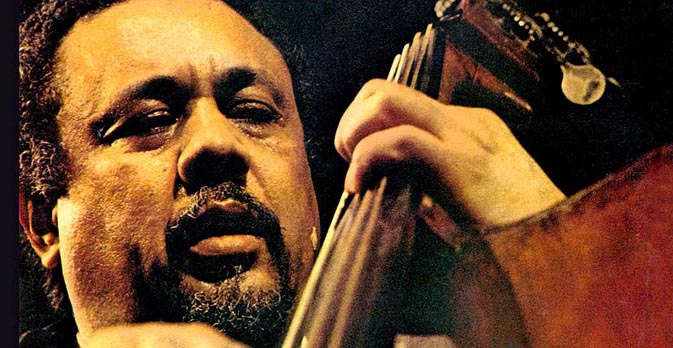
The jazz double bass player Charles Mingus arrives at the most interesting part of his career following a profitable path that began in the 40s of the 1900s in the context of big band swing. After crossing the historic turning point of the Be Bop, also playing with Charlie Parker, JJ Johnson and Miles Davis, starting from the mid -1950s, passes towards a hard bop with original outlines, pleasantly unpredictable and announcers of the jazz avant -garde who were about to make their appearance.
The record outcome of this jazz itinerary is immortalized, between 1956 and 1963, by a series of more than convincing LPs, able to stand out for the adventurous nature of the arrangements and ideas expressed. Among them we find, placed in a pre -eminent position, “Blues & Roots”, recorded in February 1959. The album in which the whimsical compositional capacity of Mingus emerges with a particularly persuasive vehemence comes to life to the confluence of three main creative courses.
On the one hand, the leader's ability to boldly guide the sound and experiments that flavor the hard bop on which the disc remains. On the other hand, the use of the blues and the first forms of gospel as a source of inspiration for the spirit that animates traces. Finally, the use of the first jazz event, the New Orleans Jazz, as a concrete material with which to build and develop the arrangements of the songs.
We can thus better understand what the album title is referred to: not only the announcement of the Blues genre as a paradigm thanks to which to direct the sessionbut a return to the roots of modern American music blossomed at the dawn of the 1900s in the south of the United States (in particular, in Louisiana and Mississippi). As Mingus himself says in the cover notes, the recordings of “Blues & Roots” come as an answer to those who accused him of having dedicated themselves in previous years to too intellectual and not very engaging work. An pretext accusation, to which the musician decides to answer by composing six pieces by himself, whose rhythmic to say the least enthralling exerts a safe grip on the senses of the listener.
The exciting sound impact thus generated is enhanced and enhanced by the lively brush of passionate atmospheres, which paint with bright colors the African American musical tradition on the canvas of the present.
In this album we therefore observe the passionate spontaneity inherent in the Blues, the Spiritual and the Gospel of the early 1900s freely scroll under the surface of a collective instrumental dialogue sometimes overwhelming, sometimes ironically boldly, sometimes fascinatingly irregularly irregular. An informal and passionate conversation, whose vivid phrasing, are channeled towards modernity thanks to the theme-supreme-test structure that characterizes the Jazz Hard Bop style.
Mingus in charge of writing the themes and organizing the music of all six pieces that form “Blues & Roots”, assembling a relatively wide formation precisely in order to evoke the climate of community creation typical of the New Orleans Jazz 20s. The rhythmic section (piano, double bass and battery) thus constitutes anchor for the evolutions of six winds, which are effectively expressing in the intertwining in the intertwining. More voices, in the imaginative melodic figures that make up the topics of entry and exit of the compositions and, finally, in the solos from time to time declaimed within the individual songs.
In addition to the leader of session (double bass), therefore nine musicians appear in the LP: Jackie McLean and John Handy (high saxophone), Booker Ervin (tenor saxophone), Peper ADAMS (baritone saxophone), Jimmy Knepper and Willie Dennis (trombone), Horace Parlan (piano, with the exception of “and Flat Ah's Flat Flat Too “), Mal Waldron (piano in” and's flat ah's flat too “), Dannie Richmond (drums). The listed artists belonged to the same generation of Mingus and had replied, before they get to these sessionthe same stylistic path. They occupy a qualitatively relevant place in the hard bop panorama, although two of them stand out for importance and skill: Jackie McLean and Pepper Adams.
McLean was already solidly stated in 1959 as one of the most capable high saxophonists, able to give a new guise, at the same time rich in soul and intellect, to the revolutionary style of Charlie Parker. Adams was in '59 at the start of his stimulating musical collaboration with Donald Byrd, also putting his decisive and intelligently angular saxophone at the service of other renowned Hard Bop groups.
At the time of recordings, the musicians called up, some of whom had already collaborated with Mingus in the past, receive only approximate indications on melodies and rhythms from him. In this way, a precise result is sought: that of promoting the spontaneistic approach explicitly highlighted by the group executions that distinguish this album with their exuberant and contagious instinct.
 |
The starting point from which Mingus outlines the background feeling of the album is “Haitian Fight Song”, a song he wrote and engraved in 1957, therefore two years earlier, for the album “The Clown”. The piece is characterized by a solo introduction of the double bass, to which are added the other tools subsequently, in a crescendo dotted with improvised solos capable of transporting the listener to the New Orleans of the early 1900s.
The same musical scheme is reproduced in four of the six compositions that we find in “Blues & Roots”: “Wednesday night prayer meeting”, “Moanin '” (with the baritone saxophone that replaces the double bass in the introduction), “Tensions” and “and Flat Ah's Flat Too”.
The acute and energetic inventiveness demonstrated by the arrangements of these songs seems to overwhelm the orderly and symmetrical nature of the jazz hard bop in favor of a battle suggestively fought by the winds on the pressing and direct battle. The outcome is a blending of rhythmic-melodic lines with lively and incisive colors, superimposed with each other as voices that vehemently express the different sound perfumes heard in New Orleans half a century earlier. They reveal us explicitly how the path of the jazz genre is a continuum Uninterrupted, which advances by adding new plans to an already existing construction, following an already traced project in its back lines by previous architects.
The other two pieces that complete the album, “Cryin 'Blues” and “My Jelly Roll Soul”, revisit the inlays of Blues and Vaudeville respectively which in the 20s represented the ornamental elements of multiple jazz compositions.
This impetuous tribute to jazz traction stops when the individual musicians take the floor, temporarily overlooking the congregation of instruments, to describe short solos that report listening in the context of the contemporary of the late 50s. These are relatively short solos, which resume the Gospel, Blues and New Orleans Jazz suggestions launched during the introductory part of each song, But the profile. In this way, the aforementioned mixture of roots and modernity that characterizes this disc is generated.
Among the most significant solos brought by dowry by jazz players present to the recordings, we mention that of Booker Ervin to the tenor saxophone in “Wednesday Night Prayer Meeting” (from minute 2.34 to minute 3.58). Here the sensual and fervent religiosity expressed by the dark and robust stamp of the saxophonist is palpable, so compelling as to make the bodies of the faithful who dance convulsive through the exciting sequence of notes visible. The improvisation takes all over the upper hand while Ervin is left alone in his torrid declamation of faith in jazz by other musicians, who accompany him for thirty exciting seconds only with ecstatic screams of encouragement and beats of hands.
John Handy instead stands out for his dynamic solo in “and Flat Ah's flat too” (from 3.28 to minute 4.07). An exercise in agility in the unmistakable style of Charlie Parker, flavored by the voluptuous shadows of the blues.
It must be said that the various solo parts played among the furrows of this vinyl by the numerous collaborators of Mingus, although on average of a good level, remain in the background with respect to the evocative setting created by the songs as a whole. The latter is thus privileged, placing the overall effect above the performance of the individual members and raising a musical building as exciting as it is unusual for the hard bop of the late 50s.
In “Cryin 'Blues”, “Tensions” and “My Jelly Roll Soul”, Mingus himself undertakes three interesting solos of exquisite workmanship and remarkable immediacy. In the first case, the repetition of percussive notes and pleasantly articulated phrasing make their sustained cadence with which to conduct the sound of the double bass from the shore of the technique to that of cultured entertainment. As for “Tenisions”, the inaccurate broken lines followed by its instrument gradually pass through a short series of marked marked (at minute 1.25, at minute 1.48 and from minute 2.17 to minute 2.24), dense parables suspended between sarcasm and expressiveness. Finally, “My Jelly Roll Soul”, dedicated to the great pianist Ragtime and Dixieland Jazz Jelly Roll Morton, houses a more relaxed solo, which releases imaginative sparks moving calmly around the main theme.
The accompaniment provided by Mingus to the soloists and arrangements distinctly unfold the typical versatility of this excellent musician. He runs through with firm vitality and always new rhythmic and sound solutions the jokes of the six songs, catalyzing the attention of the listener well beyond the rhythmic role usually assigned to the double bass.
One of the most rewarding aspects of this LP can be identified in the issues of entry and exit of the compositions, often traveled with joyful impertinent by collective improvisations in the background. Among these, we mention that of “Moanin '”, where the baritone saxophone of Pepper Adams draws a prolonged, deep and witty by glissing from serious tones, to which the response of the other winds comes punctually, shaping a composite figure from groove irresistible.
The theme of “Tensions” instead touches our imagination with the climate of apprehension, amazement and expectation that is felt in observing an acrobat intent on walking slowly on a rope suspended in the void. To fresco this sound scenography is the mutual chase of the wind, which gradually accelerate the rhythm of detached, tight and circumspect notes.
The last theme we remember is the one that opens the album: “Wednesday night prayer meeting”. Here the gospel lavished with impetus from winds takes the visible form of a preacher with an ardent faith, surrounded by the excited faces of the religious congregation rushed to his fiery sermon.
Three months after the creation of “Blues & Roots”, Mingus will partially repeat the same music formula in another beautiful album (“Ah Um”, recorded in May 1959). However, this first experiment in reuniting the origins of Afro-American modern music with jazz of the late 50s, rises as a unique, wise and electrifying example of re-enactment of the best past that music has to offer. “Blues & Roots” is a time machine manufactured by the genius of Mingus, an exciting double bass, end composer and ingenious arranger, immortalized in the best period of his career.
15/05/2025
Antonio Santini for SANREMO.FM