
1. Crime 101 is not, as the title might suggest, a collegiate primer on crime; it’s actually a reference to the much-trafficked 101 freeway in California.
2. That said: university advisors are adamant that all students must pass the Crime 101 course before signing up for Crime 109: Advanced Crime (available for junior and senior students only).
3. You will learn a lot about crime in this thriller, however, especially if you’re interested in liberating diamonds, cut and uncut, from couriers, brokers, stores, and their rightful owners.
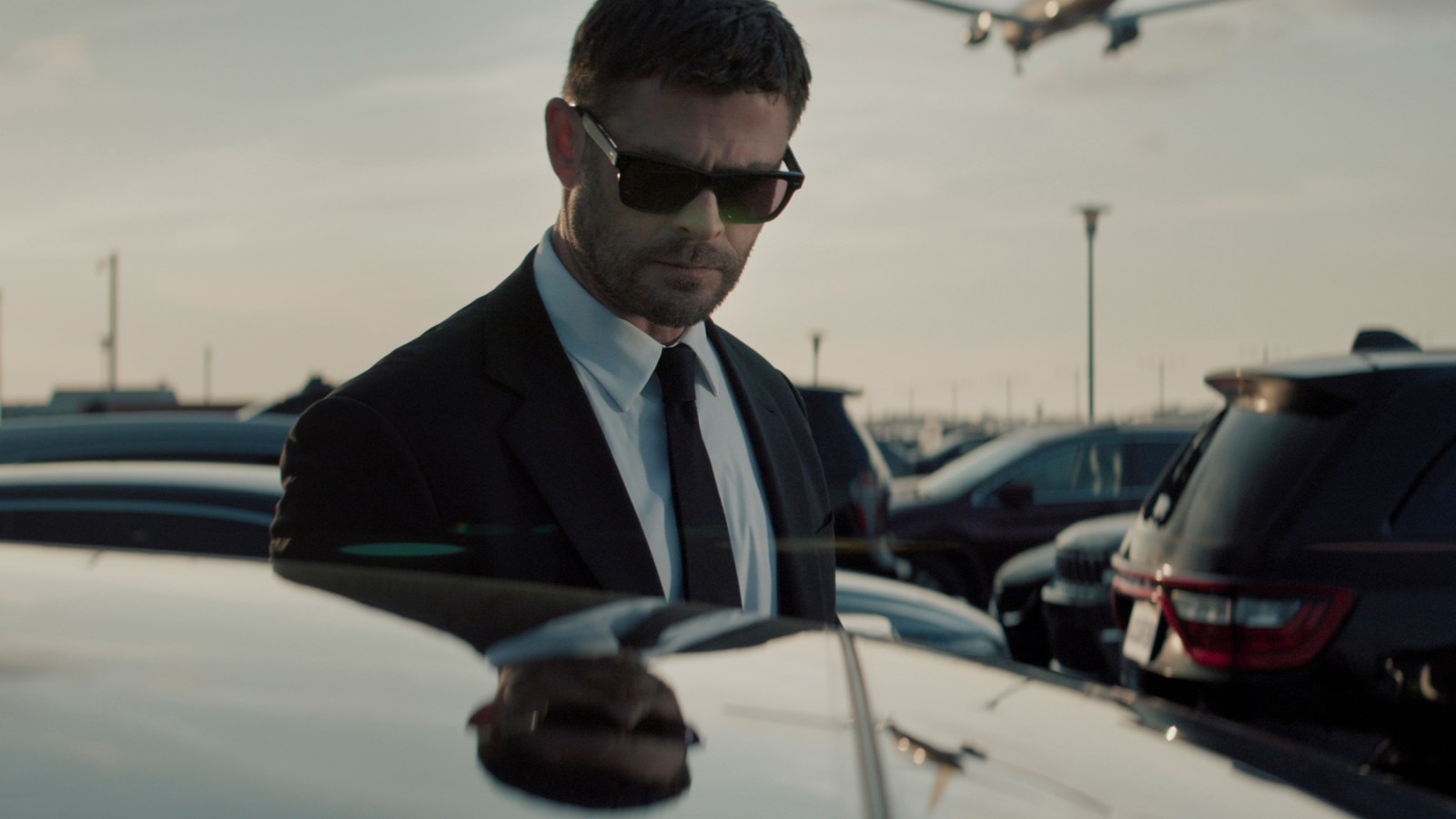
4. Chris Hemsworth play a jewel thief. A resolutely human one, we should note. At no point does his character summon thunder and lightning from the sky, pine for the good old days in Asgard, or reference the Nordic gods of yore.
5. Nor does Hemsworth’s character drop into some exotic locale and attempt to pull off a black-ops mission alongside a team of fellow mercenaries. There are many things to like about writer-director Bart Layton’s crime thriller, but one of the bigger aspects is that it gives the Australian actor something to do between Marvel movies and installments of Netflix’s Extraction movie franchise.
6. There is a whole subgenre of movies we call “Heat Rashes,” i.e. films that worship at the altar of Michael Mann’s stone-cold 1995 classic. Our personal favorite is Den of Thieves (the 2018 original, not the sequel from last year). This may be our second favorite.
7. How big a debt does this film owe to Heat? We’d say somewhere between “a good deal” and the gross national product of Denmark. This isn’t a bad thing, just a fact.
8. There’s even a bit near the end where Hemsworth finds himself in a tense situation, and the score drops in a piece of music that’s a dead ringer for Moby’s “New Dawn Fades” from the Heat soundtrack. It’s uncanny.
9. You’ll also hear a snatch of music that scores a car chase in the first act that you’d swear was the same composition that Hans Zimmer did for that opening bank robbery sequence in The Dark Knight. It definitely sounds a lot like it. Memo to Mr. Zimmer: please don’t sue them. (For what it’s worth, if Christopher Nolan were to ever release that opening sequence as a stand-alone short, it would be our permanent No. 1 Heat Rash pick.)
10. Much like Robert De Niro’s Neil McCauley, Hemsworth’s thief — he goes by the name of Davis — is a consummate professional. The best of the best. No one can touch him.
11. Also, if you’re considering becoming a professional thief, the best way to ensure you do not leave any DNA at a future crime scene, in your vehicle, etc., is to stand on a yoga mat, and rigorously run your hands over your head and scalp. This will get rid of any loose hair, flaky skin or that pesky dandruff. See, you’ve already learned a Crime 101 basic, even if that’s not what the title meant by the whole 101 thing!
12. This is the pre-job ritual we see Hemsworth doing when we first meet him. He happens to be doing this in front of the window of his beach side apartment, with a sort of steel-blue light emanating from the late-night cityscape. To call the visual palette of this particular sequence “Mann-ly” would be putting it mildly.
13. And like McCauley, Davis has a counterpart on the other side of the law. He’s a cop whose personal life is a mess. But he’s very good at his job, and treats it more like a calling than a nine-to-five gig. Again, we’re not saying this movie is borrowing a lot of elements from Heat. But we’re not not saying it’s borrowing a lot of elements from Heat.
14. The cop’s name is Detective “Lou” Lubesnik. He’s unshaven, seems perpetually hungover even when he’s not, and his wardrobe is more rumpled than the bedsheets of someone who hasn’t got out of bed for a solid week. If you’ve already guessed that Mark Ruffalo plays this character, congratulations. You are an expert on the moving pictures.
15. It should be noted that Ruffalo’s detective is unkempt in direction proportion to the way Hemsworth wears a tailored black suit. That’s his outfit of choice when committing a crime, along with a black ski mask. Seriously, it should be illegal how amazing Hemsworth looks in a suit. There are maybe a half dozen male human beings who look that incredible in a simple black suit, and we can’t name the other six.
16. Ruffalo is the one called to interrogate the first of several crime scenes in Crime 101, which will put him on an eventual collision course with Hemsworth. He can intuitively sense that whoever did this is a consummate professional. (Again, very good at his job.)
17. He also believes that this theft is part of a series of similar thefts, all of which share certain traits: no violence; no DNA evidence left behind; and done with maximum precision and minimum interactions.
18. The clincher: This last job took place near the 101 freeway, and if you link all of these gigs together, you’ll see that all of the other robberies took place in a southbound route along that same freeway. See? Crime 101, people! That’s the title of this movie.
19. A quick shout out to the diamond broker who gets ripped off in the movie’s first big set piece: He’s played by Payman Maadi, an extraordinary Iranian-American actor who was born in New York and then moved back to Iran as a child. You may have seen him in small parts in the movie Camp X-Ray and the TV show Westworld. He’s also acted in two of filmmaker Asghar Farhadi’s best works, About Elly (2009) and A Separation (2011). The latter is a masterpiece. This guy should work more often.
20. A good reminder to criminals: When asking two security couriers to hand over their weapons, make sure you get every single one of their guns. Like, physically check that they have surrendered any and all firearms on their person. The extra time and effort are totally worth it in the long run. #TheMoreYouKnow
21. Related: If you’re new at the whole security game and one of your guns is an old pistol that belonged to your dad, assume that it will not fire correctly at a key moment. That’s just Crime Movies 101.

Corey Hawkins and Mark Ruffalo in ‘Crime 101.’
Merrick Morton
22. We should mention that Lubesnik has a partner on the force: Detective Tillman. He’s played by Corey Hawkins, a.k.a. Dr. Dre from the N.W.A biopic Straight Outta Compton (2015).
23. There are very, very few American actors under the age of 40 that are better than Corey Hawkins. Seriously. We think about that look he shoots as he walks out of the door in The Piano Lesson (2024) on a weekly basis. He kills it in BlacKkKlansman, In the Heights, The Tragedy of Macbeth, and that Color Purple remake-slash-Broadway-musical adaptation from 2023 as well. If you’re going to cast anyone as a cynical, occasionally wisecracking partner to a grizzled cop, cast Hawkins. The dude can make even a throwaway part seem vital.
24. Some of the wisdom his Detective Tillman shares with his cohort, who’s about to get divorced and start a phase of his life that you might describe as “Pitiful Guy Trying to Get His Shit Together 2.0”: There are all types of yoga in Los Angeles. “Hot yoga, fast yoga, Greek yoga,” he says, before stopping himself. “I think that last one’s a food.” On the page, it’s a dumb line. When Hawkins says it, he nails the dad-joke landing. Dude’s that good.
25. Right, so if you haven’t guessed yet with the whole 101 freeway thing, Crime 101 takes place in Los Angeles. We get this info in the very first shot, which takes in L.A, skyline after dark, all of those skyscraper lights glistening like jewels on black velvet. Everything screams “urban crime thriller in the City of Angels” from the jump.
26. You know what’s cool? Starting your movie with that gliding-toward-the-horizon shot but having it filmed upside down. Then your camera slowly tilts right upside up as it moves in, except you cut away before it totally finishes its 180-degree rotation.
27. You know what’s even cooler? Using a Run the Jewels song to introduce your primary villain. Very badass. More on him in second, but to quote the RTJ track “Oh My Darling Don’t Cry” off Run the Jewels 2, which the movie uses effectively as a needle-drop, that’s “word to pimp.”
28. There’s a mandate that every fourth movie that shoots in Los Angeles has to include a scene that takes place in either Union Station, the Griffith Observatory (though simply giving it an establishing shot is fine as well), or the food court in the Grand Central Market. We don’t make the rules, we just write ridiculous list-like reviews that mention them. Crime 101 has a scene inside the food court, so: well done, you guys. We hope this helped with the tax break.
29. This is where Davis meets his contact in terms of moving “ice” and other stolen goods. His name is Money. No, really, that’s his handle. Check IMDb if you don’t believe us. He’s the equivalent of the Jon Voight character in Heat. (See: previous references to how similar this movie is to Heat.)
30. Money is played by Nick Nolte, and my god, how we’ve missed seeing Nick Nolte onscreen. He recently showed up briefly in Die, My Love, Lynne Ramsay’s hyperintense marital drama starring Jennifer Lawrence and Robert Pattinson, playing the latter’s infirm father. He only has a few scenes in this thriller, but every time he’s onscreen, you find yourself thinking: Nick Nolte. Nick! Motherfucking! Nolte!
31. Note to filmmakers: If you need someone to deliver a line in which a craggy, seen-it-all gent loses his cool and proceeds to read some young guy the riot act — but requires the character to increase not only the volume but the pitch of his rant into a high register — hire Nick Nolte. There’s a scene in which he yells at Hemsworth, and when he hits the crescendo of this outburst, we’re 99-percent sure that only dogs could hear the last part of it. 10/10, no notes.
32. Here’s where Davis is not like Neil McCauley: He doesn’t run with a crew. He has associates like Money, but he’s much more of a lone wolf type. Davis still adheres to the rule that you don’t let yourself get attached to anything you can’t walk away from if feel the heat around the corner, because that’s the Ultra-Professional Criminal’s Credo. But in his case, that includes people who help him out.
33. Naturally, Davis will break that code via a civilian (read: non-criminally affiliated) romantic interest. Her name is Maya. Think of her as the equivalent of the Amy Brenneman character in Heat.
Monica Barbaro and Chris Hemsworth in ‘Crime 101.’
Dean Rogers
34. The meet-cute that Crime 101 gives Davis and Maya is ridiculous, but also extremely L.A. She rear-ends him at a stop light. Maya is frantic, given that this is her boss’s car. Naturally, Davis doesn’t want to give out his insurance information and offers to pay for damages with a massive wad of cash. The WTF look on Maya’s face when he flashes this dough is the second best thing about this scene.
35. The first best thing about this exchange is the are-you-for-real look Maya gives Davis when, in the world’s most awkward attempt at flirting, he asks if she has children. There’s a car seat in the back of her vehicle, and even though she has established that this is her boss’s car, he still inquires as to her motherhood status. No, she doesn’t. Neither does he. See, they already have so much in common. They’re destined to be together!
36. Maya is played by Monica Barbaro, who you may remember from Top Gun: Maverick and playing Joan Baez in the Bob Dylan biopic A Complete Unknown. The Oscar-nominated actor and Bay Area native — big up NorCal! — has been building up an impressive resume over the last few years, and her work here is a nice addition to it.
37. Credit where credit is due: Crime 101 is extremely good at taking cliché roles — the grizzled fence, the law-enforcement partner, the normie girlfriend who’s destined to be a casualty of our antihero’s criminal lifestyle — and casting them with first-rate actors. Nolte, Hawkins, and Barbaro all add respective grace notes to these stock crime-thriller parts. The same goes for the long-suffering wife who has finally had it with her detective husband’s obsession over catching bad guys.
38. Right, remember how told you that Lubesnik was in the middle of a messy divorce? We get to see how messy it’s become. He meets up with his wife in one of those old-school diners that are all over Los Angeles. It bears repeating that this is an extremely L.A. type of movie.
39. It’s worth noting that this bit takes place in a diner that contrasts heavily with Davis and Maya’s first date, which takes place in a fancy restaurant. He chose this place for said date because it seemed fancy, and neither of them seem comfortable there. They eventually leave and hit up a taco stand. Criminals, take note: Just go straight to the taco stand. She’ll appreciate your lack of pretense.
40. Lubesnik meets up with his soon-to-be-ex–wife — her name is Angie — to negotiate the terms of his moving out. Naturally, things go south and he ends up storming out. We will not see Angie again. She enters and essentially exits the film in one fell swoop. There really is no reason for this scene to be in the movie at all — we’ve already established that this cop has screwed up his life because he’s all work, all the time — except for the fact that…
41. … Angie is played by the great Jennifer Jason Leigh, and any excuse to put Jennifer Jason Leigh onscreen should be indulged at all costs. Much like Hawkins and Nolte, the mere presence of Leigh increases the quality of any movie by 33 percent. Naturally, she adds a lot to this scene, and her and Ruffalo make you feel like you’re watching a couple with a long, storied history in less than five minutes. Casting directors, give Leigh more work, please.
42. You know who else needs more work? Halle Berry. She has the third main role in this film, after Hemsworth and Ruffalo.
Halle Berry in ‘Crime 101.’
Merrick Morton/Amazon Studios
43. Berry plays Sharon Coombs, a claims adjuster for a high-end insurance firm. We know her life is a mess because we’re introduced to her waking up and checking an app on her phone that tracks how well she sleeps every night. The verdict: Very badly.
44. Still, much like Davis and Lubesnik, Sharon is very good at her job. We can tell she’s a professional by the way she applies concealer to her face; a recent interview with Berry in The Cut refers to this as the character’s “war paint.” Most films would not use this particular activity as an action-is-character piece of business, but tellingly, Crime 101 does — and is a better movie for it. We’ll return to the “why” behind this later.
45. Will there be a scene in which these main characters pass each other in their cars, either on the freeway or a main thoroughfare, thus suggesting that their fates are inevitably intertwined? Spoiler: Of course. Because L.A., people.
46. The first time we see Sharon plying her trade, she’s trying to get a wealthy gentleman to sign on the dotted line regarding her firm ensuring both his vast art collection and his upcoming wedding. The way that he adds a “you know” when talking to Berry about the way that the work of Black artists always financially appreciates suggests he’s more than a bit of a douchebag. Action is character, and so is casual racism.
47. This rich prick is portrayed by Tate Donovan, who’s aged beautifully from young, matinee-idol type to character-actor utility player. You’ll recognize him immediately. He’s so good at playing entitled rich pricks. So good.
48. (This is a good moment to give a side shout-out to the legendary casting director Avy Kaufman, who should have been among the nominees of the first ever Oscar for Best Achievement in Casting; she’s responsible for assembling the ensembles for both Sentimental Value and Train Dreams, either of which could have secured her a slot. Her resumé includes Syriana, Brokeback Mountain, Ma Rainey’s Black Bottom, Lincoln, American Gangster, Dogville, The Ice Storm, and dozens of other incredible films. She outdoes herself with this movie as well. Bravo to you.)
49. If a young woman walks into a scene at a rich guy’s house, it is inevitable that someone will say something in reference to his “daughter” and he’ll correct the person by mentioning that she is his wife or fiancée. It’s Movies 101. In this case, it’s the fiancée option.
50. When Sharon returns to her office, she’s given a passive-aggressive grilling in regards to whether she closed that rich-prick deal or not. We also find out that she’s been with this firm for 12 years and is trying to become a partner. Her work and seniority suggests that she should have been made a partner a while back. The inherent sexism and ageism in society at large, and in this firm in particular, is why she’s still languishing as a V.P. This is a theme that Crime 101 will return to, when it’s not preoccupied with, y’know, crime.
51. It’s not a coincidence that, right after this bit of exposition, we sit in on a meeting at the firm where a new employee (Hanako Footman) is introduced. She’s young, inexperienced, and objectively hot. Hence, she will now get assigned the rich-prick case, and Sharon will be reassigned to looking into a less high-stakes incident. You can’t accuse Crime 101 of not having something to say about the world we live in, or of always being subtle in how it goes about said commentary.
52. The case she does get assigned to? The diamond robbery we saw in the film’s first 10 minutes. The same one Hemsworth pulled off. The same one that Ruffalo is investigating. Look, we told you their fates were intertwined!
53. You know who the big-picture villains are in Crime 101? Not the criminals. It’s bosses. Sharon’s bosses could not be more blatant examples of horrible white guys who feel that they’re entitled to do whatever the fuck they want. Lubesnik’s boss is one of those suits who hates loose cannons and talks about city hall being on his back. He naturally doesn’t want his best detective treating this diamond theft as part of a series of armed robberies happening up and down the 101, because that would mean that it wreck the department’s closed-case numbers. We never meet Maya’s boss, who’s supposedly a big-time publicist, but she sounds like she’s high maintenance from the way she talks about her. Davis is his own boss. That’s why he gets away with so much.
54. There is a proper villain here, however. His name is Ormon. This psychopath is a real piece of work. Think of him as the movie’s equivalent to Waingrow from Heat.
Barry Keoghan stars as ‘Ormon’ in CRIME 101.
Dean Rogers/Amazon Studios
55. Here’s the deal: Davis had this job in Santa Barbara all cased out and set up. But when it comes time to do the deed, he backs out. Something about it doesn’t feel right, and he tells Money he’s going to walk away.
56. Money, however, still thinks this is a lucrative score, so he recruits a new guy to do it without telling Davis. This is where we meet Ormon (and here Run the Jewels’ “Oh My Darling Don’t Cry.”) His dad used to work with Money back in the day. Now he gets a chance to prove his worth.
57. Side note to filmmakers: If you want to suggest that your psychopathic newbie is a little childish and immature, put him on a motorbike. Not a Triumph or one of those sleek, bullet-like motorcycles — like one of those revved-up dirt bikes. Also good for fast getaways and chase scenes.
58. Ormon is played by Barry Keough, the young Irish actor from Saltburn and The Banshees of Inisherin. We love Barry Keough. This line reading of “There goes that dream” still haunts us. Also his casting fulfills the unofficial mandate that most films must now cast someone who hails from Ireland, and Paul Mescal is busy filming those Beatles movies, so….
59. His character is bottle-blond, by the way. And if you want your psychopath creep to seem extra psychopathic and creepy, cast Barry Keough and give him a bad blonde dye job. Even creepier: make him wear a helmet with a dark visor half the time, so he comes off like a murderous motor-bike-riding killer [shudder] or the third member of Daft Punk [double shudder].
60. Ormon does the Santa Barbara job, and, well… all of your worst fears about this guy are confirmed. He manages to check four of the seven deadly sins off his to-do list from this jewel-store robbery alone.
61. Lubesnik investigates this robbery and notes that it fits the pattern of those other serial robberies, except for the part about there usually being no violence involved. There’s a great deal of violence that happened there. Something seems fishy about all of this, he tells Tillman. It only makes him want to dig further into his theory, despite his dickwad of a boss telling him to cool it with all that part-of-pattern talk. (See: earlier note about bosses being dickwads.)
62. Meanwhile, Davis is surveilling Sharon, because she may help him with one final job. Ormon soon starts surveilling Davis, because he gets tipped off that there’s one final job his counterpart in criminality is doing and he wants in on the loot. Sharon is keeping an eye on the guy who got his diamonds ripped off in Act One, because her bosses don’t want to pay out. Lubesnik eventually gets a tip on who the main suspect in these robberies are, and he starts surveilling Davis. Surveillance cameras record people doing everything, everywhere. Everybody is watching somebody.
63. Davis lives a fairly monastic lifestyle, and is one of those criminals who has a final finaincial number he wants to hit. Once he gets there, he’ll retire from the life. But he does have one thing he spends his money on, and that’s classic muscle cars. Crime 101 has a real thing for classic muscle cars. When Davis and Sharon meet, she’s admiring his racing green ’68 Camaro. It’s the sort of car to inspire uncontrollable drooling when you see it onscreen. Total Steve McQueen vehicle.
64. That Steve McQueen mention isn’t out of nowhere — the movie star gets a whole conversation devoted to his back catalog. Two characters actually engage in a discussion about their favorite McQueen flicks. One of them answers Bullitt, because of course. The other namechecks The Thomas Crown Affair. Note to professional criminals: When you’re a thief and someone tells you their favorite Steve McQueen movie is the one where he plays a thief who’s being chased by an investigator, they are totally on to you. Consider yourself warned.
65. There’s not much in director Bart Layton’s TV work, documentaries or his narrative debut American Animals (2018) to suggest he’s a natural fit for this kind of movie. But he’s clearly got an affection for the old-school crime flick as much as his characters have a soft spot for Steve McQueen movies, and the man knows how to stage a car chase. You get a couple of really nice ones here.
66. Also, he’s working from a Don Winslow novella (it appears in his 2020 collection Broken), and that guy can write these kinds of stories in his sleep. We highly recommend that book, as well as his new collection The Final Score. He’s the real deal.
67. In a recent Rolling Stone piece on Winslow, Layton talks about getting the novella sent to him as a potential story to adapt, and he immediately took to the idea of making a crime movie set in L.A. He’s quoted as saying that he wanted to make Crime 101 because it would allow him “to probe ‘the currency in L.A. — youth and beauty and wealth and status. And when that starts to expire, what have you got?’”
68. This would seem like a very pretentious thing to say about a pulpy, if stylish movie that centers around criminals and the cops who chase after them, were it not for the storyline centered around Halle Berry. The most painful scene in the film isn’t when her character is attacked, although that’s a tough thing to watch, given that violence towards women onscreen is never easy to view. We’ve also grown attached to Sharon by this point, so when someone hits her and threatens her, you want to see that other person get what’s coming to them, i.e. a knuckle supper.
69. No, what makes Layton’s statement seem like something other than standard interview-type horseshit is the fact that the movie really digs its teeth into Berry’s character being underestimated, misjudged, and written off because she’s a woman of a certain age. It’s implicit in the scene in which Berry is forced to play nice with her younger replacement as every guy around the meeting table coos and ogles. It’s there in the way her superiors keep brushing her off, and the way that Tate Donovan’s rich guy suddenly loses interest in working with her.
70. And it’s downright explicit when the firm’s head honcho tells Sharon why she’s likely to never, ever make partner. This is the most painful scene in the film. When Sharon emphasizes that she’s responsible for a lot of their profits over the past year and has put in a dozen years at the company, whereas he made partner in half that time, the boss (played by another veteran character actor, Paul Adelstein, soon to be seen in the upcoming AMC drama The Audacity) throws a number back at her: 53. As in, her age. He tells her she’s past her expiration date in terms of being bait for these rich guys to sign with them, and she may as well put herself out to pasture.
71. Remember how The Substance used the IRL Hollywood history of its star to add meta-layers to its story of an actor stuck in a youth-fixated industry? That’s not why Berry was cast, but she definitely brings the trials and tribulations she’s faced in the film world to this story in an intriguing way. She was lauded as a screen beauty and Bond girl in her younger years, got in on the ground floor of the superhero-movie boom (see: the X-Men franchise), deservedly won an Oscar, and then, at a certain point, it felt like the movies didn’t know what to do with her. That she’s struggled to find roles worthy of her is as damning as it is self-evident.
72. This isn’t just one self-important critic’s opinion — Berry herself has talked about it. In a new interview with The Cut, she noted that the character “rang so true for me. You get to this age where you feel like you’re being marginalized, devalued. You feel it at work. You feel it from society.” “She’s one of the great actors of her generation,” Layton says in this same piece,” even if she hasn’t always had roles like Monster’s Ball that show off what she’s capable of.”
73. This is why you get a sequence in which Sharon confronts that asshole of a boss, first by warning her younger replacement that one day, the obsolescence bell will toll for her as well, and then by calling out her superior as someone who isn’t worth her energy, her work or her time.
74. It’s one of those scenes designed to get the crowd cheering. And it would feel like cheap pandering if it weren’t Berry saying all of these things, throwing what clearly feels like her own frustration into every barbed line. “Halle actually asked me to write that speech into the script,” Layton says in The Cut piece. “I don’t know many actors who would have the confidence and bravery to be that vulnerable. But it’s because of where she’s at in her life.”
75. Is Berry the best thing about Crime 101? Probably. The movie gives her a hell of a role. She gets juicy scenes with all of her fellow costars. She gets to play the emotional scales, to be both steely and vulnerable, honest and hungry, tempted and redeemed. If nothing else, it makes you want to more Halle Berry in more movies, all of the time.
76. But there are a lot of wonderful things about Crime 101. For starters, you get a nice Thor: Ragnarok reunion, and proof that Hemsworth and Ruffalo can share scenes together without one of them being a Norse god and the other one rendered in green CGI.
77. You get a blonde Barry Keough fully leaning into playing a rabid dog let off the leash, tooling around on a motorbike and generally making you feel like you need a steel-wool shower after witnessing every scene he’s in.
78. (He also gets to play one half of Crime 101’s best action sequence, a chase scene in which Hemsworth chases after Keough through several Los Angeles neighborhoods and pits his Camaro against the latter’s motorbike. The driving choreography here deserves one of those memes of Charles Foster Kane clapping like a maniac from Citizen Kane.)
79. You get a rumpled cop proving that he’s an O.G. by hating on L.A.’s more chic trends by refusing to let someone buy him a smoothie. Action is character, and so is having your character rail against smoothies.
80. You get Hemsworth stepping into a leading man role that may not fit him as snugly as that black suit, but still allows him to flex some muscles he doesn’t usually get to flex, as well as flexing his actual muscles — that alone may sell a few dozen tickets.
81. You get Ruffalo doing his Ruffalo thing, playing what may be his 100th law-enforcement-officer-on-the-brink-of-a-breakdown role but still finding places to take that schtick and make it feel unique. We’d watch him and Hawkins do a whole series together where they solve crimes and banter about life’s petty misfortunes. Or a reboot of Columbo starring Ruffalo as Lt. Columbo. Crime 101 kind of doubles as an audition for that imaginary reboot.
82. You get Berry in full bloom (see above), and a whole bunch of great supporting actors doing non-I.P. work
83. You get a crime film which, is, yes, very derivative of many other crime films, some of which we mention above, others of which aren’t namechecked in this piece but are obvious when you think about it.
84. Still, these types of all-star, cop-versus-thief stories are part of a healthy moviegoing diet, and it feels like it’s getting harder to bring these types of movies to market right now. “I’m trying to think of what were the last versions of those films were,” Layton mused aloud in an interview with Deadline. “Are they mainly on Netflix? I’m not sure. But don’t you feel like some of those movies don’t exist anymore?” Yes, we do. It’s a gap that needed filling.
85. Also, the movies have been around for a long time, but it’s somehow taken 130 years get around to having someone say “The thing about walk-away money is, you have to be able to walk away with it.” It’s not exactly “A pool of darkness opened at myfeet and was far, far deeper than the blackest night… I dived into it… It had no bottom.”But it’s a nice, concise bit of semi-hardboiled dialogue.
86. The same can be said for using a Pornhub-type site to pass contraband date along. How has no one thought of doing this in a genre movie before?!
87. And you get Amazon, who’s distributing this movie, actually giving it a theatrical release. This is the sort of movie that gets usually relegated straight-to-streaming, no questions asked, and you have a chance to see it in a theater, with other human beings, all of you enjoying what feels like a throwback to both the 1970s and the 1990s.
88. (Incidentally, the budget for Crime 101 was reported to be $93 million, which in Amazon numbers, translates to two and one-third Melania docs. You get a lot more bang for this thriller than you do with blatant propaganda used to bribe an administration into not messing around with your corporate dealmaking.)
89. By the way, have you ever tried to write 101 things about a movie? It’s much tougher than you might imagine. We realize that its name comes from the freeway, but couldn’t they have just set the whole thing near Interstate 5 and called it Crime 5? In other news: Thank you for not naming it Crime 405. That would have broken us.
90. Look, we do not want to oversell Layton’s contribution to the crime-film canon. It has its share of missteps and scenes so overly familiar that they turn into inadvertent comic relief.
91. Do we ever need to milk the moment when someone texts someone, and the camera holds on those three dots that characterize an incoming response, for an extra-long time? No, we do not.
92. Do we need another Bruce Springsteen needle-drop in a movie to get an awkward male to slow dance? No, we do not, even if it’s a live version of “Jersey Girl.” We love Springsteen, but unless you’re a movie about Springsteen, it might be good to issue a temporary moratorium on using his music for easy emotional cues.
93. Do we need a backstory involving foster-home stays that are meant to add depth (kind of) to someone’s character, yet also function as easy ways to get from Plot Point A to Plot Point B? No, we do not.
94. Do we need a scene in which a criminal beats up a woman, when we’ve already established that he’s a scumbag without a moral compass? No, we do not. (See earlier graf about Keough and Berry’s characters.)
95. Do we need the sound of someone giving inspirational platitudes in a voiceover to unite all the narrative strands and act as sort of an ironic chorus to the pulp fiction happening onscreen? No, we do not.
96. (Incidentally, it occasionally seems like these are coming from some sort of self-affirmation app, which is also very L.A. But several scenes make it appear as if it’s a yoga instructor saying this during a class that’s attended by both Sharon and Lubesnik. That may be the most L.A. thing of all regarding this very L.A.-centric movie.)
97. Do we need clever last-minute switcheroos for the sake of plot conveniences? We’re being purposefully vague about the who, what, where of this one so as to avoid spoilers, but trust us when we say No, we do not.
98. Incidentally, there is “one last job” on the horizon, the kind that would allow Davis to retire. This will naturally offer him an out, but it will also cause a conflict between him and Maya, and once again, the irony of the final theft that will provide a permanent exit strategy yet will also kill any hope of true domestic bliss.
99. More importantly, this final job will collectively involve all of the main characters together and lead to a climax that helps tie every loose end together, reward the just and bring the unjust to justice. It also leads to what may be the single most ludicrous ending we’ve ever seen that involves a note, a cryptic number and a parking lot. You may wanna palm-smack your head now just to get it out of the way.
100. And still, we’d recommend this movie to anyone who likes movies involving crime paying, in both metaphorical and perhaps even literal ways. It’s much better than it has any right to be.
101. You’ve already seen Heat a thousand times. You can take one night off and watch this instead.